1. At a Glance – Blink and You’ll Miss the Plot Twist
Oriental Rail Infrastructure Ltd is that rare Indian railway story where seats, berths, bogies, wagons, and a bit of family capitalism all collide at one busy junction. Market cap sits at ₹1,070 Cr, the stock is chilling around ₹160, and the market is clearly confused—down ~29% over one year while profits are doing bhangra in Q3. Latest quarterly revenue came in at ₹169 Cr, up 10.3% YoY, but the real masala is profits: PAT up 83.8% YoY. That’s not a typo, that’s rail math.
Valuations? Stock trades at ~30x earnings, EV/EBITDA ~13.9x, P/B 2.73x, with ROCE 11.1% and ROE 9.23%—basically saying “growth story in progress, execution still loading… please wait.” Debt stands at ₹229 Cr, promoter holding a comfortable 57.7%, zero pledges, and a dividend yield so small it’s basically emotional support.
But the real flex is not today’s P&L—it’s the order book, now corrected to ₹1,960.15 Cr after a spicy board-meeting corrigendum. Add wagon leasing approval, smart wagon tech, and capacity doubling, and suddenly this smallcap smells less like plywood and more like rolling stock ambition. Curious already? Good. Let’s open the file.
2. Introduction – From Train Seats to Freight Dreams
Oriental Rail Infrastructure Ltd has one of those deceptively boring names that hides a surprisingly complex business. On paper, it makes seats and berths. In reality, it sits at the intersection of Indian Railways’ capex cycle, freight modernization, and the government’s obsession with “Make in India, but louder.”
Founded as a passenger coach component supplier, the company became the only listed organized player in railway seats and berths, quietly building a ~30% market share. Every time you stretch your legs in a Rajdhani, Duronto, or Shatabdi, there’s a decent chance you’re interacting with Oriental’s handiwork. Not glamorous, but extremely sticky.
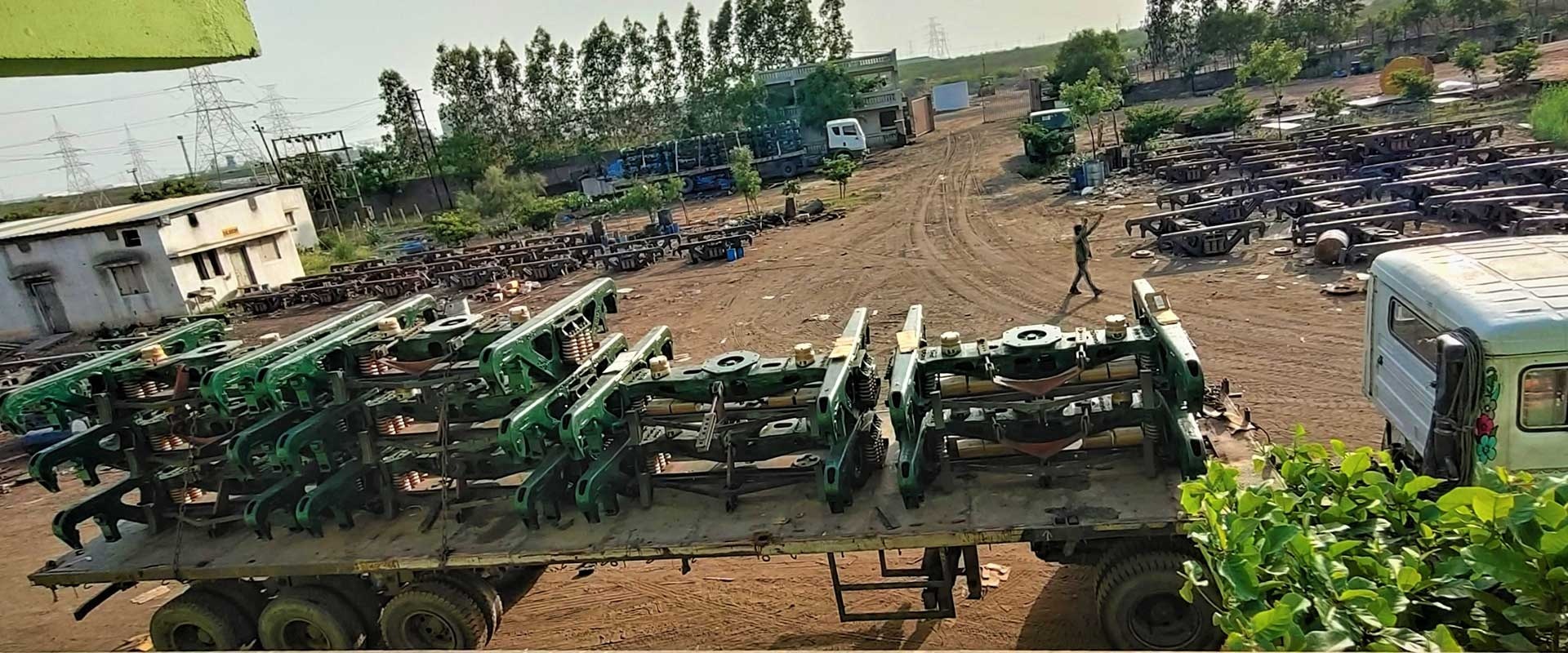
Over time, Oriental realised a brutal truth: passenger seats alone don’t build empires. So it added freight wagons, bogies, couplers, and springs through its wholly owned subsidiary, Oriental Foundry Pvt. Ltd. (OFPL). Suddenly, this wasn’t just a seating company—it was flirting with heavy engineering.
Fast forward to FY25–FY26, and the story gets spicy. Order inflows explode, collaborations go international (USA, Russia—full Bollywood foreign angle), wagon leasing approval lands, and management starts talking capacity expansion like a startup founder on caffeine.
Yet the market remains unimpressed. Why? Because margins wobble, working capital is messy, and ROE still hasn’t shown six-pack abs. So is this a classic “market is early” story, or “market knows something you don’t”?