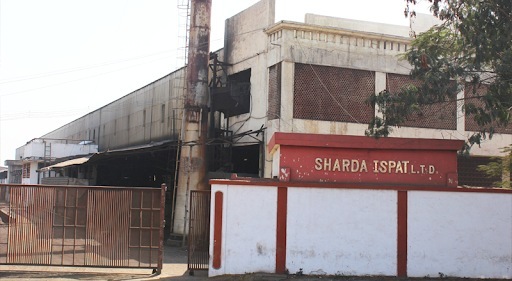
1. At a Glance
If steel had a personality, Sharda Ispat Ltd would be that quiet, old-school Nagpur uncle who has been around since 1960, knows all the auto OEM vendors, but still runs margins like it’s 1998. Market cap sits at ₹95.8 Cr, stock price at ₹189, down ~20% in 3 months and a painful ~37% over 1 year. Q3 FY26 numbers just landed, and they weren’t exactly Diwali bonus material: Revenue ₹47.6 Cr (-12.5% QoQ) and PAT ₹1.44 Cr (-54% QoQ). Operating margin limped back to 3.78%, which in steel terms is “alive but wheezing.”
Despite the slowdown, the balance sheet hasn’t exploded, promoter holding is a steady ~75% with zero pledge, and ROCE still reads ~14%. But at 33.6× P/E for a cyclical, low-margin steel roller? That’s where the eyebrow starts twitching. Is this a patient smallcap compounder going through a bad patch, or just a job-work steel business being priced like a specialty alloy darling? Let’s open the furnace and look inside.
2. Introduction
Sharda Ispat isn’t new money. Incorporated in 1960, this is a legacy alloy and spring steel rolling company supplying flats, rounds, and squares primarily to automobile OEM component manufacturers, forging units, and bright bar players. No fancy D2C story, no green hydrogen buzzwords — just steel, rollers, heat, and repeat.
The business has survived multiple cycles, a demerger in 2011 (splitting assets into Sharda Ispat Industries and Sarda Power & Steel), and still operates from its retained Kamptee Road unit. Over the last decade, revenues have grown at a ~12–14% CAGR, profits at a better clip, but margins have never escaped the single-digit jail.
Q3 FY26 reminded everyone why steel is a humbling business. Auto demand softened, volumes cooled, and suddenly the thin margin model looked… very thin. Yet, the company remains profitable, debt is manageable, and customer relationships with Tata Motors, Ashok Leyland, M&M vendors haven’t vanished overnight.
So the real question: is this just another steel downcycle quarter, or is valuation finally running ahead of fundamentals?
3. Business Model – WTF Do They Even Do?
In simple terms: they roll steel so others can make cars and trucks.
Sharda