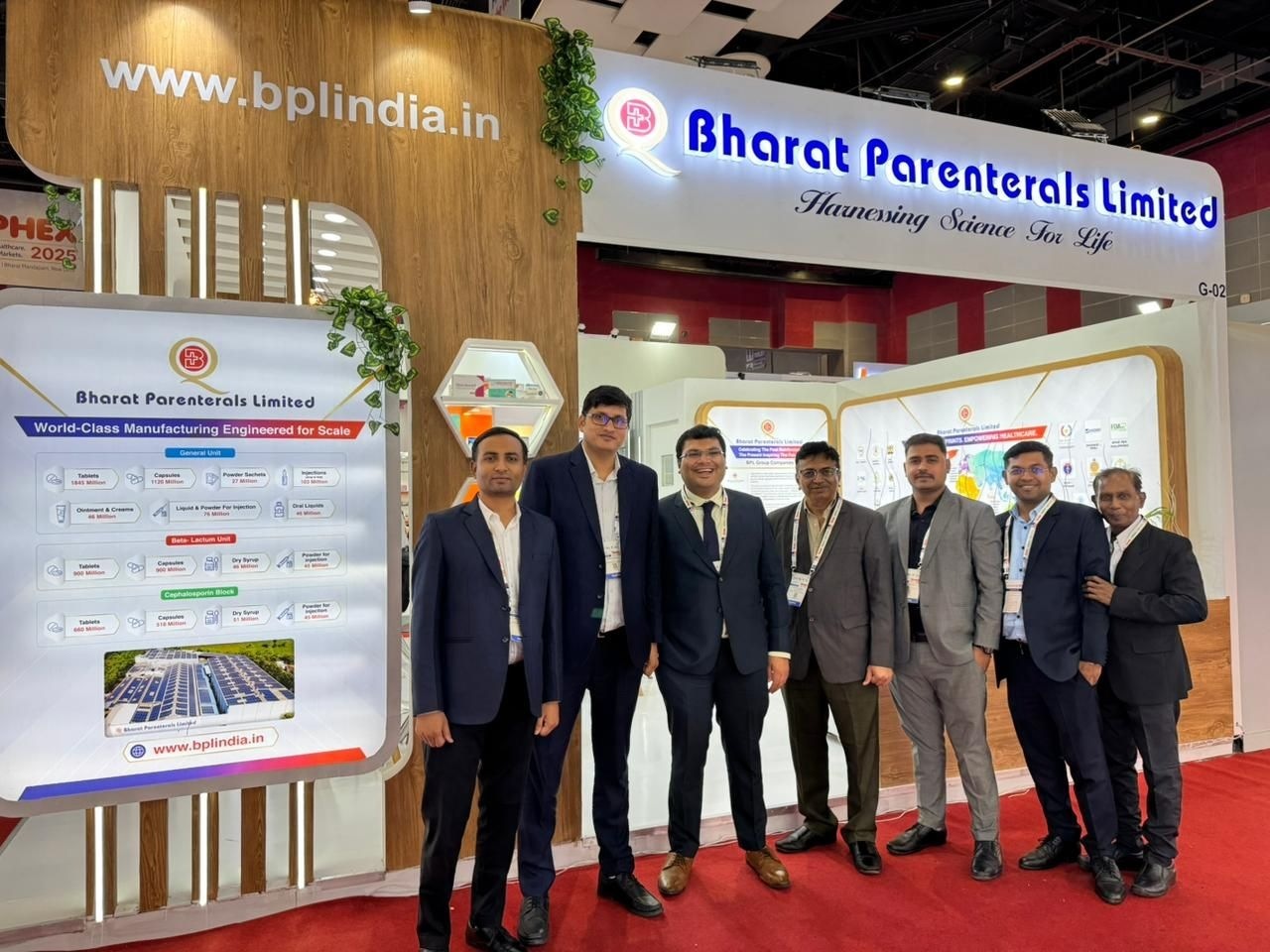
1. At a Glance – The “Doctor, Patient Stable… But Still on Oxygen” Snapshot
Bharat Parenterals Ltd is a classic midcap pharma story where ambition is running faster than profitability. Market cap sits around ₹643 crore, stock price hovering near ₹934, and the last 3 months have shaved off more than 22% of shareholder patience.
FY25 consolidated sales clocked ₹340 crore, but FY26 so far has been… let’s say “character building.” Q3 FY26 consolidated revenue came in at ₹65.2 crore, EBITDA margin a thin 3%, and PAT a loss of ₹9.6 crore. On paper, ROCE is negative (-4.38%), ROE is also negative (-4.71%), and interest coverage has fallen into philosophical territory (-0.57).
And yet—this isn’t a dying patient. There’s a ₹303 crore order book, USFDA EIR in hand, EU GMP audit with zero critical/major observations, and subsidiaries burning cash today to (theoretically) mint cash tomorrow.
So what is this? A falling knife? Or a coiled spring wrapped in regulatory paperwork? Let’s open the files.
2. Introduction – When Pharma Companies Decide to Play the Long Game (and the Long Burn)
Bharat Parenterals is not trying to be the next Sun Pharma. It’s trying to be cleverer—and riskier. Instead of mass-market generics and retail branding, BPL has gone full export-heavy, injectable-heavy, regulation-heavy.
Historically, this company made decent money doing plain-vanilla export formulations. Then management looked at margins and said: “What if we suffer today… so we can suffer less tomorrow?”
Thus began the pivot:
- From anti-infectives → to critical care & complex injectables
- From emerging markets only → to US & EU regulated markets
- From one company → to a three-headed structure:
- BPL (core exporter)
- Innoxel (regulated market CDMO + specialty R&D)
- Varenyam (India institutional + emerging regulated markets)
The problem? All three are currently hungry. And hungry subsidiaries eat consolidated profits for breakfast.
Is the pain temporary… or structural? That’s the real question.
3. Business Model – WTF Do They Even Do? (Explained Without a Pharma Degree)
At the simplest level, BPL manufactures finished dosage formulations—mostly injectables and liquids—and sells them globally.
But today, it’s better understood as a pharma holding company with three different risk profiles:
- Standalone BPL (Old Reliable)
- Export-led formulations business
- Anti-infectives, anesthesia, pain, CVS
- Bread-and-butter revenues, moderate margins
- FY25 standalone revenue: ₹318.7 crore, PAT ₹26.4 crore
- Innoxel Lifesciences (The Expensive Genius Child)
- Develops complex injectables, ER injectables, liposomal oncology products
- Focus: US & EU markets
- Business model: CDMO + out-licensing + milestone income