1. At a Glance
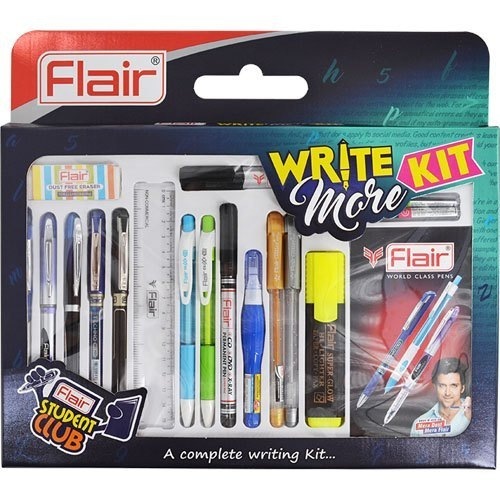
Flair Writing Industries Ltd is what happens when your school pen grows up, files a DRHP, and starts flexing export awards. With a market cap of ₹3,241 Cr, current price ₹307, and a 24× P/E, Flair sits comfortably between “boring stationery company” and “surprisingly serious consumer brand.” Q3 FY26 delivered ₹318 Cr in sales (+20.1% YoY) and ₹32.7 Cr in PAT (+11.6% YoY) — not explosive, but steady enough to keep long-term investors sharpening their pencils.
Debt is a rounding error (₹58.9 Cr, D/E 0.05), ROCE is 16.1%, ROE 12.5%, and promoter holding is a rock-solid 78.6% with zero pledge. Exports span 115 countries, SKUs cross 2,500, and the company now sells everything from a ₹5 pen to premium Pierre Cardin metal pens.
The stock is down ~10% over 6 months, up ~31% over 1 year — classic post-IPO digestion with decent fundamentals underneath. Question is simple: is this a compounding stationery machine… or just a well-packaged pen box?
2. Introduction
Every Indian has used a Flair pen. Some lost it in school. Some chewed it during exams. Some probably still have one stuck in a drawer. But very few paused to think: “Wait, this pen company is now listed, exporting globally, and trading at 24× earnings?”
Flair Writing Industries is not a startup story. It’s a 1976-born, family-run, manufacturing-heavy consumer business that quietly scaled while flashy internet companies burned cash. The IPO in December 2023 pulled the curtain back, and suddenly investors realized this isn’t just about pens — it’s about brands, distribution, manufacturing scale, and export economics.
But here’s the twist. This is not DOMS-level valuation euphoria, nor Linc-level cheapness. Flair sits awkwardly in the middle — decent growth, decent margins, decent governance, but also working capital intensity,