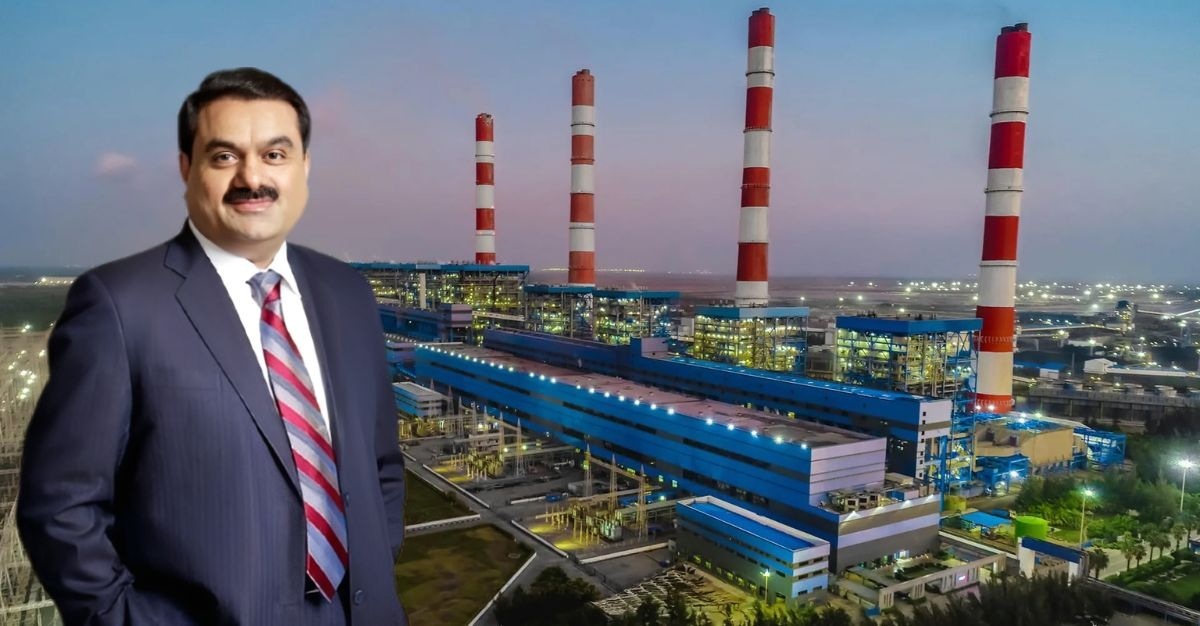
1. At a Glance – Boiler On, Cash Meter Spinning
Adani Power is that one thermal guy who was declared “finished” every five years… and then casually dropped ₹2,488 Cr profit in Q3 FY26 like it was chai money. At a market cap of ₹2.57 lakh Cr, stock chilling near ₹134, this isn’t a sleepy PSU thermal dinosaur — this is a cash-generating monster with coal in one hand and PPAs in the other.
Quarterly revenue came in at ₹12,451 Cr, down YoY and QoQ (yes, the numbers flinched), but operating margins are still flexing at 34%, which for thermal power is basically bodybuilding-level definition. ROE at 26%, ROCE at 22.5%, and debt-to-equity at 0.83 — not bad for a company that used to be debt’s favourite punching bag.
Returns?
- 5-year stock CAGR: 67%
- 3-year CAGR: 42%
- 1-year: 28%
No dividend, though. Why? Because when you’re expanding to 30,670 MW by 2032, you don’t distribute laddoos — you pour concrete.
So the big question before we dive deeper:
👉 Is Adani Power a cyclical cash cow… or a structural cash machine hiding inside a “thermal is dead” narrative?
2. Introduction – Thermal Power Is Supposed to Be Boring. This Isn’t.
Let’s get one thing straight. Thermal power is supposed to be boring, regulated, margin-capped, and slowly dying — at least on Twitter and in ESG panels with bad coffee.
And yet, here we are.
Adani Power, the largest private thermal power producer in India, has quietly turned itself from a debt-heavy, litigated, stressed asset collector into a high-margin, high-ROE cash factory. No fancy buzzwords. No AI cloud nonsense. Just electrons, coal, PPAs, and brutal scale.
The company operates 17,550 MW today, with another 4,520 MW under construction and a clear plan to hit 30,670 MW by 2032. That’s not incremental growth — that’s “I don’t care about narratives, I care about megawatts” growth.
What changed?
- Coal security improved
- PPAs got renegotiated or stabilised
- Merchant tariffs went wild during peak demand
- Old stressed assets got absorbed and sweated
- Balance sheet went from ICU to gym mode
Add to this:
- Exporting 1,600 MW to Bangladesh (Godda plant)
- Supreme Court settlements handing over ₹4,240 Cr + ₹1,348 Cr in claims
- And a management that clearly prefers EBITDA over PR
Still, revenue growth has slowed recently. Profits dipped QoQ. Merchant tariffs