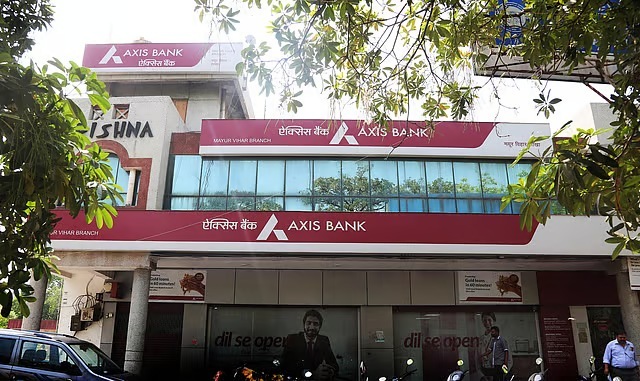
Axis Bank Q3 FY26 – ₹7,011 Cr Profit, 16.3% ROE, 60% Retail Loans, Digital 96% – Still Only 8.15% Promoter Holding, Yet Everyone Wants a Slice!
Date of Publishing -
Spotted a factual error — a wrong number, date, or fact? Tell us and we will check the source.
1. At a Glance
Axis Bank, India’s self-appointed poster boy for “private banking with extra masala,” just dropped its Q3 FY26 results like a K-drama cliffhanger. With a market cap of ₹3,90,648 Cr, a 1-year return of 32.6%, and a price sitting pretty at ₹1,258, it’s busy flexing a P/E of 14.9 and a book value of ₹662 (yes, that’s nearly double the average PSU bank, sorry SBI fans). Q3 net profit hit ₹7,011 Cr, up 3.98% QoQ, and quarterly sales came in at ₹33,709 Cr, because apparently “bada bank, bada revenue.” Return on Equity (ROE) stands at 16.3%, with capital adequacy at 16.63%. Meanwhile, digital transactions are at 96% – even your dadi has probably opened an Axis account on her smartphone. Gross NPA? Just 1.43%. Promoter holding? 8.15% – which is basically “everybody’s bank, nobody’s baby.” With 5,377 branches and more ATMs than Delhi has potholes, Axis is everywhere except your local chai tapri. Ready for the full forensic comedy?
2. Introduction
Welcome to Axis Bank Ltd, where private sector hustle meets digital swagger, and every investor is forced to ask: “If the bank is so big, why do I still get three OTPs for a single transaction?” Incorporated in 1993, Axis has gone from being “that new kid in banking” to “the one with more subsidiaries than the Ambani family’s wedding guest list.” Third-largest in the private sector, fourth-largest issuer of credit cards, and as obsessed with branch expansion as Indian aunties are with WhatsApp forwards.
Axis isn’t just a bank – it’s a financial ecosystem, complete with investment banking, securities, mutual funds, insurance (Max Life, anyone?), TReDS, and even Freecharge (for when you want to recharge your Jio and feel like a fintech pro). All this, and still a CASA ratio of 43%—not bad, not iconic. Oh, and don’t forget their international presence: Dubai, Singapore, Abu Dhabi, Sharjah, Dhaka, GIFT City. Basically, they’re everywhere, but try getting through to customer care in under five minutes.
So, why does every FI, DII, and random NRI want a piece of Axis Bank, even with low promoter skin in the game? Let’s deep-dive into the hilarious, number-loaded, and occasionally cringe-worthy saga of India’s most digital-friendly, capital-raising, compliance-dodging (hello, RBI caution) private bank.
3. Business Model – WTF Do They Even Do?
Axis Bank’s business model is basically: “If it moves, lend to it. If it doesn’t move, cross-sell. If it bounces, restructure.” Retail banking forms the meaty 61% of revenue (salaried junta and shopkeepers, unite!), with corporate/wholesale at 22%, treasury doing 15% (for the ex-IIT, Excel-loving crowd), and “other banking” contributing a lonely 2% (probably Freecharge users topping up Rs 10 at midnight).
Loan book split? Retail at 60%, Corporate 29%, SME 11%—because no portfolio is complete without some SME risk. Home loans are king (28% of retail), with personal, auto, and rural loans each elbowing for double digits. They even squeeze 7% out of credit cards. Axis’ digital pitch isn’t just for show: 96% of transactions, 87% of new cards, 74% of SIPs, and 70% of new savings accounts were sourced digitally. The day’s not far when your loan approval will come via WhatsApp forward.
Subsidiaries? Axis Capital closes 90 IB deals in a year, Axis Securities is the 3rd largest bank-led brokerage, and Axis AMC handles ₹2.74 lakh crore of AUM, with more assets under trust than the GDP of Nepal. And if you thought that was enough, they’ve even invested in Max Life and run one of three RBI-approved TReDS platforms. The business model? Every financial service under the sun. Customer base? Everyone except probably your dog.
Still confused? So are half their customers when they try to navigate the product list.
4. Financials Overview
Time for some forensic accounting – and yes, these are real numbers (figures in ₹ crore unless mentioned):