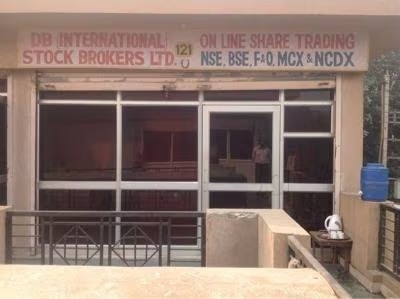
1. At a Glance – Blink and You’ll Miss It
DB (International) Stock Brokers Ltd is that old-school market participant which has seen Harshad Mehta, dotcom boom, global financial crisis, COVID panic, meme stock madness, and still shows up every quarter with some profit.
Market cap sits at ₹87.8 Cr, stock trades around ₹24.9, dangerously close to its 52-week low of ₹23.6, and almost 43% below the yearly high of ₹44. If price action was a mood, this stock is clearly sulking.
Latest quarterly numbers?
Sales ₹6.61 Cr, PAT ₹0.89 Cr, with YoY sales down 27.8% and profit down 13.6%. Not a blow-up, not a celebration either—more like that awkward silence after a bad joke.
Valuations are… interesting.
P/E at 20.8, P/B at 1.17, Debt-to-equity at 0.04, meaning leverage is almost nonexistent. Promoters hold 41.17%, with 6.45% pledged, which is small but worth watching.
So the big question:
Is this a sleepy broker waiting for a bull market, or a structurally limited business just jogging in circles?
Let’s dig.
2. Introduction – The Broker Who Refused to Die
Founded in 1992, DB (International) Stock Brokers Ltd is from the era when trading meant shouting on phones, not clicking apps. Unlike many peers who pivoted to fintech razzle-dazzle, DB has stayed… well… boring.
And boring is not always bad in capital markets.
The company operates primarily as:
- A stock broker
- A CDSL depository participant
- A capital market intermediary
No lending madness, no unsecured consumer loans, no crypto pivot. Just plain vanilla broking, derivatives, IPO facilitation, mutual fund distribution, and NRI services.
But here’s the twist:
Despite decent operating margins historically, growth has been wildly inconsistent. Revenues jump during bull phases and cool off the moment volumes dry up. This isn’t a SaaS company with recurring revenue—it’s a market mood ring.
So when markets go quiet, DB goes quiet too.
Is that a flaw—or just the nature of the beast?
3. Business Model – WTF Do They Even Do?
Imagine explaining DB Stock Brokers to a lazy but smart investor:
“They make money when people trade, when exchanges reward volume, and when surplus cash earns interest.”
That’s it. No rocket science.