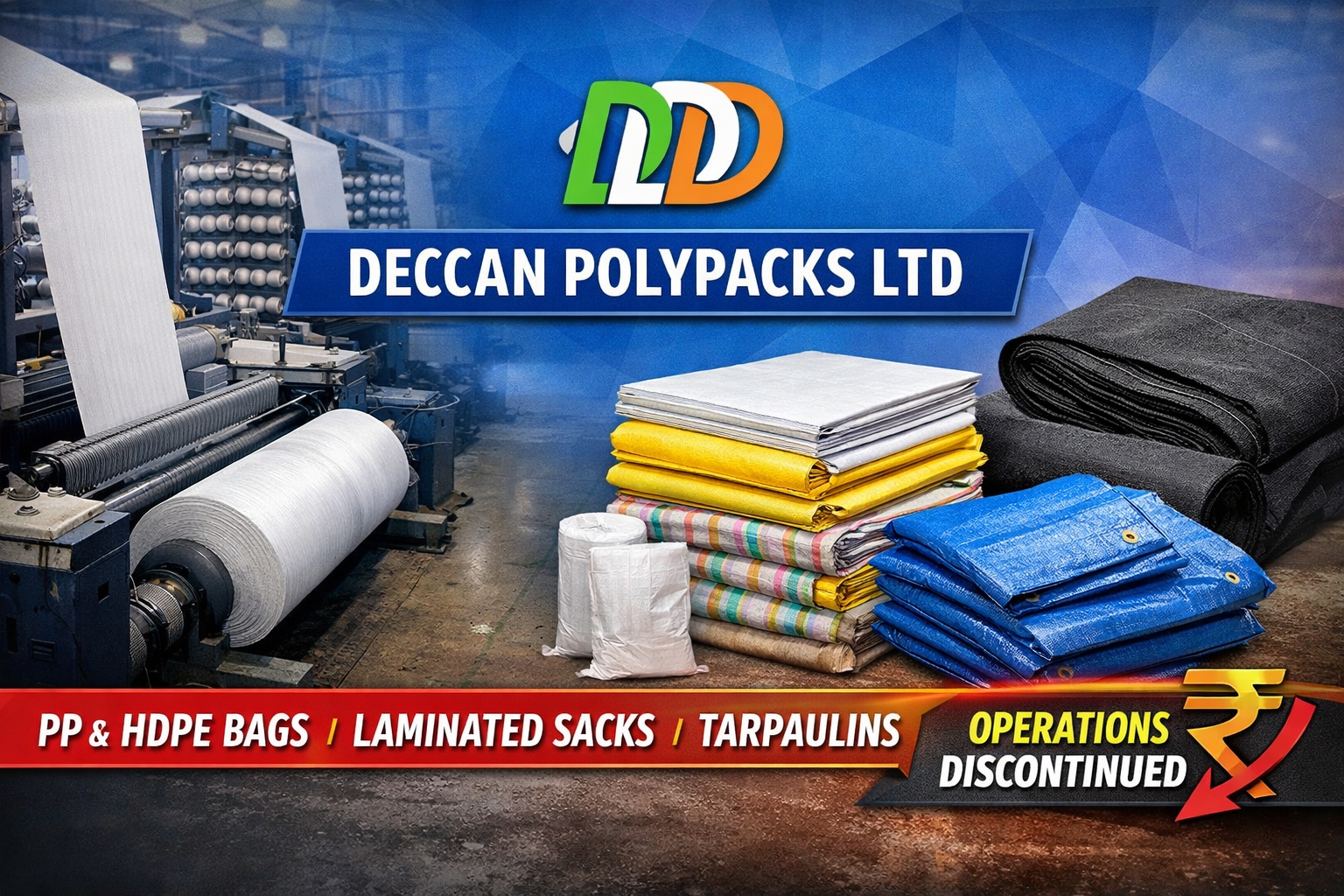
1. At a Glance – “Alive on BSE, Dead in Real Life”
Deccan Polypacks Ltd is that rare BSE species which has not done business since July 2014, yet continues to publish quarterly results, rotate directors, incur expenses, earn ‘Other Income’, and trade at a ₹6.13 Cr market cap. Current price sits at ₹29, down 17% in 3 months, while 1-year return is +123% because… well, markets love haunted houses.
Key numbers scream confusion:
- Market Cap: ₹6.13 Cr
- Sales: ₹0.00 Cr (yes, zero)
- PAT (TTM): ₹0.59 Cr (entirely from Other Income)
- Debt: ₹13.64 Cr
- Net Worth: Negative (Reserves at –₹15.71 Cr)
- Promoter Holding: 12.94% (down from 51%)
- Auditor Remark: Going-concern uncertainty
So the company:
- Doesn’t manufacture
- Doesn’t sell
- Has negative equity
- Has debt larger than market cap
- Yet still has 8,100+ shareholders
Ladies and gentlemen, welcome to zombie capitalism.
Question for you already: Is this a stock, or a financial séance?
2. Introduction – The Company That Time Forgot
Incorporated in 1984, Deccan Polypacks was once a legit plastic packaging manufacturer making PP/HDPE woven sacks, tarpaulins, liners, sheets, the whole plastic buffet.
Then came 15 July 2014.
Operations were officially discontinued.
Factories went silent.
Revenue went to zero.
But the company… never shut down.
Instead of liquidation, revival, merger, or delisting, Deccan Polypacks chose the “existential middle path”:
- Remain listed
- File quarterly results
- Pay expenses
- Earn interest/other income occasionally
- Accumulate losses
- Shrink promoter stake
- Keep auditors nervous
From FY18 onwards, Sales = 0.
Yet from FY18 to FY25, PAT exists.
How? Other Income.
What income? The dump doesn’t specify, so we don’t speculate.
This is not a turnaround story.
This is a balance-sheet survival story.
Let’s dissect the corpse properly.
3. Business Model – WTF Do They Even Do?
Officially, the company manufactures polypropylene woven bags and polyethylene sacks.
Reality check:
- No manufacturing
- No sales
- No customers
- No operating revenue since 2014
So what is the business model in FY26?
👉 Exist. File. Survive.
The company:
- Incurs administrative expenses
- Earns sporadic Other Income
- Pays no interest recently (despite debt)
- Has negligible assets
- Maintains