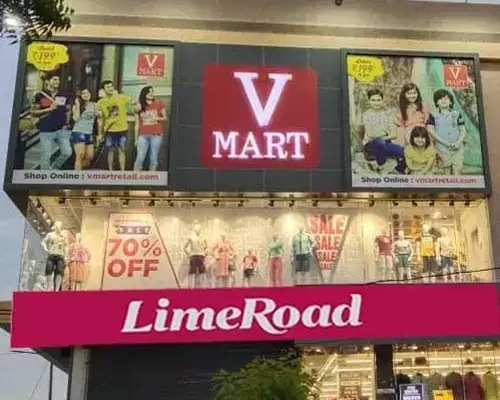
1. At a Glance – “Gaon se Mall tak” Retail Ka Audit
If Indian value retail had a mohalla ka Sharma ji ka beta, it would be V-Mart Retail Ltd.
Market cap of ₹4,707 Cr, current price hovering around ₹591, and a stock that has punished momentum lovers with -32.9% return in 3 months, yet keeps fundamental purists awake at night. Why? Because Q3 FY26 came in with ₹1,126 Cr revenue (+9.7% YoY) and ₹89.6 Cr PAT (+25.1% YoY) while operating margin quietly hit 19%.
488 stores. 70% in Tier 2, 3, 4 towns.
Average apparel price ₹334.
Monthly footfall 3.6 million humans walking in, touching clothes, bargaining with their eyes.
P/E is ~39.6x, which screams “expensive” until you remember peers trade like they’re selling Gucci to gold-plated customers. ROCE is 8.5%, ROE a modest 3.08%, balance sheet looks like it went through gym but still skips leg day.
So what is this?
A turnaround? A value trap? Or just a misunderstood desi fashion chain doing jugaad capitalism quietly?
Let’s open the audit file 📂.
2. Introduction – Value Retail Ka Mahabharat
Indian fashion retail is brutal.
Customers want sasta, tikau, trendy, discounted, returnable, Instagram-worthy clothes… and they want it yesterday.
In this battlefield, V-Mart chose a dangerous path:
👉 Ignore metros
👉 Ignore premium malls
👉 Chase Bharat, not India
While shiny brands fought for Delhi NCR rentals, V-Mart quietly opened stores in Banka, Ballia, Begusarai and places where Zomato riders still ask for landmarks.
But this strategy came with pain:
- COVID nuked footfalls
- Fixed lease costs didn’t care
- LimeRoad acquisition initially burned cash like a bonfire
Fast forward to FY25–FY26, and suddenly:
- Losses shrank
- Store productivity improved
- Same Store Sales Growth turned positive (~10%)
Question is: Is this structural recovery or just a lucky quarter?
3. Business Model – WTF Do They Even Do?
Imagine