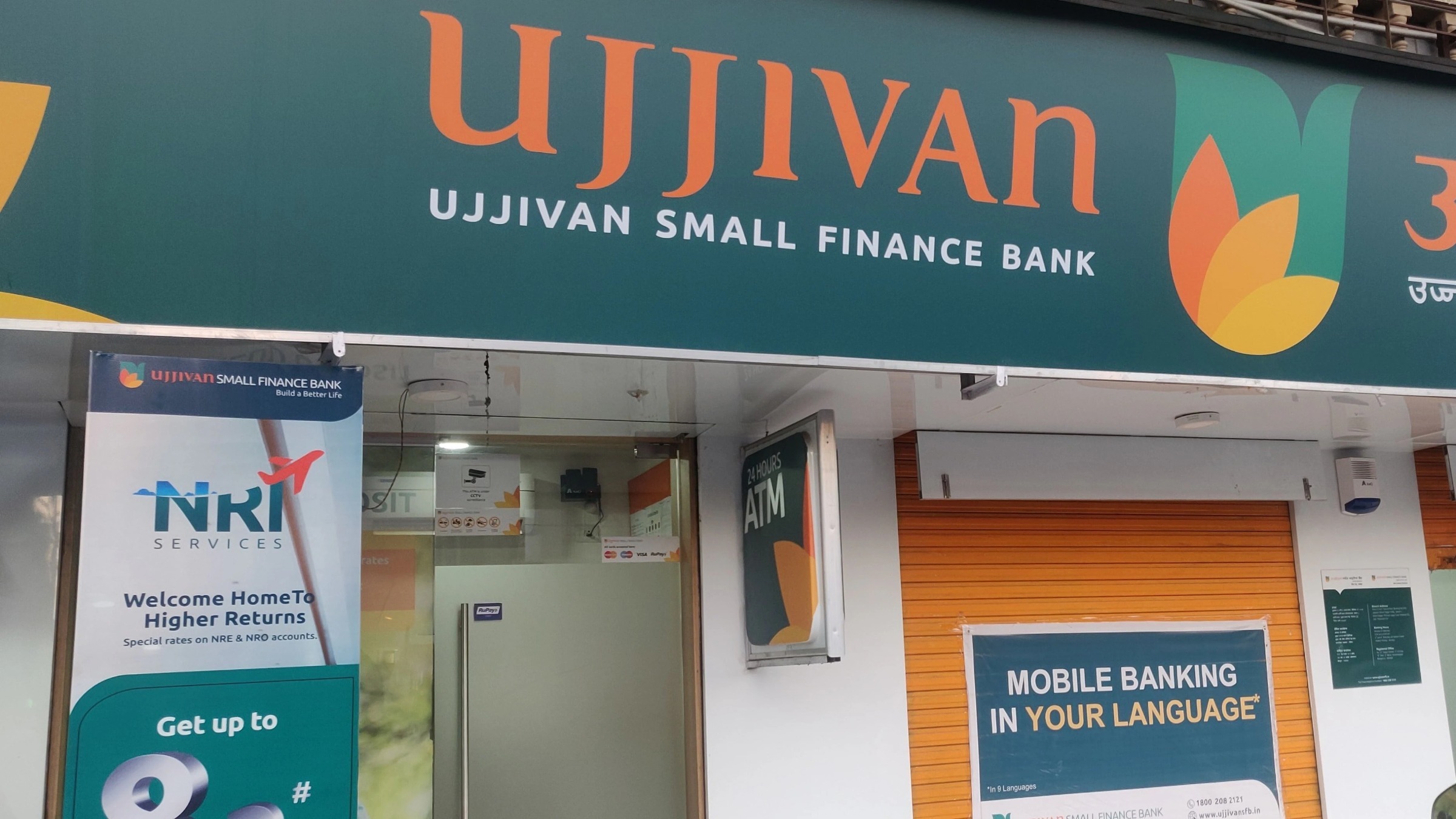
1. At a Glance – Blink and You’ll Miss the Punchline
Let’s get the obvious out of the way. Ujjivan Small Finance Bank is trading around ₹62, with a market cap of ~₹12,028 Cr, after delivering a Q3 FY26 PAT of ₹186 Cr, up 71% YoY. Three-month return? ~19%. One-year return? A spicy ~80%. Suddenly, everyone who ignored this stock at ₹30 is pretending they “tracked it closely.” Sure.
But before we start distributing laddoos, let’s note the contradictions: ROE at 12.4%, ROA 1.65%, NIM compressed to ~8.8%, and a P/B of ~1.93× for a bank that still calls itself “small” while managing ₹49,614 Cr of assets. GNPA has cooled to 2.18%, NNPA at 0.67%, and CAR a comfortable ~21.6%.
Deposits stand tall at ₹42,223 Cr, loans at ₹37,057 Cr, and CASA stubbornly at ~26%. This is not a fairy tale. This is a bank in therapy—recovering from microfinance trauma, learning retail manners, and flirting with the RBI for a Universal Banking License.
So the real question: is this a disciplined turnaround story… or just a well-dressed recovery rally? Ready to find out?
2. Introduction – From Microfinance PTSD to Banking Aspirations
Ujjivan began life in 2005 as an NBFC with a noble mission: serve the “economically active poor.” Translation: lend to people banks were too scared to touch. It did well, grew fast, and then—like every microfinance story—hit the inevitable potholes: asset quality cycles, regulatory shifts, and pandemic hangovers.
In 2017, it became a Small Finance Bank. In 2024, it completed the reverse merger with Ujjivan Financial Services, wiping out the promoter holding to 0% and turning into a fully professionally run institution. No promoter safety net. No emotional support. Just quarterly numbers and RBI glare.
Fast forward to FY26: GNPA has collapsed from 7.1% (FY22) to ~2.2%, capital ratios are healthy, and profitability is back. Yet margins are thinner, funding costs are real, and growth now depends less on SHG magic and more on boring things like CASA, MSME underwriting, and retail discipline.
So yes, Ujjivan has survived. But thriving? That’s the exam it’s currently writing—without a cheat sheet.
3. Business Model –