1. At a Glance – Fashion Ramp or Accounting Catwalk?
Thomas Scott India Ltd walks into Q2 FY26 wearing a sharply pressed balance sheet and a slightly overconfident valuation multiple. Market cap stands at ₹488 Cr, current price ₹333, and the stock has politely disappointed momentum chasers with -4.5% return over 3 months and -14.8% over 1 year. Meanwhile, the business clearly didn’t get the memo about slowing down.
The latest Quarterly Results show ₹56.9 Cr in sales (up 40% YoY) and ₹4.72 Cr PAT (up 66.8% YoY). Operating margin strutted in at 14.88%, which for an apparel-and-retail-heavy company is not bad at all — especially one juggling B2C, B2B, private labels, licensed brands, and contract manufacturing like a Delhi wedding buffet.
Return ratios look respectable: ROCE 20.4%, ROE 16.4%, debt is under control at ₹26.6 Cr, and Debt/Equity 0.21 suggests lenders are not sleeping with one eye open. The stock trades at 31.8x P/E, which is expensive if this is just a shirt seller, but maybe justified if this is morphing into a platform-led fashion execution engine.
But here’s the real hook: sales CAGR of 65% (3Y), profit CAGR of 176% (3Y), and a backend quietly getting AI-powered. Is Thomas Scott stitching a scalable fashion-tech story, or just enjoying a lucky fashion season? Let’s open the wardrobe.
2. Introduction – From Tailor Shop Vibes to Algorithmic Fashion
Indian apparel companies usually fall into two categories. One: legacy exporters crying about cotton prices and Europe demand. Two: D2C Instagram brands burning cash faster than fabric scraps. Thomas Scott somehow decided to sit awkwardly in the middle — doing own brands, other brands, licensed brands, marketplaces, exports, contract manufacturing, and now… AI tools. Ambitious? Yes. Confusing? Also yes.
Incorporated in 2010, Thomas Scott India Ltd manufactures and trades garments and fabrics, with a heavy focus on men’s formal and business-casual wear. Shirts are the hero product, but bottoms, bags, and accessories have joined the party. The company sells through Myntra, Amazon, Flipkart, Ajio, Tata Cliq, and even Namshi (Dubai) — because why not ship shirts to the Middle East too?
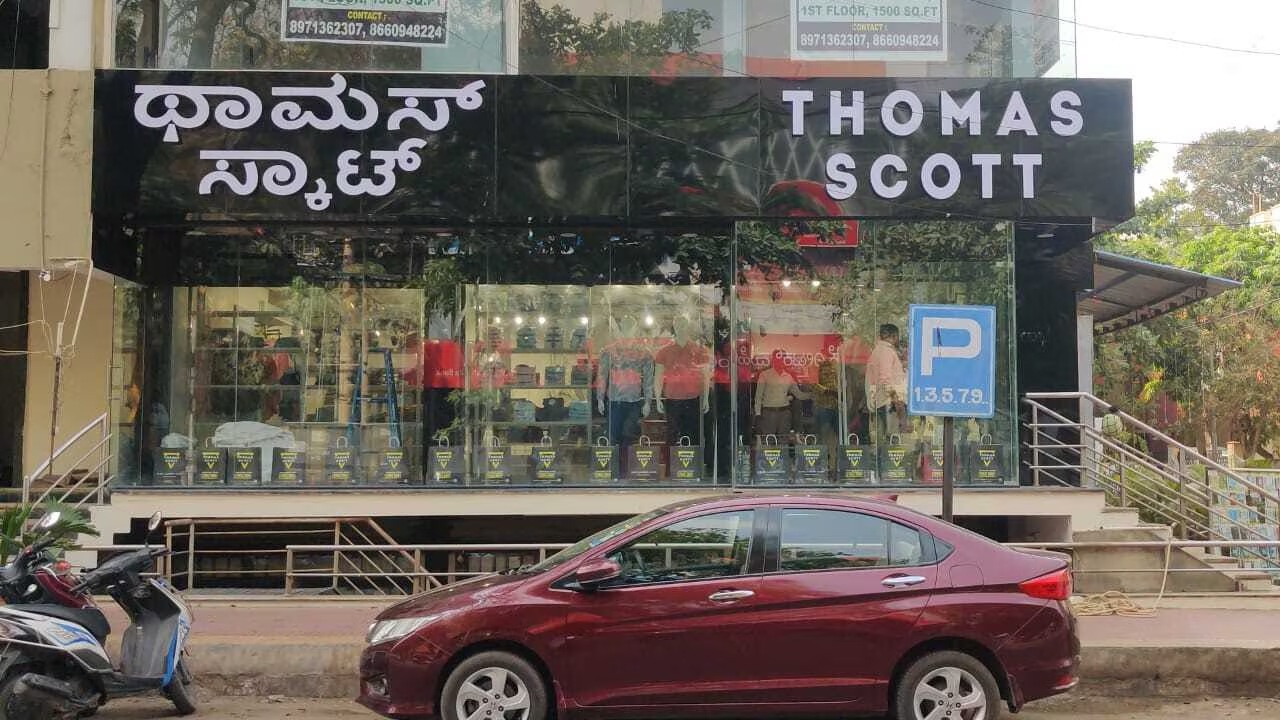
Offline retail exists but is clearly not the main character. Five exclusive stores in Bangalore are more like brand signboards than revenue engines. The real volume comes from marketplaces and B2B relationships.
What’s interesting is not just growth, but how growth is happening. Thomas Scott is increasingly behaving like a fashion execution partner rather than a single-brand apparel company. It designs, sources, manufactures, catalogs, warehouses, and fulfills — sometimes for itself, sometimes for others.
Question for you: do you value this as a fashion brand, or as a backend fashion infrastructure company?
3. Business Model – WTF Do They Even Do?
Explaining Thomas Scott’s business to a lazy investor requires diagrams, caffeine, and patience. But let’s simplify.
A. B2C Business – Many Brands, Many Platforms
The flagship Thomas Scott brand sells premium shirts and casual wear online. But