SML Mahindra Ltd Q3 FY26 – ₹539 Cr Revenue, 62% Growth, 40× P/E, and a Bus Company That Accidentally Became a Multibagger
1. At a Glance
If there was an award for “Most Unexpected Comeback in Indian Auto History”, SML Mahindra Ltd would already be practising its victory speech. Once a sleepy Punjab-based bus-and-truck maker that investors remembered only during road transport tenders, the company is now a ₹6,379 crore market-cap beast trading at ₹4,406 per share, up 233% in one year. Yes, you read that right — not crypto, not SME IPO madness, but a good old commercial vehicle company selling buses.
Q3 FY26 numbers dropped like a mic: ₹539 crore revenue, up 62.5% YoY, with PAT of ₹17.5 crore, up an eye-watering 3,209% YoY (because last year’s base was practically on life support). ROE is flexing at 36.4%, ROCE at 27.1%, and the stock is casually chilling at a 40× P/E, telling value investors to wait outside with chai. Promoter holding has jumped to 59%, debt is down to ₹254 crore, and buses — yes, literal buses — are doing 67% of revenue heavy lifting.
So the big question, is this a genuine Mahindra-fuelled turnaround story, or are we all just passengers on a very fast, very expensive bus?
2. Introduction – From Isuzu Cousin to Mahindra’s New Favourite Child
SML’s life story reads like a Bollywood second-half comeback. Incorporated in 1983 as Swaraj Vehicles, the company went through Japanese alliances, identity crises, and long periods of investor neglect. Mazda left. Isuzu stayed. Sumitomo hovered. For years, SML Isuzu was that company you knew existed but never bought because volumes were low, margins were meh, and cyclicality was brutal.
Then 2025 happened.
In August 2025, Mahindra & Mahindra Limited acquired 58.96% stake, effectively taking control. Sumitomo exited. The board was reshuffled. Top management changed. Auditors changed. Even the company’s name changed to SML Mahindra Limited — because nothing says transformation like a rebranding exercise backed by serious capital.
And suddenly, the numbers started behaving. Sales volumes surged. Operating margins crossed 10%. ROCE went from single digits to mid-20s. The stock went from “ignored” to “over-owned” faster than you can say open offer at ₹1,554.
But remember — commercial vehicles are cyclical, brutal, and unforgiving. So before we declare this a Mahindra miracle, let’s actually open the bonnet.
3. Business Model – WTF Do They Even Do?
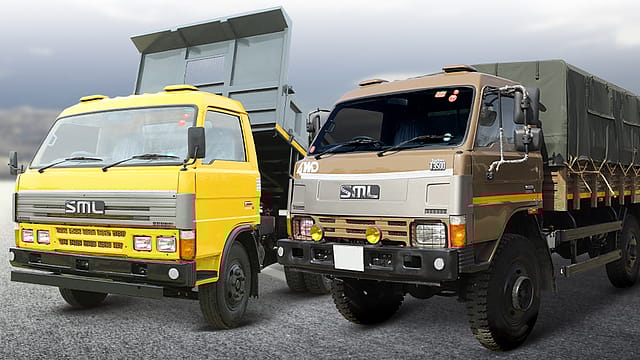
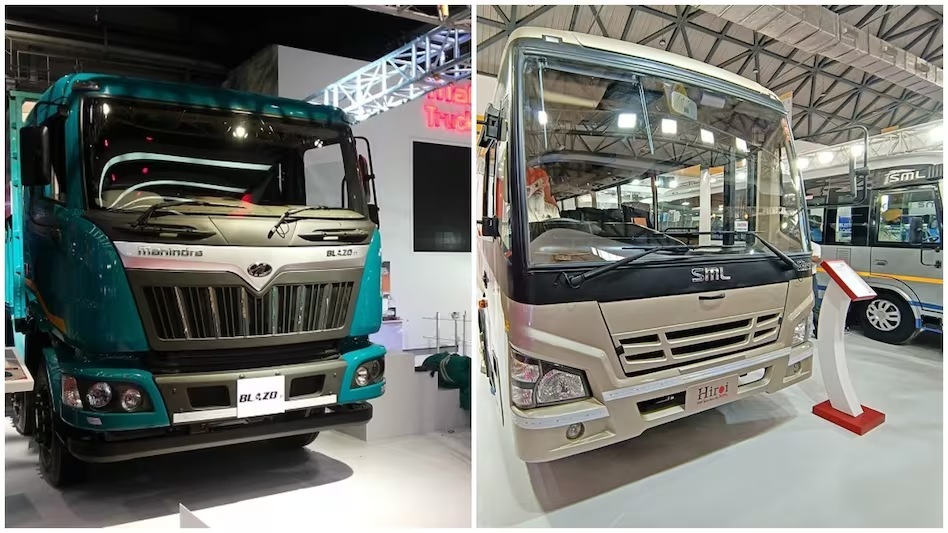
At its core, SML Mahindra does one thing: it makes buses and trucks, mostly for India, mostly for state transport undertakings, schools, staff transport operators, and regional logistics players.
The revenue mix is hilariously unbalanced in the best possible way:
Passenger vehicles (buses): 67%
Cargo vehicles (trucks): 26%
Spare parts and services make up the rest
This is not Tata Motors with 17 segments or Ashok Leyland with global ambitions. This is a focused, no-nonsense CV company that knows buses better than your local conductor knows shortcuts.
The company operates in:
LCV (Light Commercial Vehicles)
MCV (Medium Commercial Vehicles)
Manufacturing happens at Nawanshahr, Punjab, with installed capacity of 24,000 units per annum. FY23 volumes were ~12,400 units, so yes — there’s still headroom, assuming demand doesn’t fall off a cliff.
Geographically, it’s almost entirely domestic (98% India), with token exports to Bangladesh, Bhutan, and Nepal,
all EV CV will be rolled out exclusively on SML platform. – CEO
I think market has missed this very important point. Smallest EV CV in India right now is arnd 8k crore market cap and we are talking abt M&M ‘s baby who will start delivering EVCV by Q2/Q3 FY 27. Lets keep the fingers crossed

One Response
all EV CV will be rolled out exclusively on SML platform. – CEO
I think market has missed this very important point. Smallest EV CV in India right now is arnd 8k crore market cap and we are talking abt M&M ‘s baby who will start delivering EVCV by Q2/Q3 FY 27. Lets keep the fingers crossed