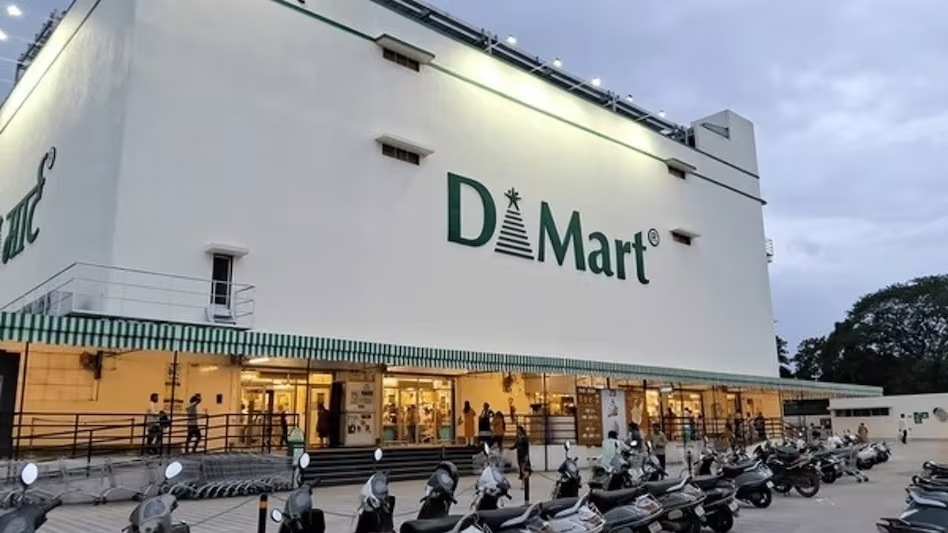
1. At a Glance – The DMart Paradox Nobody Escapes
₹2.47 lakh crore market cap. A stock price hovering around ₹3,801. A trailing P/E of 86.4 that makes value investors clutch their Excel sheets and growth investors smile nervously. And yet, every Sunday afternoon, DMart parking lots look like wedding venues. Avenue Supermarts Ltd is that rare Indian retailer which runs on ruthless cost discipline, refuses to discount its valuation for anyone, and still manages to grow faster than your monthly grocery bill.
Q3 FY26 (quarter ended December 2025) came in with ₹18,101 crore in sales, up 13.3% YoY, and PAT of ₹856 crore, growing 18.3% YoY. EPS for the quarter stood at ₹13.15, which annualises to ₹52.6 because yes—this is Quarterly Results, lock it, don’t argue with it later. Margins stayed stubbornly boring (OPM ~8%), debt stayed almost invisible (Debt/Equity 0.07), and promoter holding stayed glued at 74.6%, like Damani sahab doesn’t trust anyone else with the cash register.
Over the last three months, the stock is down ~12%, six months down ~5%, and five years up a sleepy ~5%. And yet, DMart remains the most discussed retailer in India because it does one thing exceptionally well: it sells everyday essentials without drama, while the market adds all the drama on its behalf. Curious already? Good. Let’s open the billing counter.
2. Introduction – The Zen Monk of Indian Retail
If Indian retail were a Bollywood film, DMart would not be the hero doing slow-motion entries. It would be the quiet uncle who owns half the town’s real estate and never raises his voice. Founded in 2002 in Mumbai, Avenue Supermarts Ltd built its empire on a deceptively boring philosophy: Everyday Low Cost – Everyday Low Price. No flashy loyalty gimmicks, no “Big Billion Day” madness, no influencer reels explaining discounts. Just low prices, consistently, forever.
While peers chase margins with private labels or burn cash online, DMart keeps its head down, negotiates hard with suppliers, owns a large chunk of its store real estate, and rotates inventory like a hawk. The result? A business that compounds sales at 24% CAGR over 3 years and profits at 22% CAGR, yet still gets accused of being “too expensive” every single year.
Q3 FY26 also came with management changes—MD & CEO Ignatius Noronha exits Jan 31, 2026, with Anshul Asawa stepping in as CEO from Feb 1 and MD from April. The market panicked for approximately five minutes, then remembered that DMart is less about CEOs and more about systems. The question is not whether DMart can survive leadership changes—it’s whether Indian consumers can survive without DMart discounts. Be honest, when was the last time you walked out of a DMart without overspending?
3. Business Model – WTF Do They Even Do?
Let’s simplify DMart for the lazy genius investor. They buy cheap, sell cheap, and sell a lot. That’s it. But the devil, as always, lives in the supply chain.
DMart operates large-format supermarkets focused on Foods (56% of H1 FY25 revenue), Non-Foods FMCG (21%), and General Merchandise & Apparel (23%). These are boring categories with brutal competition—but also insanely high repeat purchases. Milk doesn’t wait for macro tailwinds. Rice doesn’t care about interest rates.
The real magic lies in three things. First, procurement muscle—DMart negotiates directly with manufacturers, often pays faster than peers, and extracts lower prices. Second, operational efficiency—limited SKUs,