1. At a Glance – The Kind of Business That Politicians Understand Instantly
If you’ve ever wondered what regulatory moats look like when they put on chappals and sit in Mumbai suburbs, welcome to G M Breweries Ltd. A company with a market capitalisation of about ₹2,727 crore, a current price hovering around ₹1,194, and returns that look like someone accidentally mixed ethanol into rocket fuel. In just the last three months, the stock delivered roughly 56% returns, while over six months it flexed a 60% move—all without shouting about AI, EVs, or “platform synergies.” The latest quarter ended December 2025 came with ₹202 crore in sales and ₹42 crore in PAT, translating into a mind-bending 91% YoY profit growth. The company runs zero debt, sports a ROCE of ~18%, an ROE of ~14.6%, and pays a small but polite dividend (0.63%), like a disciplined Maharashtrian uncle who never forgets Diwali envelopes. The real kicker? G M Breweries contributes 25–30% of Maharashtra’s entire country liquor excise duty. This isn’t a drinks company; it’s a semi-official tax collection department with branding.
2. Introduction – When Monopoly Meets Mumbai, Thane & Palghar
Founded in 1981, G M Breweries didn’t chase glamour. It chased geography. Somewhere along the way, it locked in a monopoly over country liquor across Mumbai, Thane, and Palghar—districts where population density, consumption patterns, and regulatory frameworks combine into a beautiful excise-paying cocktail. While everyone else dreams of premium whisky ads during cricket matches, GMB quietly ensures that the state treasury doesn’t miss its monthly allowance.
The company manufactures and markets Country Liquor (CL) and Indian-Made Foreign Liquor (IMFL), but the real hero is country liquor—steady, predictable, recession-resistant, and blissfully immune to global lifestyle trends. In FY24 and FY25, management leaned harder into CL because IMFL competition got crowded. Translation: when fancy brands started elbowing each other, GMB went back to its fortress.
This is not a company that reinvents itself every year. It compounds by not doing stupid things. No debt-fuelled expansions. No overseas adventures. No influencer campaigns. Just a fully automated plant in Thane churning out up to 50,000 cases per day, with annual bulk liquor capacity of 13.76 crore litres, of which only ~55.74% was utilised in FY25. Spare capacity is sitting there quietly, like a loaded revolver on the table.
3. Business Model – WTF Do They Even Do? (Short Answer: Sell What Sells)
Imagine explaining G M Breweries to a smart but lazy investor. Here’s the cheat code: they sell alcohol that people already want, in areas where they are the only legal option.
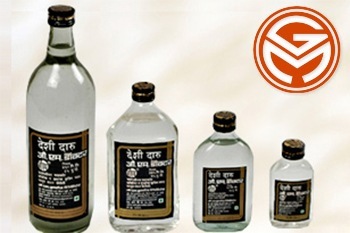
The product portfolio includes household names (in the desi sense) like G.M. Santra, G.M. Doctor, and G.M. Limbu Punch. These aren’t aspirational brands; they’re habitual. Consumption is driven by routine, not Instagram. In 2022, the company launched “G M Black”, dipping its toes into broader domestic IMFL waters—but without losing focus.
Manufacturing is centralised in Thane, Maharashtra, with a fully automatic facility that has scaled from 200 cases a day at inception to industrial-scale volumes. The operational secret sauce lies in packaging flexibility. To counter glass bottle shortages, price volatility, and breakages, GMB shifted heavily toward PET bottles, which accounted