1. At a Glance
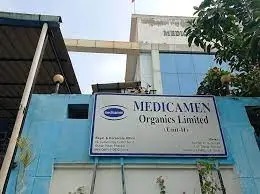
Medicamen Organics Ltd is that quiet pharmaceutical kid in the classroom who doesn’t shout, doesn’t dance on social media reels, but suddenly tops the class when nobody is watching. With a market capitalisation of roughly ₹31 crore and a current price hovering near ₹26.4, the stock has had a rough last year, down almost 49%, like a Bollywood actor after one bad Friday. But behind this bruised share price sits a business clocking ₹17.85 crore in H1 FY26 sales, a PAT of ₹2.04 crore, and an operating margin flexing at a healthy 19.16%. The P/E at 6.76 looks suspiciously low in an industry where the median peer P/E chills above 30. ROE of nearly 18% and ROCE close to 17% suggest this is not a zombie pharma unit surviving on jugaad alone. Debt stands at ₹15.67 crore with a debt-to-equity of 0.48 — not angelic, not demonic, somewhere in the middle like a typical Indian uncle. Add in African expansion, cosmetics dreams, nutraceutical flirting, and government tenders, and suddenly this small-cap pharma doesn’t look so small anymore. Curious yet, or already judging by the price chart?
2. Introduction
Medicamen Organics Ltd was incorporated back in 1995, which in Indian pharma years means it has survived liberalisation hangovers, price control nightmares, USFDA panic attacks, and more tender paperwork than a government babu’s desk. While most investors chase shiny branded pharma giants, Medicamen quietly manufactures tablets, capsules, syrups, ointments, and dry powder sachets — the unglamorous but essential bread-and-butter of healthcare.
This is not a brand-building, billboard-loving company. It is a B2B workhorse. Contract manufacturing, third-party production, government tenders, merchant exporters — Medicamen prefers invoices over Instagram followers. And in FY24, nearly 98% of revenue came from contract manufacturing. That tells you exactly what kind of personality this company has: “Boss, bas order do, hum bana denge.”
The recent half-year numbers show decent growth momentum, but the market seems unconvinced, probably because small-cap pharma has the reputation of promising the moon and delivering paracetamol. Yet Medicamen has expanded capacity, acquired a pharmacy business in Rwanda, launched subsidiaries for cosmetics and personal care, and keeps filing press releases like a startup discovering LinkedIn.
The big question is simple: is this a boring compounder hiding in plain sight, or a classic low-P/E value trap with African dreams and Indian working capital stress? Let’s dissect this tablet strip one layer at a time.
3. Business Model – WTF Do They Even Do?
Medicamen Organics does not “discover molecules” or “change global healthcare paradigms.” It manufactures dosage forms. Lots of them. Tablets, capsules, syrups, ointments, dry powder sachets — if it can be swallowed, applied, or dissolved, Medicamen probably makes it.
The company operates largely on a B2B contract and third-party manufacturing model. This means other pharma companies — both domestic and international — outsource manufacturing to Medicamen. Products are marketed under partner brand names through loan licensing and third-party distribution agreements. Translation: Medicamen cooks, others serve.
Its product universe includes over 170 export products and 80+ domestic products, with 84 product registrations under partner names. Client concentration is high, with the top 10 customers contributing nearly 79% of revenue — which is either efficiency or anxiety, depending on your mood.
Medicamen also participates in government tenders, supplying to hospitals, PSUs, and even armed