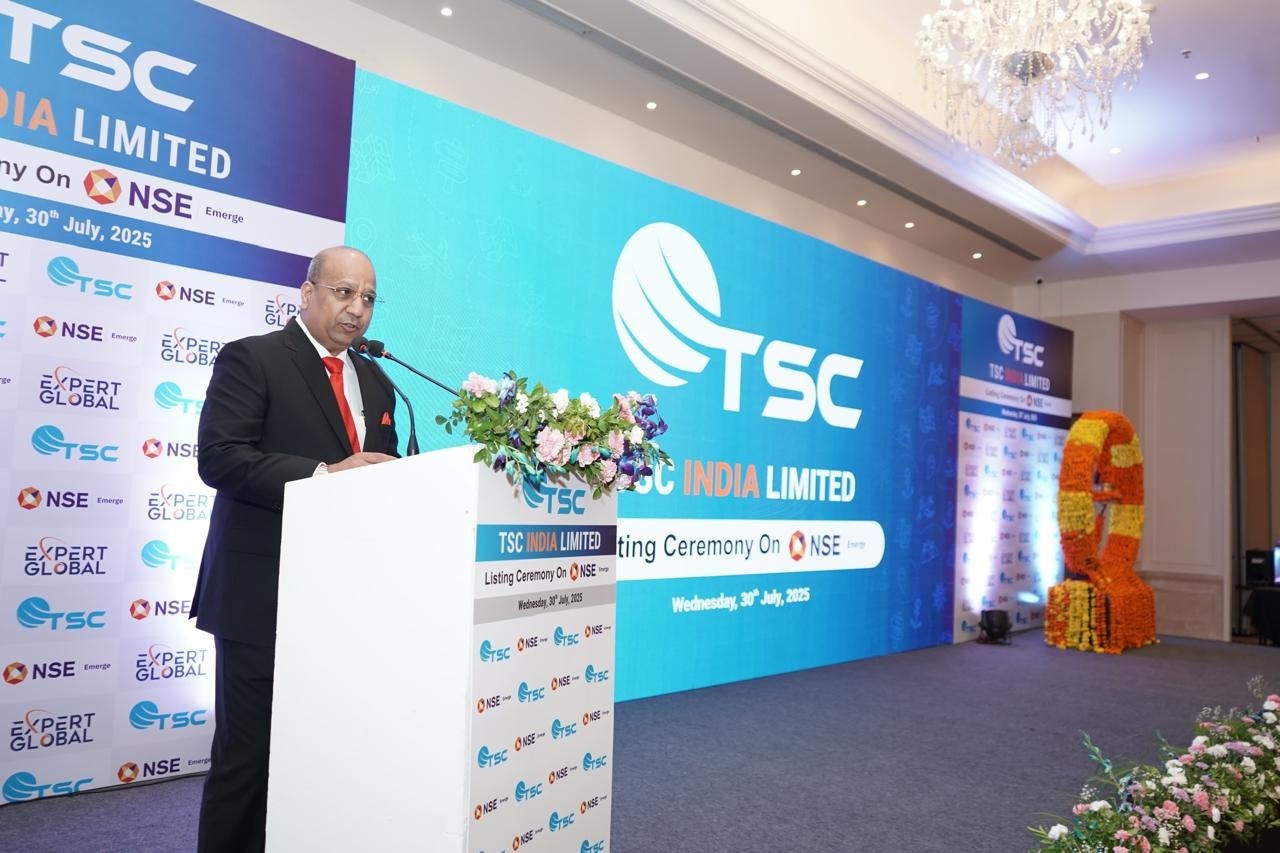
TSC India Limited H1 FY26 Results: ₹15.7 Cr Revenue, ₹3.43 Cr PAT, 34% OPM — Budget Airline Margins, But Balance Sheet Turbulence
1. At a Glance – Seat Belt On, Turbulence Ahead
TSC India Limited is one of those rare SME stocks that makes you rub your eyes twice — once because the margins look airline-business-defying, and once because the balance sheet quietly coughs in the background. With a market cap of about ₹68.8 crore and a current price hovering around ₹49, the stock has already delivered a -23% return over the last three months, proving that even profitable companies can experience mid-air pockets.
The latest half-yearly consolidated results (H1 FY26) show revenue of ₹15.7 crore and a PAT of ₹3.43 crore, translating into an operating margin north of 34%. That’s not a typo — for a travel services company that essentially sells airline tickets, these are margins most airlines would frame on their office walls. ROE stands at a spicy 39.6%, ROCE at 22%, and the P/E ratio sits around 13, well below the industry average of ~40.
But before you start clapping like you just landed early, remember: debtor days are a jaw-dropping 428 days, borrowings are ₹26.4 crore, and working capital days have ballooned to 131. This is a company flying business class on the P&L but dragging checked-in luggage full of receivables on the balance sheet. Curious already? Good. Keep reading.
2. Introduction – Welcome to the World of B2B Travel Jugaad
The Indian travel industry has two extremes. On one side, you have flashy consumer platforms spending crores on IPL ads. On the other, you have quiet B2B operators who don’t care about brand recall because their customers are corporate finance teams who only remember one thing: lowest fare, fastest refund.
TSC India Limited firmly belongs to the second category. Formerly known as TSC Travel Services Ltd, the company has rebranded itself but not its DNA — it is a pure B2B travel management company focused primarily on air ticketing. No glossy holiday packages, no influencer reels, no honeymoon discounts. Just flights, invoices, and corporate Excel sheets.
Founded years before travel tech became fashionable, TSC has slowly built a network across North, West, and Central India, operating out of Jalandhar with branches in Ahmedabad, Jaipur, Lucknow, and Chandigarh. By June 2024, it had over 2,100 registered corporate customers and was managing around 12,000 bookings per month.
And here’s the funny part: despite operating in an industry notorious for low margins, TSC consistently reports operating margins above 30%. Either they’ve cracked a secret algorithm, or they are very good at squeezing commissions, incentives, and rebates from airlines and GDS platforms. Or both.
But every good comedy has a twist. The same company that prints profits also shows negative operating cash flows and massive receivables. So the big question is: is this a disciplined B2B cash machine, or a working-capital-heavy beast wearing a profit mask? Let’s dissect.
3. Business Model – WTF Do They Even Do?
Imagine you’re a mid-sized Indian company with employees flying every week. You don’t want your staff booking random flights on random apps, losing invoices, and calling HR at midnight. You outsource the headache. Enter TSC India.
TSC operates as a B2B travel management intermediary. It doesn’t own planes, hotels, or airports. Instead, it sits between airlines, GDS platforms, and corporate clients. Its core service is air ticketing — domestic and international — supported by itinerary planning, booking management, analytics, and 24/7 emergency support.