1. At a Glance
Rukmani Devi Garg Agro Impex Ltd is that classic Indian SME story where grain bags move faster than PowerPoint slides. Listed on the BSE SME platform in October 2025, the company today sits at a market cap of roughly ₹69.5 Cr with a stock price hovering around ₹78.3. Sales for FY25 came in at ₹327 Cr, while the latest half-year (Sep 2025) alone clocked ₹302 Cr of revenue, which is basically saying, “bhai, pura saal ek taraf, aadha saal ek taraf.”
Operating margins are thin at ~3–4%, because this is agri trading, not SaaS. But ROE of ~26% and ROCE of ~19% suggest the balance sheet is being sweated properly, like a wholesaler squeezing profit out of every sack of wheat. Debt stands at ~₹32 Cr with a debt-to-equity of ~0.87, which is not scary but definitely not debt-free spirituality either.
This is a company where volumes talk, margins whisper, and working capital shouts. The real masala is in how quickly they rotate stock and money, not in fancy branding jingles. If you like businesses that smell of mandi dust rather than boardroom perfume, you’ll want to keep reading.
2. Introduction
Let’s be honest. When you hear “Agro Impex,” your brain doesn’t jump to innovation, disruption, or AI-powered blockchain wheat. It jumps to trucks, godowns, brokers, and that uncle who knows mandi prices before Google does.
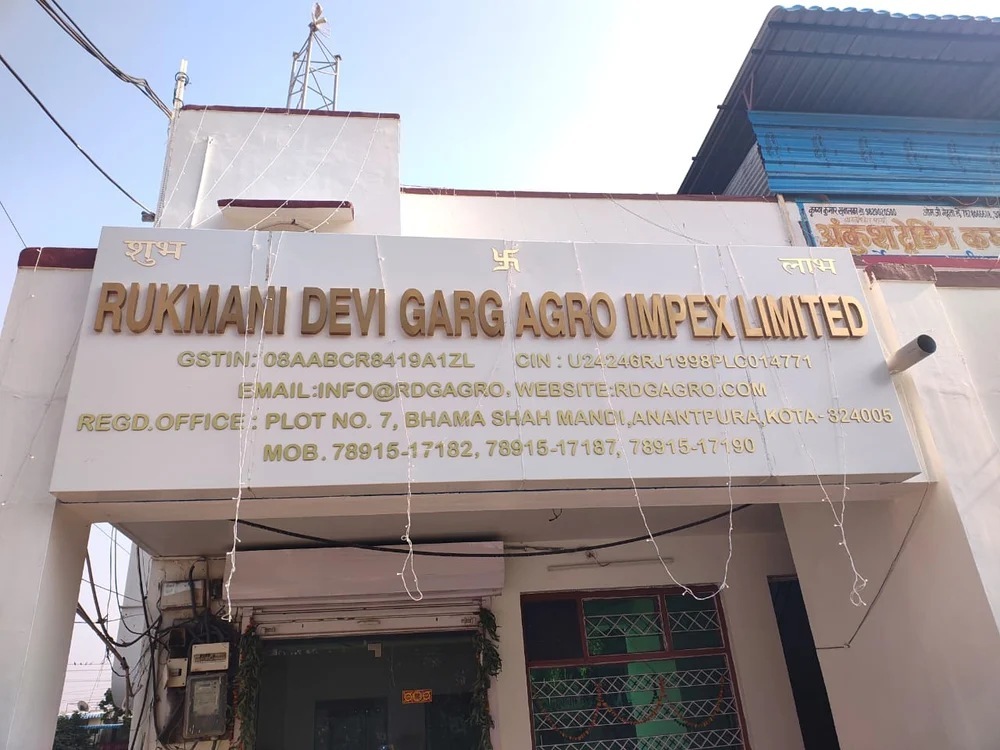
Rukmani Devi Garg Agro Impex Ltd is exactly that kind of business. No unnecessary drama. No app downloads required. The company aggregates agricultural produce, grades it, processes some of it, brands a bit of wheat, and sells the rest in bulk to corporates, flour mills, oil mills, exporters, and agri-processors.
This is not a consumer glamour story. This is a supply chain grind story. The company operates from Kota, Rajasthan, one of India’s biggest grain markets, where wheat moves in thousands of tonnes and margins are decided by timing, relationships, and logistics efficiency.
The IPO raised ₹22.5 Cr, mainly for working capital, which tells you everything you need to know about this business. No “capex for future growth” poetry. Just plain, boring, necessary money to buy more grain, store it, and sell it.
Now the question is simple: can a low-margin, high-volume agri aggregator create consistent shareholder value, or will it remain a mandi-level cash rotation machine with equity volatility? Let’s dig.
3. Business Model – WTF Do They Even Do?
Imagine a giant funnel. At the top are farmers, traders, and local suppliers across Rajasthan and nearby states. At the bottom are corporates like ITC, flour mills, oil mills, and exporters. Rukmani Devi Garg Agro Impex sits in the middle, clipping a small margin per transaction but doing it at scale.
The company procures commodities such as wheat, mustard, chickpea, maize, soyabean, coriander, and flax seeds. Some of this wheat is processed and sold under its own brands like Sharbati, Happy Family, and Taj Mahal. The rest is sold in bulk as traded products.
In FY25, around 70% of revenue came from traded products and about 30% from branded/processed wheat. Category-wise, processed wheat (including mill quality) formed ~38%, while traded products contributed ~62%.
This tells you the truth: branding exists, but trading pays the bills. Branding gives slightly better margins and stability, but bulk