Tapi Fruit Processing Ltd H1 FY25 – ₹10.9 Cr Sales, ₹-1.0 Cr Loss, ROCE -10.3%: When Fruit Jelly Meets Balance Sheet Acidity
1. At a Glance
If nostalgia had a balance sheet, Tapi Fruit Processing Ltd would be that kid who sold imli balls in school but now files half-yearly results. Market cap hovering around ₹29.7 Cr, current price at ₹69, and a six-month return that politely says “don’t look at me” (-5.97%). The latest half-yearly numbers show sales of ₹10.9 Cr with PAT of ₹-1.0 Cr, meaning revenue is walking forward while profits are moonwalking backwards. ROCE at -10.3% and ROE at -14.8% suggest capital is being used, just not loved. Debt stands at ₹7.17 Cr, current ratio at 0.79, and interest coverage at -4.20—which is accounting language for “interest is winning this round.” Yet, despite the financial indigestion, the company is busy expanding capacity, launching gummies, and dreaming of Vision 2030. Is this a sugar rush before fitness kicks in, or another packet of sour candy? Keep reading.
2. Introduction
Founded in 1999, Tapi Fruit Processing Ltd began life as a home-scale food processing outfit—Tapi Food Products—with a name that proudly expands to Towards Agro Products Innovation. Over two decades later, it’s an NSE-SME listed packaged food company manufacturing fruit jellies, jams, ketchup, fruit bars, nutraceutical gummies, and more things that make dentists nervous.
The company operates from Surat, Gujarat, runs in-house R&D, sells across 28 states, and exports a tiny 2% of revenue to markets like the U.A.E., U.S.A., and Australia. Domestically, it’s very much an India-first brand (98% revenue), with general trade stockists doing the heavy lifting.
But while products are colorful, numbers are grayscale. Profitability has been volatile, margins thin, and the latest half-year ended Sep 2025 reported a net loss of ~₹99.5 lakhs (limited review unmodified). The board, however, is not sulking—it approved new bank facilities, capex for capacity expansion, GMP/AYUSH upgrades, and even opened a company-operated retail outlet in Surat.
So, is Tapi a classic SME story of “invest first, profit later,” or is it stuck in a loop of expansion without execution? As a funny detective, let’s follow the crumbs—preferably the sugar-coated ones.
3. Business Model – WTF Do They Even Do?
Tapi makes jelly-based fruit products and candies—simple, right? But there’s more. The portfolio includes fruit jelly, jam, ketchup, fruit crush, nutraceutical gummies, fruit bars, candied fruit, and bakery & institutional products. Think of it as a sweet shop that also attended a nutrition seminar.
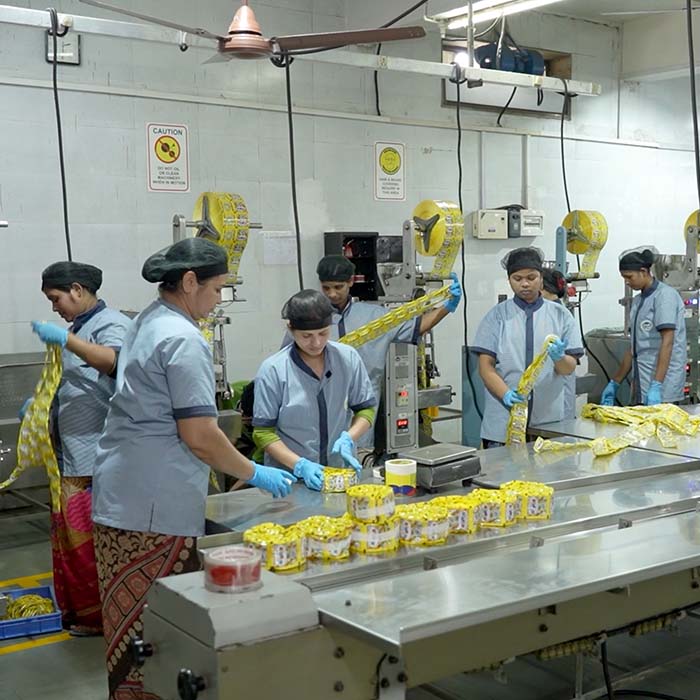
The manufacturing unit in Surat houses in-house R&D focused on product tweaks and launches—recent additions include Jelly Bite, Ice Lolly, and Jelly Twist. Distribution is old-school general trade via stockists across 28 states, complemented by a company-operated retail outlet and an e-market website/mobile app.
Exports exist but are symbolic—2% of FY24 revenue—so the real battlefield is India’s hyper-competitive packaged foods aisle. Here, Tapi competes with giants who have marketing budgets larger than Tapi’s market cap. The differentiator? Indian taste profiles, affordability, and a growing tilt toward nutraceutical gummies—a segment that sounds healthier and sells better.
The business model is manufacturing-led with working capital intensity (inventory days ~57 in Mar 2025). When sales grow, cash is needed yesterday. When sales stall, interest still wants today’s EMI. Simple business, complex execution. Question for you: can brand-led growth outrun balance sheet stress?