1. At a Glance – Blink and You’ll Miss the Margin
Ambani Orgochem Ltd is that rare stock which looks busy, sounds industrial, smells like chemicals, and still earns profit like it’s doing charity work. Market cap sits around ₹76.4 crore while the stock price at ₹99.8 looks like it’s permanently stuck in the “recovering from a fall” phase. In the last three months, the stock politely declined by almost 29%, probably overwhelmed by its own valuation. Sales for the trailing twelve months stand tall at ₹223 crore, while profit after tax politely whispers at ₹0.63 crore. That’s not a typo; that’s capitalism with thin margins. The company trades at a P/E of 121, which is what happens when earnings don’t show up on time but the stock market does. ROCE of 7.12% and ROE of nearly zero make this company look less like a compounding machine and more like a chemistry experiment still waiting for the right catalyst. Latest half-year numbers show revenue momentum, EBITDA growth, and profit improvement, but the balance sheet is sweating under debt and capex. This is a classic case of “business is growing, profits are thinking about it.” Curious already? Good. Because this story only gets more entertaining.
2. Introduction – The Chemical Factory That Refuses to Explode (Financially)
Ambani Orgochem Ltd has been around since 1985, which already earns it vintage credibility in a market obsessed with startups founded during lockdown boredom. The company manufactures water-based specialty chemicals and dyes, serving industries ranging from paints and textiles to pharma and construction. In short, if something needs to stick, dry faster, resist bacteria, or look better, Ambani Orgochem probably sells something for it.
But longevity doesn’t always mean luxury. Financially, this company has lived a disciplined middle-class life: steady sales growth, regular capex, controlled ambition, and very modest profits. Over the last five years, sales have compounded at about 21%, but profits have actually declined over the same period. That’s like running a marathon faster every year but finishing with less energy.
The recent half-year FY26 numbers show a sharp jump in revenue and EBITDA, which is encouraging. However, profits are still thin, and debt levels remain elevated. The market seems confused: should it reward the growth or punish the margins? So far, it has chosen confusion.
Ambani Orgochem sits in the specialty chemicals space, a sector known for fat margins and pricing power. Unfortunately, this company seems to be playing the game on hard mode. Still, with capacity expansion, a new Dahej facility, and improving operating leverage, there’s a faint smell of turnaround in the air. Or maybe that’s just the chemicals.
3. Business Model – WTF Do They Even Do?
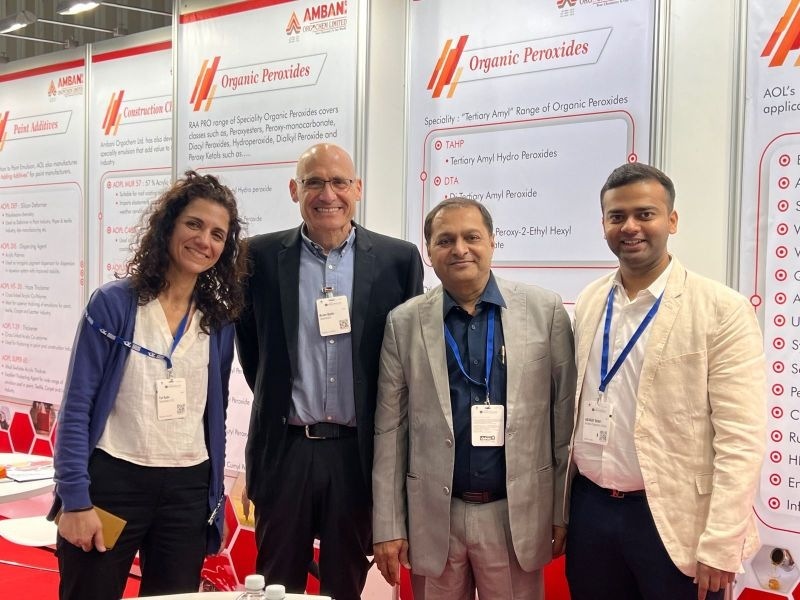
Ambani Orgochem manufactures and supplies specialty chemicals that most people will never pronounce correctly but industries cannot function without. The product portfolio includes organic peroxides, paint driers, accelerators, acrylic emulsions, silver ion disinfectants, and textile auxiliaries. These are not consumer-facing products. There’s no brand recall here. No Instagram ads. Just drums, tanks, and invoices.
The company operates four manufacturing units at Tarapur, Maharashtra, with a combined capacity of 15,300 MTPA. These units cater to multiple end-user industries like composites, FRP, paints, textiles, paper, adhesives, carpets, construction, wood, and pharmaceuticals. Basically, if it’s industrial and messy, Ambani Orgochem wants to be involved.
Revenue is split roughly 70% domestic and 30% exports, with export markets including countries like Nigeria and Vietnam. This geographic diversification helps, but it also exposes the company to currency and logistics volatility.
What makes the business tricky is pricing power. Specialty chemicals ideally enjoy high margins due to customization and switching costs. However, Ambani Orgochem’s margins suggest it operates in a highly competitive sub-segment where volume matters more than pricing. The upcoming Dahej capex, focused on salicylic and peroxide derivatives, could improve margins if executed well. If not, it just adds more depreciation to