Shiva Granito Export Ltd H1 FY26 – ₹2.15 Cr Sales, EPS ₹0.00, P/E 1,703×: When Granite Is Solid but Profits Are on Rice-Grain Mode
1. At a Glance – Granite Strong, Numbers Fragile
If balance sheets had facial expressions, Shiva Granito Export Ltd would be that stone-faced uncle at a wedding who looks rich but refuses to give shagun. Incorporated in 2015, listed on the BSE SME platform, and currently flaunting a market cap of roughly ₹17 crore at a price of ₹12.9, the company sits at the intersection of heavy rocks and light profits.
The headline numbers are… dramatic. Stock P/E of 1,703× (yes, not a typo), ROCE of 2.25%, ROE of 0.10%, and quarterly PAT that has politely vanished to ₹0.00 crore. Sales for the latest half-year (Sep 2025) stand at ₹2.15 crore, up 18.1% QoQ, while profits decided to take a spiritual break.
Book value is ₹18.2, meaning the stock trades at 0.71× P/B, which looks cheap until you remember book value doesn’t pay EMIs—cash flows do. Debt stands at ₹5.37 crore, promoter holding has slid to 44.46%, and working capital days have ballooned to 565+ days, suggesting money is stuck somewhere between marble slabs and customer excuses.
Yet, despite all this, the company recently approved 1.16 crore convertible warrants worth ₹17.4 crore, expanded authorised capital, and keeps exporting stones with CE certification swagger. Is this a turnaround rock story or just another decorative tile in the SME bazaar? Let’s dig—hammer and sarcasm ready.
2. Introduction – Welcome to the Stone Age of Earnings
Shiva Granito Export Ltd sounds like a company that should be crushing it. After all, who doesn’t like marble floors, granite countertops, and engineered quartz slabs that make kitchens look Instagram-ready? The company manufactures and exports marble and granite, while also producing engineered quartz slabs, resins, and quartz powder. On paper, it’s vertically integrated. In reality, profits behave like rare gemstones—occasionally spotted, mostly missing.
Founded in 2015, SGL carries CE certification (European standards), exports globally, and claims manufacturing capacity that would make many SMEs jealous. A quartz slab plant with 2.5 million sq. ft. annual capacity, resin manufacturing of 4,000 MT, and quartz powder capacity of 10,000 MT—this is not a backyard operation.
But here’s the twist: despite all this industrial muscle, FY25 PAT was just ₹0.02 crore, and the latest half-year ended Sep 2025 reports zero EPS. The income statement reads like a thriller novel—operating profit exists, other income swings wildly, and net profit sometimes disappears after tax and interest say hello.
Over the years, the company has survived losses, one spectacular FY23 hit (thanks to a massive negative other income), and promoter dilution that raises eyebrows faster than a CA during audit season.
So the real question, dear reader: is Shiva Granito a sleeping granite giant waiting for polish, or is it already polished but hollow inside? And why does a stone exporter earn returns softer than cotton? Let’s break it slab by slab.
3. Business Model – WTF Do They Even Do?
At its core, Shiva Granito Export Ltd digs, cuts, polishes, and sells rocks. But not just any rocks—marble, granite, porcelain, artificial quartz slabs, and a side hustle in resins and quartz powder. Think of it as a mineral buffet where construction companies, interior designers, and overseas buyers pick what they like.
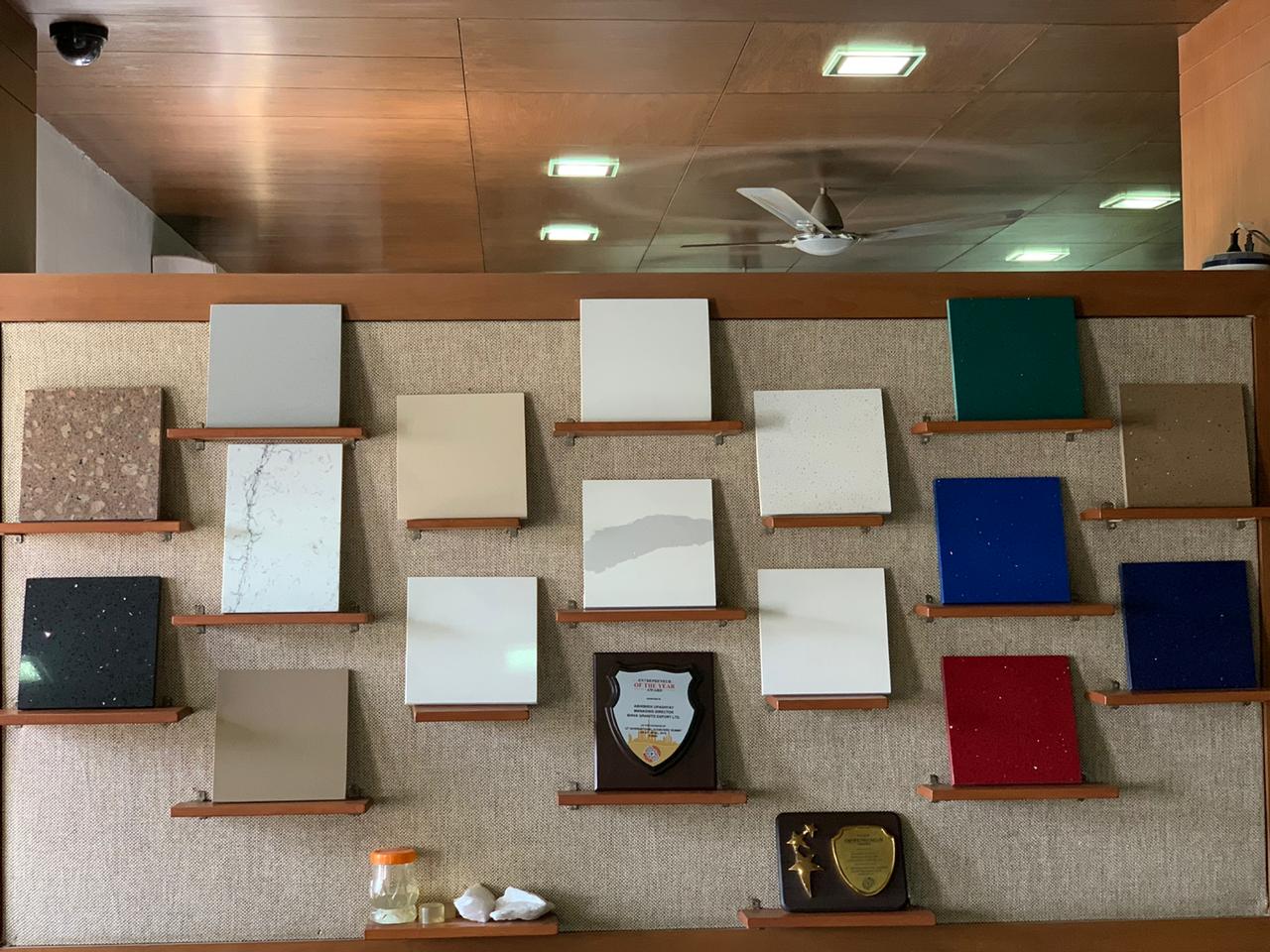
The flagship offering is engineered quartz stone slabs, used in countertops and premium interiors. These slabs are manufactured in multiple thicknesses (10–30 mm) and colors, targeting both domestic and export markets. Complementing this are granite and marble products, which remain staples in Indian and global construction.
Then comes the chemical angle. The company manufactures respol chemicals (resins) and mineral/quartz powder, which are inputs not just for its own slabs but also for other industrial users. This vertical integration should, in theory, protect margins. In practice, margins exist—but profits don’t always survive interest, depreciation, and tax.
Revenue composition in FY24 tells an interesting story:
Sale of products: ~81%
Discount received & creditors written back: ~17%
Profit on sale of assets: ~2%
Yes, a chunky portion of revenue comes from accounting adjustments rather than customers actually buying stuff. That’s like saying your salary includes “friends returning old