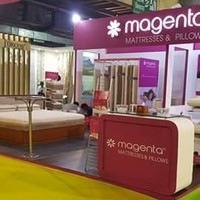
Magenta Lifecare Ltd, a BSE-SME listed household furnishings company, is currently trading around ₹12.4 with a market cap of roughly ₹8.5 crore. In the last three months, the stock has politely declined by about 22%, reminding shareholders that mattresses are meant for sleeping, not for portfolio excitement. The company just reported half-yearly results, clocking ₹5.44 crore in sales and ₹0.05 crore in PAT for the latest half-year period. Valuation metrics look like a confused buffet: P/E of ~85, Price-to-Book of 0.61, ROCE at 2.61%, and ROE below 1%. On paper, it sells premium sleep products; on the balance sheet, it barely looks awake. Yet, for a microcap born in 2015 with CertiPUR-US certified foam products and a freshly minted IPO in June 2024, Magenta Lifecare is at least trying to stretch, yawn, and maybe someday get out of bed. Curious already? You should be—this mattress story has more layers than a memory-foam cross section.
2. Introduction – A Mattress Company That Refuses to Sleep Quietly
Founded in 2015, Magenta Lifecare Ltd operates in the deceptively boring-sounding “household furnishings” space. But don’t be fooled—this is the mattress industry, where dreams are sold at premium prices and margins often vanish faster than sleep after a late-night coffee. Magenta manufactures foam-based mattresses, pillows, and adjustable beds, marketed under the Magenta brand across India.
The company went public in June 2024 with a ₹7 crore IPO, instantly entering the unforgiving world of quarterly (or in this case, half-yearly) scrutiny. Since listing, the stock has behaved like a pillow fight gone wrong—volatile, soft on fundamentals, and occasionally painful for those standing too close.
What makes Magenta interesting is not size—it is tiny—but ambition. It runs a manufacturing facility in Gujarat with a capacity of 60,000 mattresses and 70,000 pillows annually, sells through exclusive Magenta NEXUS showrooms, multi-brand outlets, dealers, and online channels, and positions itself as a premium foam player.
But here’s the fun part: despite selling “premium sleep,” the financials show thin margins, low returns, and negative cash flows recently. Is this a classic case of “invest now, profit later,” or just another SME mattress that’s all foam and no bounce? Let’s roll up the bedsheet and look underneath.
3. Business Model – WTF Do They Even Do?
Imagine explaining Magenta Lifecare to a smart but lazy investor at 2 a.m. The short version: They make mattresses and pillows from foam, sell them under their own brand, and hope people pay up for better sleep.
The long version? Magenta manufactures CertiPUR-US certified foam products, which basically means the foam won’t poison you while you sleep—always a plus. The product range is wide enough to confuse even seasoned furniture shoppers: euro-top mattresses, memory foam, latex-based variants, bamboo charcoal mattresses, gel-infused models, and even remote-controlled adjustable bed bases for people who want hospital-bed vibes without the hospital.
Revenue-wise, the company is refreshingly honest:
97% comes from product sales.
The rest is accounting leftovers like sundry creditors written back.
Within products, pillows dominate at ~58% of FY24 sales, while mattresses contribute ~37%. Yes, the mattress company earns more from pillows—ironic, but also very Indian SME-core.
Geographically, Gujarat alone contributes ~68% of revenue, meaning Magenta’s “pan-India” dreams are still mostly sleeping in Ahmedabad. Customer concentration is another red flag-shaped pillow: top 10 customers contribute ~40.5% of revenue, while top 10 suppliers account for ~97.5%. Translation? If even one supplier sneezes, Magenta catches a cold.
Does this business model work? It can—if scale improves and working capital