Maks Energy Solutions India Ltd H1 FY26 – ₹26.1 Cr Sales, EPS ₹0.10, Debt ₹16.98 Cr: Diesel, Debt & Desi Drama
1. At a Glance – Small Generator, Big Noise
Maks Energy Solutions India Ltd is that classic SME stock which looks harmless on the surface but starts coughing smoke once you lift the bonnet. Market cap sits around ₹20.5 Cr, the stock is chilling at ₹29.6 (after politely sliding ~10% in three months), and the P/E proudly flashes 32x like it’s Cummins’ distant cousin. Latest H1 FY26 numbers (Sep 2025) show sales of ₹26.11 Cr, PAT of just ₹0.07 Cr, and EPS of ₹0.10. Operating margins hover at a modest 3.68%, ROCE is 9.49%, and ROE is a sleepy 4.33%. Debt? A very real ₹16.98 Cr, almost equal to net worth. Promoters hold a steady 71.19%, zero pledge, which is the only thing not shaking. In short: the company sells diesel generators, but the stock price itself seems to be running on backup power. Curious already?
2. Introduction – When Backup Power Needs Backup Hope
Maks Energy was incorporated in 2010, long before power cuts became nostalgic dinner-table stories. The company assembles and sells diesel generating (DG) sets and distributes auto spare parts. Simple, boring, industrial. No fancy SaaS, no AI, no “platform play.” Just diesel, metal, engines, and receivables that refuse to come home on time.
And yet, here it is on the SME exchange, commanding a valuation multiple that would make larger capital goods companies raise an eyebrow. Over the years, revenue has grown, margins have shrunk, profits have played hide-and-seek, and debt has remained stubbornly loyal. The business has survived, not thrived.
The latest half-year results (H1 FY26) came with an auditor qualification on ₹477.37 lakh of receivables. That’s not a typo. That’s money allegedly earned but not convincingly collectible. The adjusted impact? An implied loss of ₹470.86 lakh flagged by auditors. That’s when you stop sipping chai and start reading footnotes.
So the question becomes: is Maks Energy a cyclical industrial struggling with working capital, or a balance-sheet gym enthusiast lifting more debt than it should? Let’s open the toolbox.
3. Business Model – WTF Do They Even Do?
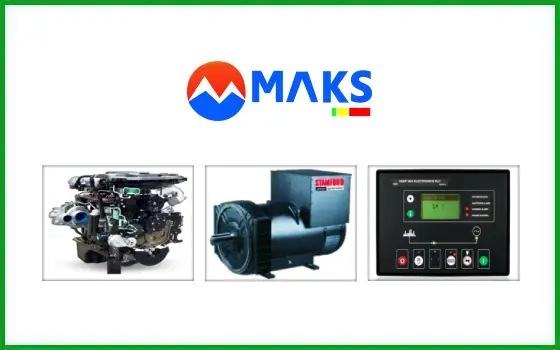
Imagine you order engines from Tata, Cummins, Perkins, or Volvo Penta. You buy alternators, panels, frames, silencers. Then you assemble them into diesel generator sets ranging from 15 kVA to 1250 kVA, slap the label “Maks Generators”, and sell them to factories, real estate projects, hospitals, dairies, pharma plants, and anyone who fears electricity boards.
That’s the core business.
On the side, the company also distributes automotive spare parts in Maharashtra. Because why not? When margins are thin, you diversify into trading. In FY25, revenue split was roughly 54% trading and 46% manufacturing/assembling. Translation: more than half the business is low-margin trading, not value-added manufacturing.
Geographically, 95% revenue is domestic, with exports contributing a polite 5% to SAARC, Middle East, Africa, and Southeast Asia. No global domination plans here, just cautious border hopping.
The model is working-capital heavy. You buy components, assemble, sell on credit, wait… and wait… and wait. Which brings us to the receivables problem that auditors politely screamed about.
Does this sound like a scalable manufacturing story or a glorified assembler stuck in credit cycles?
4. Financials Overview – The Numbers Speak, But Softly
Result Type Lock: HALF-YEARLY RESULTS (H1 FY26)
Annualised EPS = Latest EPS × 2
Half-Year Comparison Table (₹ Crores)
Source table
Metric
Latest H1 FY26
H1 FY25
H2 FY25
YoY %
QoQ %
Revenue
26.11
34.05
32.43
-23.3%
-19.5%
EBITDA
0.96
1.17
1.74
-17.9%
-44.8%
PAT
0.07
0.13
0.42
-46.2%
-83.3%
EPS (₹)
0.10
0.19
0.61
-47.4%
-83.6%
Annualised EPS (H1): ₹0.20
Commentary: Sales dropped, margins slipped, profits nearly evaporated. EBITDA halved sequentially, PAT collapsed like a cheap plastic chair. If this were a cricket scorecard, commentators would politely say “Maks is struggling to rotate strike.”
Does this look like a business earning its 32x multiple?
5. Valuation Discussion – Fair Value Range Only (Educational)
Method 1: P/E Based
Annualised EPS: ₹0.20
Reasonable SME industrial multiple (based on peers): 15x – 20x