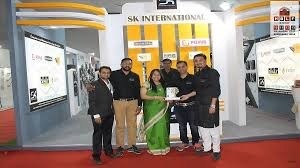
S K International Export Ltd H1 FY26 (Sep 2025) – ₹0.01 Cr Sales, ₹-0.18 Cr PAT, Negative OPM but ₹2.17 Cr FY25 Profit Surprise: Fashion Walk or Financial Moonwalk?
1. At a Glance
If stock markets were fashion weeks, S K International Export Ltd would be the model who walked the ramp confidently, tripped at the corner, but still posed like it was intentional. As of mid-December, the company sits at a market cap of ₹22 crore, a share price of ₹30, and a P/E of ~11, which on paper looks “reasonable,” until you notice the fine print screaming -60% operating margins, negative ROE, and quarterly sales that basically vanished. The last reported H1 FY26 (Sep 2025) numbers show sales of ₹0.01 crore and a loss of ₹0.18 crore, which is less “fashion export powerhouse” and more “boutique on power-saving mode.” Yet, paradoxically, FY25 closed with ₹2.17 crore profit, largely juiced up by other income, not hardcore garment hustle. Returns over the last 3–6 months look spicy on the screen, but fundamentals are wearing last season’s clothes. Curious already? Good. Keep reading.
2. Introduction – Welcome to the Wardrobe of Confusion
Founded in 2018, SK International Export Ltd entered the Indian SME market with a simple dream: stitch fabric, ship abroad, collect dollars (or euros), smile politely. The business claims to manufacture and market men’s and women’s apparel across silk, viscose, cotton, polyester, wool, and blends, with a side quest into ethnic dupattas. Sounds straightforward, right? Except the financials read like a Netflix plot twist.
Over the years, revenues have shrunk, margins have evaporated, and yet profits occasionally appear like a surprise guest at a wedding. How? Other income. If operating profit was the main character, it fainted early in the episode. The supporting actor—non-operating income—picked up the script and finished the season.
And just when you think this is a simple garment exporter, the company quietly edits its Memorandum of Association to include automobile parts trading and digital healthcare services. Because when scarves don’t sell, obviously stethoscopes and spark plugs will. Logical, no?
So the big question: is this a struggling exporter trying to reinvent itself, or a microcap experimenting with everything until something sticks?
3. Business Model – WTF Do They Even Do?
At its core, SK International Export is supposed to be a garment manufacturer and exporter. The company produces apparel and accessories using multiple fabrics and sells them under brands like Fabrecycle, Sehsaa, and SandKastle.
Fabrecycle talks sustainability—recycled PET bottles spun into polyester yarn, converted into scarves, stoles, beachwear, and blankets.
Sehsaa focuses on scarves for the local retail market.
SandKastle sells beachwear domestically through online marketplaces and exhibitions.
Exports are make-to-order, primarily to Spain, Germany, France, the Netherlands, and the UK, with the company registered under the Apparel Export Promotion Council.
On paper, this is a clean, ESG-friendly, export-oriented model. In reality, volumes are thin, costs are stubborn, and scale is missing. When sales drop from ₹6–7 crore levels to ₹1.54 crore TTM, sustainability slogans alone don’t pay electricity bills. And the sudden urge to diversify into automobiles and healthcare feels less like strategy and more like entrepreneurial FOMO. Would you trust your fashion tailor to fix your car engine?
4. Financials Overview – Numbers That Need Therapy
Result Type Lock: Latest official heading clearly states “Half Yearly Results – period ended September 30, 2025.” ➡️ LOCKED AS HALF-YEARLY RESULTS ➡️ Annualised EPS = Latest EPS × 2
H1 FY26 Comparison Table (₹ crore, Half-Yearly)
Metric
Latest H1 FY26
H1 FY25
Previous H2 FY25
YoY %
QoQ %
Revenue
0.01
1.09
1.53
-99.1%
-99.3%
EBITDA
-0.42
-0.03
-0.51
NA
NA
PAT
-0.18
0.00
2.17
NA
NA
EPS (₹)
-0.25
0.00
2.96
NA
NA
Annualised EPS (Half-Yearly): -0.50
Commentary: This table looks like someone accidentally turned off the revenue switch. Costs didn’t disappear, margins went underground, and profitability reversed sharply. If fashion trends change fast, SK’s numbers change faster—and not in a good way. Question for you: how does an exporter survive when exports practically stop?