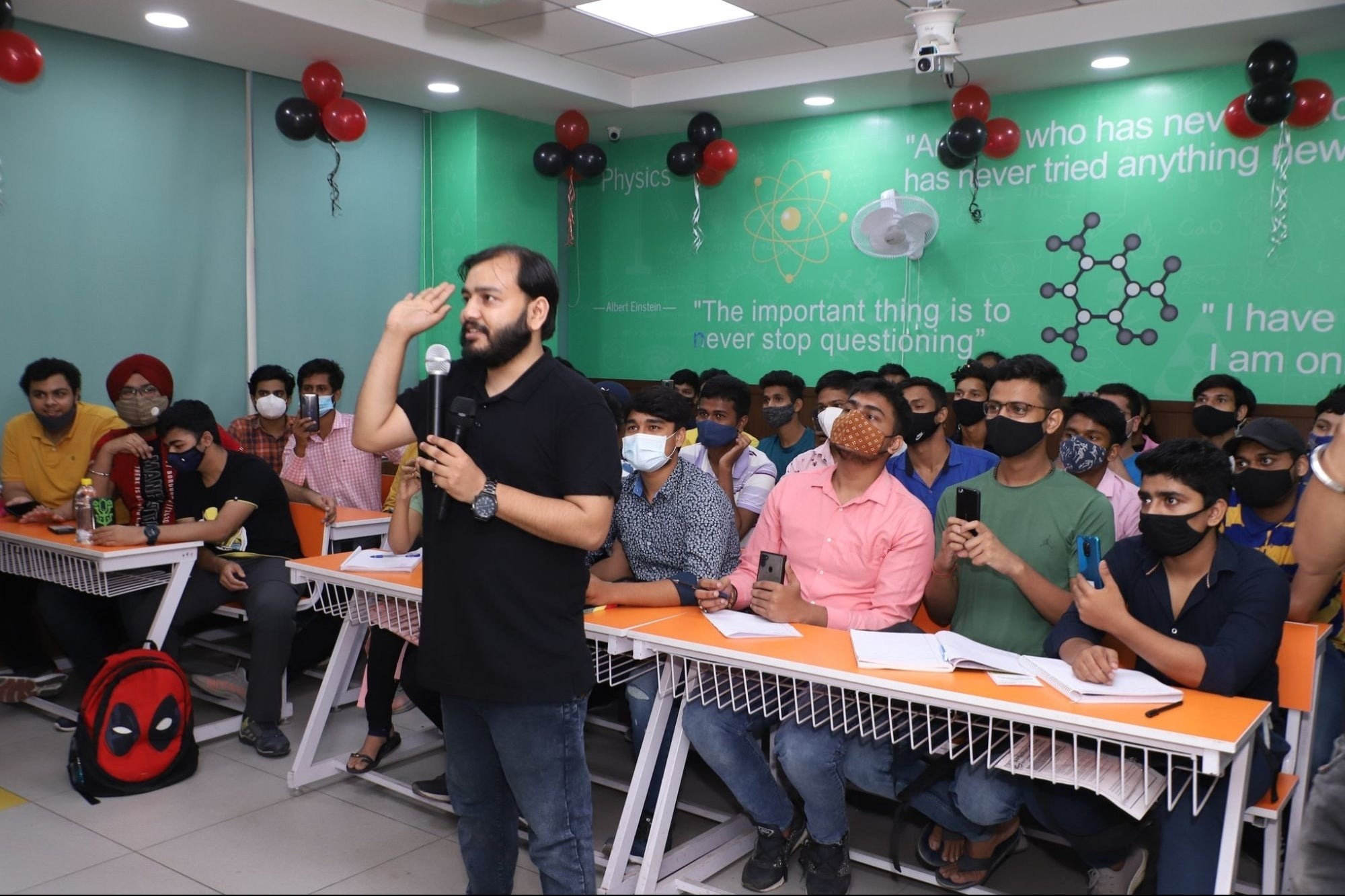
Physicswallah Ltd Q2 FY26 – ₹1,051 Cr Quarterly Revenue, 26% YoY Growth, IPO Hangover, and a Valuation That Gives Coaching Mafia Sleepless Nights
1. At a Glance – “From YouTube Gyaan to Dalal Street Dandia”
₹37,831 crore market cap. ₹132 stock price. A company that once ran on chalk, charisma, and YouTube comments is now running on quarterly concalls, EBITDA slides, and ESOP ballots. PhysicsWallah’s latest quarter ended September 2025 shows ₹1,051 crore in revenue, up 26.3% YoY, with PAT of ₹72.3 crore, up a spicy 62.4% YoY. Sounds great, right? But zoom out and you’ll see ROCE still sulking at -2.12%, debt sitting at ₹970 crore, and EV/EBITDA casually chilling at 119x, like valuation discipline is an optional subject.
Offline now contributes 53% of revenue, online 47%, proving that even digital disruptors eventually crave classrooms, benches, and that one invigilator who scares everyone into silence. With 2.43 million paid users, 18,028 employees, and 303 offline centres, PhysicsWallah has officially entered the “too-big-to-ignore, too-expensive-to-understand” phase.
So is this India’s most democratized education platform… or just another coaching giant with better PR and cheaper fees? Let’s open the answer sheet.
2. Introduction – “Sir, Yeh Revolution Board Pe Likhi Hai Ya Balance Sheet Mein?”
PhysicsWallah is the classic Indian startup fairy tale. A teacher with a marker. A YouTube channel. Free content. Massive trust. And then—boom—incorporation, venture capital, offline centres, acquisitions, IPO, and suddenly you’re arguing about working capital days instead of angular momentum.
Founded by Alakh Pandey in 2014 as a YouTube channel and incorporated later with Prateek Boob, PhysicsWallah rode the biggest secular trend of the last decade: India’s exam obsession combined with cheap data. Between FY23 and FY25, revenue grew at a 41.8% CAGR, while paid users jumped from 1.76 million to 4.46 million. That’s not growth; that’s syllabus completion speed on 2x.
But here’s where it gets interesting. Unlike Byju’s-style “burn cash, buy everything” madness, PhysicsWallah positioned itself as the middle-class messiah: affordable courses, mass reach, and relatively controlled spending. JEE at ₹4,500. NEET at ₹4,800. UPSC at ₹18,000. Kota coaching owners probably still wake up screaming at night.
Then came the IPO in November 2025. ₹3,480 crore raised. Dreams upgraded from whiteboard to white marble offices. And now the company must answer the most dangerous question in capitalism: “Show me sustainable profits.”
Ready? Because the marks distribution is brutal.
3. Business Model – WTF Do They Even Do?
Imagine a buffet where JEE aspirants, NEET dreamers, UPSC warriors, banking exam grinders, and data science hopefuls all stand in the same line. That’s PhysicsWallah.
The company operates across online, offline, and hybrid formats:
Online: Apps, website, recorded + live lectures, test series, doubt-solving, AI-powered personalization.
Hybrid: Online lectures + physical centres for discipline and doubt resolution (aka “parents feel safe” model).
They cover 13 education categories, with revenue contribution from:
NEET – 26.5%
JEE – 15.5%
Foundation – 17.5%
Govt Exams – 12.5%
Others – 32%
Content-wise, the scale is insane: 4,382 books and 8.66 million questions. That’s not a question bank; that’s an interrogation department.
The genius (and risk) lies in pricing. By charging a fraction of competitors, PhysicsWallah bets on volume over margin. Works beautifully in growth phases. Gets tricky when investors start asking about ROCE.
Question for you: Can India’s largest affordable edtech remain affordable after listing?
4. Financials Overview – Quarterly Report Card (No Grace Marks)