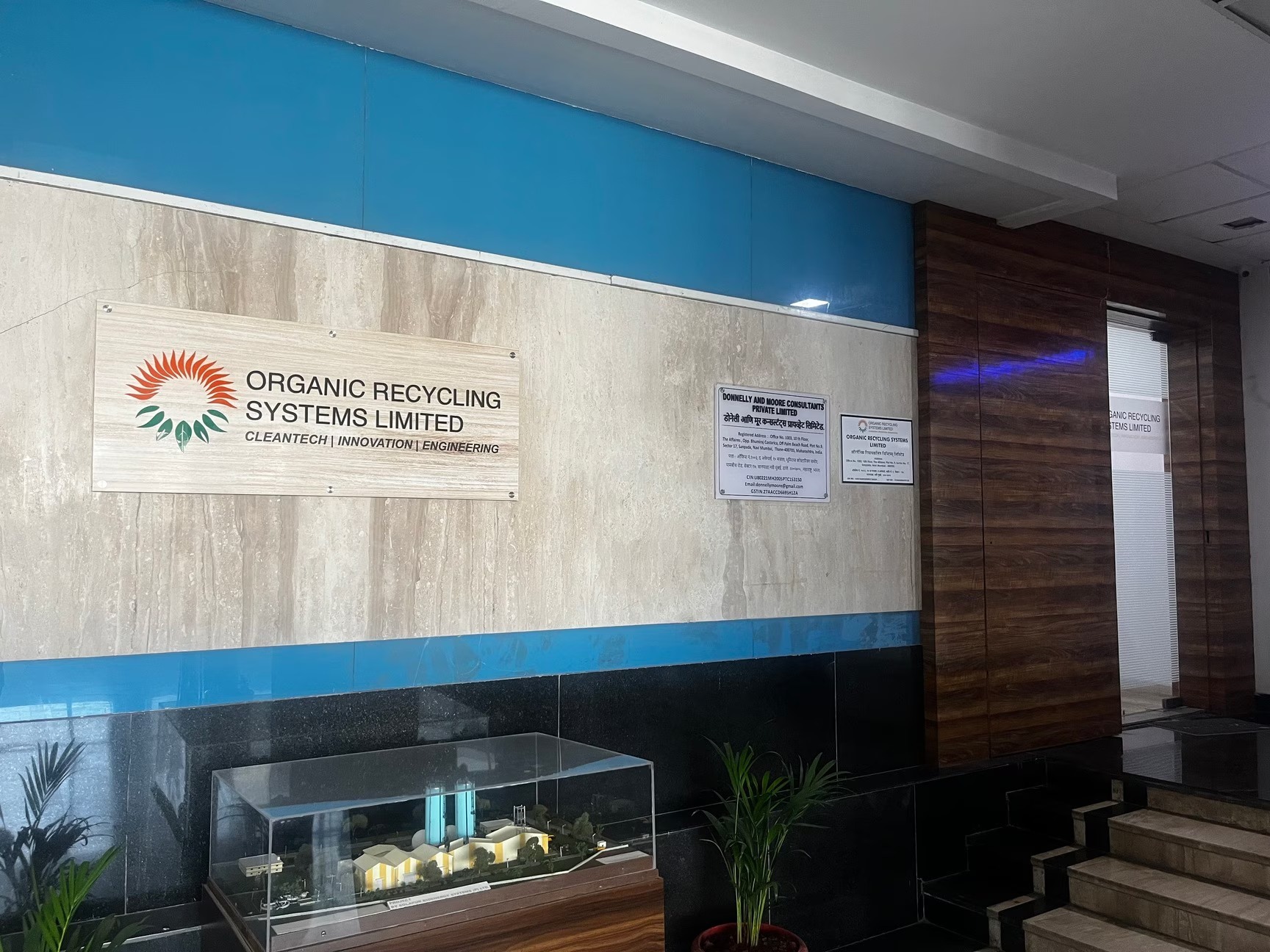
Organic Recycling Systems Ltd H1FY26 – ₹299 mn Revenue Surge, ₹121 mn PAT Pop, 46% OPM: Waste, Wealth, and One Very Busy Digester
1. At a Glance – Garbage In, Profits Out
Organic Recycling Systems Ltd (ORSL) is that rare Indian SME which literally makes money out of other people’s trash. As of mid-December, the company sits at a market cap of roughly ₹216 crore with the stock hovering around ₹250, nursing a bruised ego after a ~9% fall over the last three months and a much uglier ~31% one-year return. But before you judge the stock like a reality show contestant, look at the business numbers. Latest half-year results (H1FY26) show revenue of ₹299.10 million and PAT of ₹121.16 million, growing at a face-slapping 70% and 79% respectively. Operating margins are flirting with the mid-40s, ROE is ~14.6%, ROCE ~12.2%, and P/E is a modest ~10x while peers are partying in the 20–40x zone. Debt stands at about ₹43.7 crore, promoter holding is a low 18.1%, and debtor days are still an uncomfortable 304 days. This is a company that converts waste into energy, compost, and profits—but also converts patience into a mandatory virtue for shareholders. Intrigued already, or still holding your nose?
2. Introduction – Welcome to the Dustbin Economy
Waste management is not glamorous. No one takes selfies with garbage trucks. No Bollywood item song is titled Tu Mera Biomethanation Hai. And yet, this is where ORSL quietly operates, building anaerobic digestion plants, licensing technology, and convincing municipalities that trash is not trash—it’s misunderstood fuel.
Incorporated in 2008, ORSL has survived the hardest phase of any Indian infrastructure-tech hybrid: the “pehle loss, phir aur loss, phir thoda profit” phase. From FY21 and FY22 losses, it flipped sharply into profitability by FY23 and hasn’t looked back since. By FY25, the company clocked ₹56 crore in sales and ₹21 crore in PAT on a trailing basis. That’s not small talk; that’s a full-blown turnaround monologue.
But ORSL is not a simple EPC contractor. It plays across project development, technology licensing, product supply, and consulting. Add to that a patented dry anaerobic digestion technology and partnerships with IIT Bombay, IIT Kharagpur, IIT BHU, IOCL, and foreign grant agencies, and suddenly this “waste company” starts sounding like the nerdy kid who secretly tops the class.
Still, the stock market remains suspicious. Low promoter holding, high working capital cycle, and SME liquidity issues keep sentiment cautious. So the real question is: is ORSL a future environmental utility star or just another over-engineered science project? Let’s dig into the garbage pile.
3. Business Model – WTF Do They Even Do?
Imagine a municipal corporation staring at mountains of wet garbage and saying, “Boss, iska kuch karo.” ORSL walks in with a helmet, a patented technology, and a PowerPoint.
The company operates through three main verticals. First is project development and technology licensing on EPC basis, where ORSL partners with urban local bodies under BOOT or PPP models. Here, it designs, engineers, builds, and sometimes operates waste-to-energy projects while licensing its technology.
Second is the product vertical, which designs and supplies key equipment required for municipal solid waste (MSW) projects. Think digesters, processing systems, and now even activated carbon products like GAC-01. The company also plans to acquire exclusive marketing or manufacturing rights for certain MSW equipment—basically moving from “we build it” to “we sell it to everyone.”
Third is the consulting and R&D vertical, which is where the IITs come in. ORSL is working on anaerobic digestion, biogas upgrading, microbial technologies, digestate valorisation, and even bio-CCUS (carbon capture and utilisation). Translation: they’re trying to squeeze every possible molecule of value out of garbage.
The crown jewel is the Solapur waste-to-energy plant—one of India’s first anaerobic biomethanation WTE plants. With a capacity of 400 tonnes per day, 3 MW power generation, and 60 TPD compost output, it processes OFMSW, press-mud, and biomass. Electricity is sold to the state utility, compost goes to farms, and ORSL gets paid for doing society’s dirty work. Not sexy, but very necessary.
4. Financials Overview – Numbers That Don’t Smell Bad
Half-Yearly Result Type Locked: Half Yearly Results (H1FY26)
Annualised EPS = Latest EPS × 2
Source table
Metric
Latest Half (H1FY26)
Same Half Last Year
Previous Half
YoY %
HoH %
Revenue (₹ cr)
29.9
17.6
26.0
70.2%
15.0%
EBITDA (₹ cr)
13.7
7.7
7.0
77.9%
95.7%
PAT (₹ cr)
12.1
6.8
9.0
78.9%
34.4%
EPS (₹)
13.98
8.79
10.34
59.0%
35.2%
Annualised EPS (Half-Yearly × 2) = ₹27.96
At a CMP of ₹250, implied P/E on annualised EPS is ~8.9x. For a company growing revenue and profit north of 70%, that’s… suspiciously cheap. Either the market knows something, or it’s just allergic to SME stocks with garbage trucks in the logo. Which one do you think it is?
5. Valuation Discussion – Fair Value Range Only
Method 1: P/E Multiple
Annualised EPS ≈ ₹27.96 Peer P/E range: 15x – 25x Fair value range = ₹420 – ₹700
Method 2: EV/EBITDA
TTM EBITDA ≈ ₹20 crore Peer EV/EBITDA: 12x – 16x Implied EV range = ₹240 – ₹320 crore After adjusting net debt (~₹44 crore), equity value range ≈ ₹196 – ₹276 crore
Method 3: Simplified DCF
Assumptions (educational, not predictive): Moderate growth tapering, stable margins, conservative discounting Indicative equity value band aligns around current to moderately higher levels.
Fair value range (educational): Broad band between current market cap and optimistic peer-aligned multiples. This fair value range is for educational purposes only and is not investment advice.
6. What’s Cooking – News, Triggers, Drama
ORSL’s announcement section reads like an IIT annual report. In just the last year, the company has partnered with IIT Bombay, IIT Kharagpur, IIT BHU, and