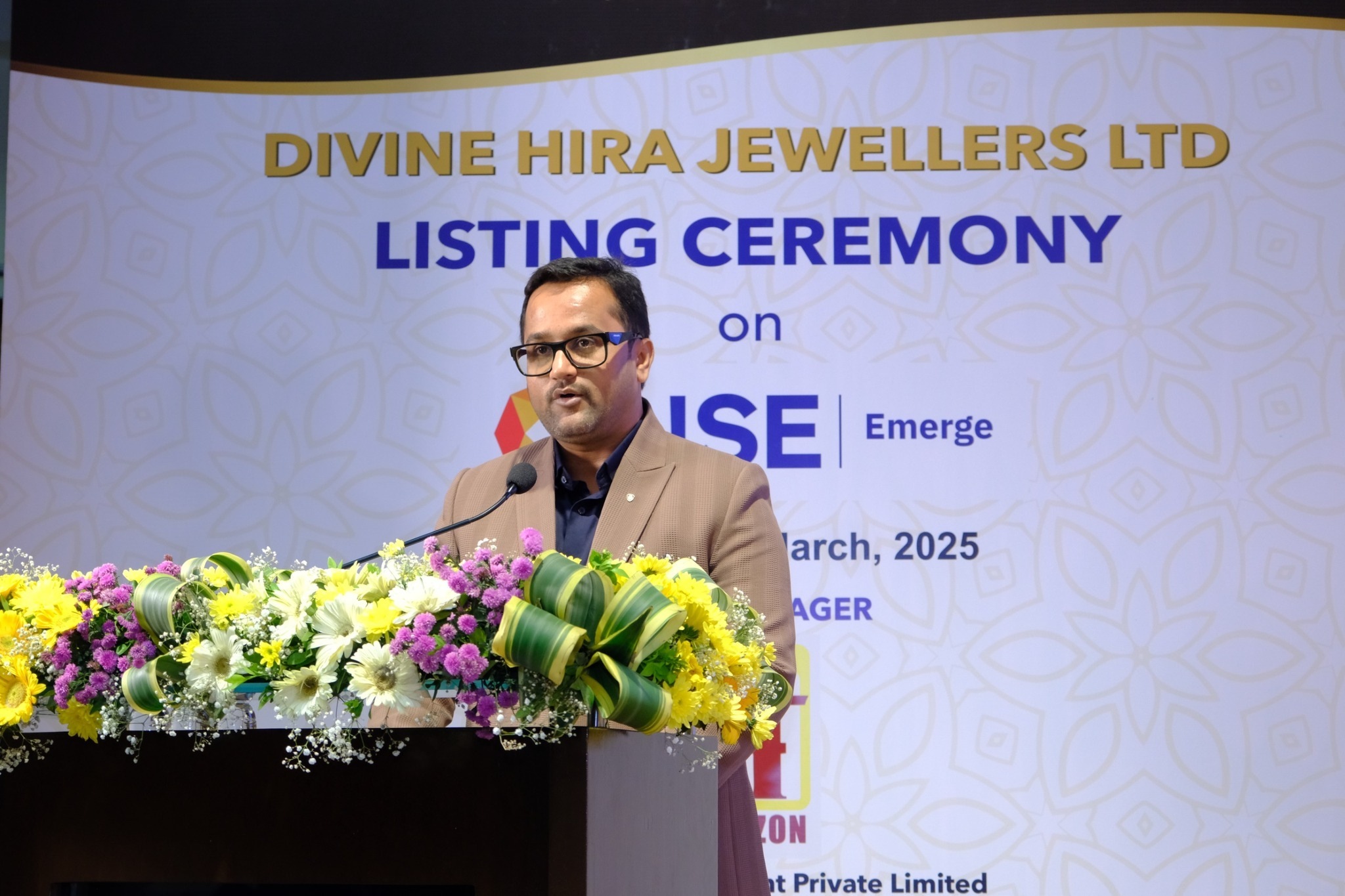
Divine Hira Jewellers Ltd is what happens when a freshly incorporated SME (July 2022) decides to sprint instead of jog. Listed on NSE SME in March 2025, the company is already flashing ₹242 Cr market cap, a ₹185 stock price, and a 3-month return north of 100%, which is basically Dalal Street saying, “bhai gold hai.” Latest H1 FY26 results show ₹500 Cr in sales in just six months, PAT of ₹3.12 Cr, and margins so thin you could hallmark them. With ROE ~21%, ROCE ~19.7%, and Debt/Equity at 0.43, the balance sheet doesn’t look drunk, but the valuation at ~39x earnings suggests investors are already imagining Titan-level dreams for a Zaveri Bazaar wholesaler. Promoters hold a chunky 72.7%, there’s zero pledge, and dividends are also zero—because growth ka shaadi chal raha hai. The big question: is this a gold compounding story or just a very shiny turnover machine?
Jewellery companies have one superpower: they can post insane revenues without actually earning insane profits. Divine Hira Jewellers fits neatly into this Indian tradition. Incorporated barely three years ago, the company has gone from startup vibes to ₹723 Cr TTM revenue faster than a wedding planner during shaadi season.
Operating out of Zaveri Bazaar, Mumbai, Divine Hira plays the wholesale B2B game—selling 22K gold jewellery, silver articles, bullion, and coins to retailers and showrooms. No fancy mall showrooms, no celebrity ads, no “emotional brand storytelling.” This is pure supply-chain hustle.
But here’s where it gets interesting. Despite wafer-thin OPM of ~1–2%, the company shows strong ROE and ROCE, driven by fast inventory churn, improving working capital cycles, and debt that’s present but not scary. Investors seem to be betting that scale + discipline + bullion efficiency = future margin expansion.
But tell me honestly—can a wholesaler ever become a brand darling without burning capital? Or is Divine Hira happy being the quiet baniya who counts money while others design ads?
3. Business Model – WTF Do They Even Do? (Gold Edition)
Let’s explain Divine Hira’s business like you’re smart but lazy.
They design gold jewellery, but they don’t manufacture it themselves. Instead, they outsource production to third-party artisans. Think of them as the wedding planner—not cooking food, not stitching lehengas, but coordinating everything and charging efficiently.
Their bread and butter is 22 Karat gold jewellery, sold primarily in bulk to wholesalers and retailers. Products range from necklaces, mangalsutras, bangles, chains, malas, rings, and wedding jewellery, to antique-style designs inspired by historical motifs. There’s also silver jewellery, silver bullion (999 purity), gold coins (24K), and custom silver artifacts.
Revenue mix in FY24 was brutally simple:
Gold & Gold Products: 96.13%
Silver Products: 3.80%
Labour Charges: 0.07%
So no confusion here—this is a gold-first company.
Customer concentration is high, with Moksh Ornaments (39.28%) and Kalyan Jewellers (37%) together forming more than three-fourths of revenue. Efficient? Yes. Risky? Also yes. If one big client sneezes, Divine Hira catches a cold.
They operate on a tight working capital cycle—inventory held ~21–25 days, payments received ~30 days post-delivery. That’s how you survive on 1% margins.
Now tell me—is this disciplined execution, or dependency disguised as efficiency?
The latest official heading clearly states “Half Yearly Results”. 👉 Result type locked as HALF-YEARLY RESULTS. 👉 Annualised EPS = Latest EPS × 2
Quarterly / Half-Year Comparison Table (₹ Cr)
Source table
Metric
Latest H1 FY26
YoY H1 FY25
Prev H2 FY25
YoY %
QoQ %
Revenue
500
223
359
124%
39%
EBITDA
5
5
9
0%
-44%
PAT
3.12
3
6
4%
-48%
EPS (₹)
2.39
2.35
4.26
2%
-44%
Annualised EPS (Half-Yearly): 👉 ₹2.39 × 2 = ₹4.78
Witty takeaway: Revenue said “rocket 🚀”, profits said “rickshaw 🛺”. EBITDA and PAT haven’t scaled in line with sales, reminding everyone that bullion businesses are about volume, not flexing margins.
So reader, quick pause—are you impressed by revenue growth or suspicious of profit stagnation?
5. Valuation Discussion – Fair Value Range (Not a Crystal Ball)