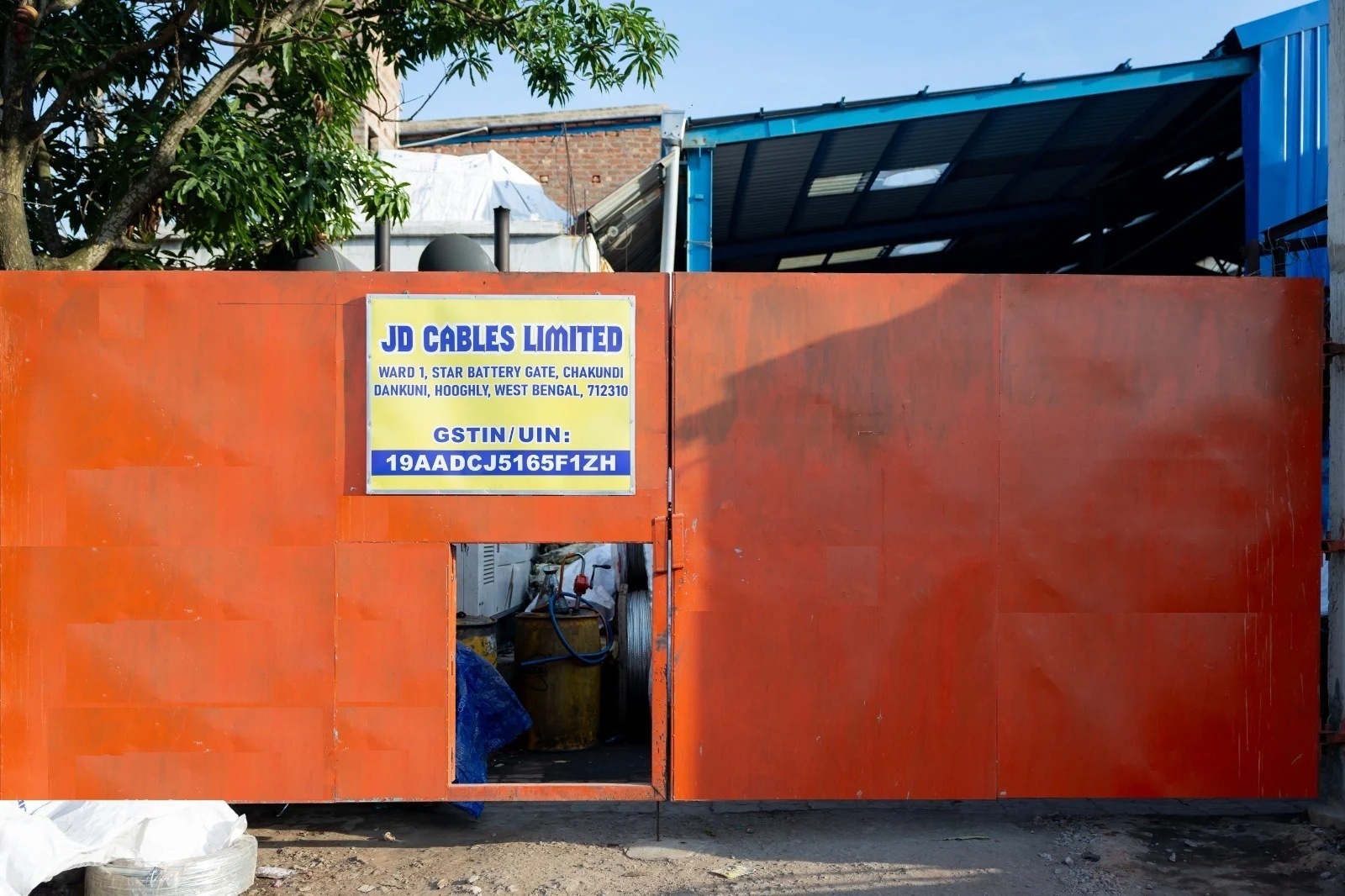
JD Cables Ltd H1 FY26 – ₹121 Cr Revenue, ₹12 Cr PAT, ROCE 66%: Small Cable, Big Current
1. At a Glance – Current Itna Tez Kyun Hai?
JD Cables Ltd is one of those SME listings that quietly entered the market, put its helmet on, climbed the electricity pole, and started pulling numbers that make largecaps look at their voltage stabilisers nervously. With a market cap of about ₹354 crore and a current price hovering near ₹157, the company has delivered H1 FY26 revenue of ₹121 crore and PAT of roughly ₹12 crore, while clocking an ROCE of 65.6% and ROE that casually flexes at 117%. That’s not a typo, that’s leverage + margin + scale doing bhangra together. The company operates in a boring-but-beautiful business of cables and conductors, supplying mostly to state electricity boards, where demand doesn’t trend on Instagram but does trend upward with every power reform scheme. Recently listed via SME IPO in September 2025, JD Cables already trades at a P/E of ~15, lower than most listed cable peers, while reporting a 3-year profit growth of 269%. No dividend yet, but when your balance sheet is still doing push-ups, maybe that’s okay. The real question is: is this current sustainable, or is this just IPO adrenaline?
2. Introduction – Welcome to the World of Wires, Where Drama Is Insulated
If you think cables are boring, you’ve clearly never tracked a power distribution company during election year. JD Cables lives in that ecosystem—where electricity must flow, tenders must be won, and payments… well, eventually arrive. Incorporated in 2015, JD Cables is still relatively young, but its financials look like it drank Red Bull mixed with EPC contracts.
The company manufactures power cables, control cables, aerial bunched cables, and aluminium conductors like AAC, AAAC, and ACSR. These are not lifestyle products. No one wakes up saying, “Bhai, aaj ACSR conductor chahiye.” But governments, utilities, and DISCOMs absolutely do—and in bulk.
JD Cables’ business is closely tied to India’s power transmission and distribution capex cycle. Schemes like grid strengthening, rural electrification, loss reduction, and renewable integration keep demand steady. That also means margins depend on execution discipline, raw material pricing, and working capital sanity—three things that often decide whether a cable company becomes Polycab or just “Polycap, but weaker”.
So where does JD Cables stand today? Financially strong, operationally expanding, and strategically inching toward EPC eligibility with its newly granted electrical contractor license in West Bengal. But concentration risks, cash flow swings, and SME volatility are always lurking. Ready to open the insulation and see what’s inside?
3. Business Model – WTF Do They Even Do?
JD Cables does one thing, and does it repeatedly: manufacture cables and conductors for power transmission and distribution. No fintech pivot. No AI buzzword salad. Just aluminium, copper, insulation, machines, and deadlines.
The product mix is heavily skewed toward Aerial Bunched Cables (ABC), which contribute around 77% of revenue. Conductors like AAC/AAAC/ACSR contribute another 19%. The rest—power cables, control cables, and single-core service wires—are small contributors for now. This concentration tells you two things:
JD Cables is deeply embedded in distribution-level infrastructure.
If ABC demand sneezes, revenue catches a cold.
Manufacturing happens at two units in West Bengal—Howrah and Hooghly—with a combined installed capacity of 28,000 km annually. Current utilisation ranges between 65–72%, which means there is still headroom without immediate capex panic. The facilities include extruders, stranding machines, armouring setups, and quality control labs—basically all the toys required to keep state electricity boards happy.
Geographically, revenue is clustered in eastern India: Bihar, West Bengal, Jharkhand, Assam, and Tripura together account for over 90% of revenue. This makes logistics efficient but concentration risk real. Top five customers contribute ~66% of revenue, which again screams: execution good, diversification pending.
The company plans to expand via EPC contractors and turnkey developers, and is flirting with IoT-enabled smart cables. Whether that becomes reality or remains a PowerPoint slide depends on capital discipline and actual orders.
4. Financials Overview – Numbers Bol Rahe Hain, Sunoge?
Result Type Detected: Half-Yearly Results (H1 FY26). Locked. Annualised EPS = Latest EPS × 2
H1 FY26 vs Comparisons (₹ in crores)
Source table
Metric
Latest H1 FY26
Same Period Last Year
Previous Period
YoY %
QoQ %
Revenue
121
107
143
~13%
-15%
EBITDA
19
15
19
~27%
Flat
PAT
12
10
12
~20%
Flat
EPS (₹)
5.29
2.06
2.34
Massive
Massive
Annualised EPS (H1 FY26) = 5.29 × 2 = ₹10.58
Commentary time. Revenue growth is steady, not explosive, but margins are improving. EBITDA margin expanded to ~16%, which is solid for a cable manufacturer supplying to government utilities. PAT growth is clean, not juiced by other income or accounting gymnastics. EPS jump looks dramatic because of equity base changes post-IPO—so don’t let that alone hypnotise you.
Still, when a company with ₹354 crore market cap delivers ₹24 crore TTM PAT and maintains ROCE above 60%, you sit up straighter. Question is: can they keep converting orders into cash?
5. Valuation Discussion – Fair Value Range Only, No Astrology
Let’s do this like adults.
1) P/E Method
Annualised EPS (H1 FY26): ₹10.58
Reasonable SME cable multiple (conservative vs peers): 14–18x