1. At a Glance – Blink and You’ll Miss the Growth
₹1,254 crore market cap. ₹269 stock price. Zero debt. ROCE touching an almost illegal-looking 96%. ROE at 77%. And a half-year PAT of ₹33 crore on revenue of ₹112 crore. If those numbers didn’t make you sit up straighter in your chair, you might be reading the wrong article.
Safe Enterprises Retail Fixtures Ltd is one of those companies that quietly went about welding metal, polishing wood, installing LED-lit racks for retail stores across India, and then suddenly woke up one fine SME morning saying: “Boss, let’s print money.” In H1 FY26, revenue jumped 94.6% YoY and profit grew 96%. This is not a typo. This is not Excel hallucination. This is what happens when capacity utilisation meets retail capex cycles.
The stock is trading at ~22.6x earnings, lower than industry PE of ~35x, despite margins that would make many consumer durable giants blush. Operating margin at 37% is not normal in fixtures, furniture, or anything involving screws and human labour. And yet, here we are.
The catch? Customer concentration so high it could give a risk manager heartburn. The largest customer alone contributes 84.5% of revenue. Yes, one customer. If that customer sneezes, Safe Enterprises doesn’t catch a cold — it catches viral pneumonia.
So is this a hidden gem or a single-client rocket strapped to a balance sheet? Let’s open the toolbox and inspect every nut and bolt.
2. Introduction – From Shop Racks to Stock Market Racks
Safe Enterprises Retail Fixtures Ltd was incorporated in 1976. That’s almost five decades of existence. Most SME investors assume companies founded in the 70s are either sleepy dinosaurs or land-bank stories. Safe Enterprises said, “Hold my LED-lit gondola.”
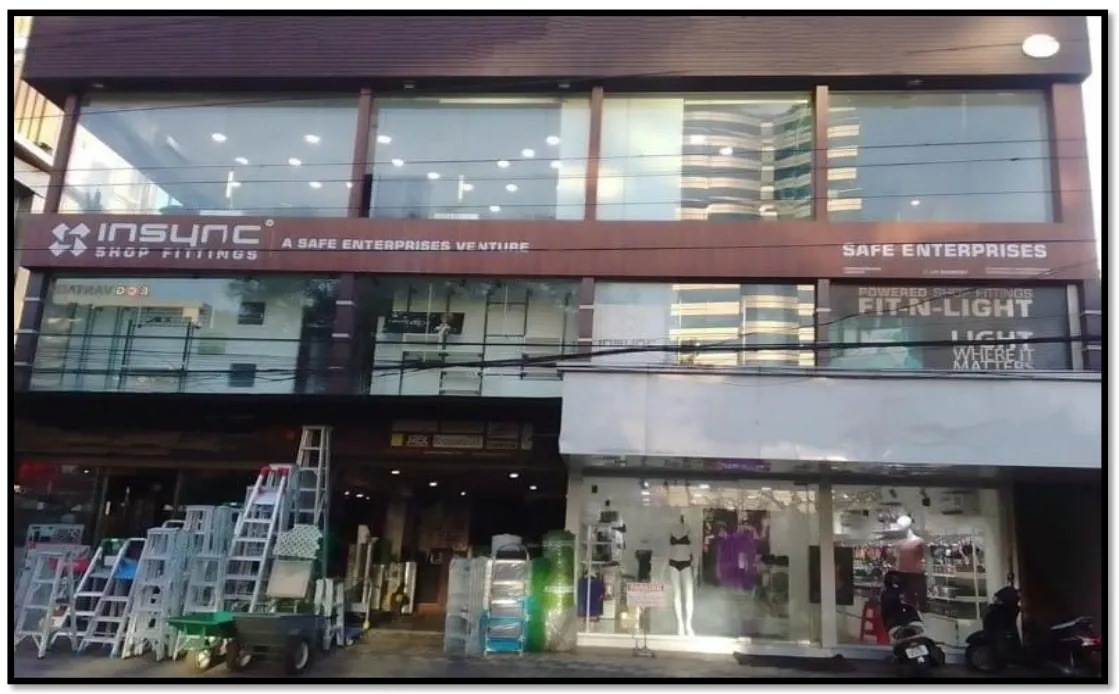
The company designs, manufactures, supplies, and installs shop fittings and retail fixtures — essentially everything you see when you walk into a branded store, except the overpriced T-shirt. From fashion stores to electronics chains to department stores, Safe builds the skeleton on which retail dreams are hung.
What makes it interesting is not what they do, but how efficiently they do it. They’re not just bending metal and cutting wood. They integrate electrification, LED lighting, digital screens, touch monitors, and IoT applications like “Lift and Learn” (yes, even shelves are smarter than us now).
In June 2025, the company listed on NSE SME after raising ₹161 crore through an IPO. Post listing, instead of cooling off like most IPO honeymoon stories, the company decided to flex with monster half-year numbers.
But remember, dear reader, this is an SME. Governance, concentration, scalability, and cyclicality all come free with the territory. The job here is not to fall in love with margins but to understand how fragile or durable those margins are.
So before you start mentally redecorating your portfolio with Safe Enterprises racks, let’s understand the business first.
3. Business Model – WTF Do They Even Do?
Imagine a retail brand wants to open 500 stores across India. They don’t want random carpenters and jugaad electricians messing up brand aesthetics. They want standardised, modular, scalable, tech-enabled shop interiors — delivered on time, installed fast, and looking premium.
That’s where Safe Enterprises walks in with a helmet, CAD drawings, and a welding machine.
The company offers:
- Modular storage racks and systems
- Cabinets and partitions
- Glass, cash, and display counters
- Digital display screens and touch monitors
- Electrified fittings with IoT applications
- Engineered shop fitting lines like gondolas, tower displays, shelving units
This is a B2B business with high entry barriers in execution. Designing is easy. Manufacturing at scale with tight tolerances, installing pan-India, and managing timelines for large retail rollouts is not.
Safe operates three owned manufacturing units in Navi Mumbai and Nerul, plus a subsidiary unit in Pune. Metal works utilisation is already ~90% across units. Wood works utilisation is close to 88%. This is not idle capacity waiting for demand — this is demand chasing capacity.
Revenue is 98.7% domestic, with exports forming a small 1.3%. Geographically, Maharashtra leads, but revenue is spread across