1. At a Glance
Petro Carbon & Chemicals Ltd is that classic SME stock which looks like a commodity play, smells like a commodity play, but trades like a tech startup on caffeine. Market cap sitting around ₹465 crore, stock chilling near ₹188, while trailing P/E casually flexes at 113x like it’s selling AI chips instead of calcined petroleum coke. In the last three months, the stock is up ~3.7%, six months ~1.9%, and one year down ~15%, which means nobody is fully happy — bulls are tired, bears are confused, and long-term holders are emotionally detached. Latest half-year numbers show sales of ₹260 crore with PAT of ₹2.93 crore, but profit has fallen sharply YoY despite revenue growth. ROCE at ~5% and ROE at ~5.4% politely whisper that capital efficiency is not the company’s strongest personality trait right now. Debt stands tall at ₹258 crore, interest coverage is a nervous 1.35x, and margins are thinner than a railway tea cup. Yet, this is a company supplying CPC to giants like NALCO and Hindalco, running plants inside Haldia refinery, and expanding capacity with environmental approvals in hand. Expensive, leveraged, operationally critical, and cyclically moody — perfect masala for an EduInvesting deep dive. Ready to decode whether this is carbon gold or just black dust?
2. Introduction
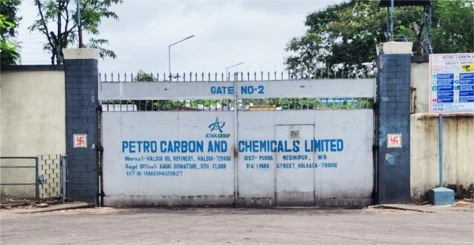
Petro Carbon & Chemicals Ltd (PCCL) is one of those companies that sits quietly in the background of India’s industrial ecosystem, supplying a product so unsexy that nobody talks about it at parties — until aluminium smelters stop running. Incorporated in 2007 and part of the Atha Group, PCCL manufactures Calcined Petroleum Coke (CPC), one of the purest forms of carbon, and sells it almost entirely to large industrial customers. No retail drama, no influencer marketing, no fancy brand recall. Just long-term B2B relationships and furnaces running day and night.
But don’t let the industrial calm fool you. The financials tell a story full of mood swings. One year margins spike, next year they vanish. One half-year profit looks healthy, next half-year looks like it forgot to wake up. The company has tasted periods of very high ROE historically, but currently sits in a phase where returns on capital have cooled faster than a chai left unattended.
What makes PCCL interesting is not just what it does, but where it sits. Located inside the Haldia Oil Refinery complex, with a captive 10 MW power plant, and supplying CPC to aluminium majors, PCCL is deeply embedded in the commodity supply chain. That’s both a moat and a risk. When aluminium demand is strong and CPC pricing behaves, life is good. When margins compress or interest costs rise, numbers fall off a cliff.
So the big question: is this just a temporary margin winter, or a structural issue hiding behind a carbon-black balance sheet? Let’s put on the detective hat (SME style), sharpen the sarcasm, and start digging.
3. Business Model – WTF Do They Even Do?
Petro Carbon & Chemicals does exactly one thing — and does it at scale. It manufactures Calcined Petroleum Coke (CPC). No product diversification gymnastics, no “adjacent opportunity” jargon. One product, multiple end uses.
CPC is derived from raw petroleum coke, which is then calcined (heated at very high temperatures) to remove volatile matter and improve carbon purity. The result is a high-carbon product used mainly in aluminium smelting anodes, steel recarburisation, titanium dioxide production, chemicals, and increasingly, battery-related applications.
PCCL operates on a pure B2B model. Its customers are not random traders but heavyweights like NALCO and Hindalco. Around 70% of its CPC goes directly into the aluminium industry, and 90–95% of revenue comes from a handful of large clients. That’s great for volume visibility, but also means customer concentration risk is very real. If one client sneezes, PCCL catches a cold.
The company’s manufacturing facility is located at Haldia, West Bengal, spread over ~30 acres, with a capacity of ~93,744 MTPA and utilisation consistently between 80–90% over the last three years. It also runs a captive 10 MW power plant, which is critical because energy costs can make or break margins in carbon processing.
PCCL is not sitting idle either. It has received environmental clearance for setting up 72,000 TPA of advanced carbon materials and revamping its 48,000 TPA carbon paste plant. Translation: management is betting that demand for carbon materials will keep growing, even if current margins are sulking.
Simple business. Heavy capex. Cyclical margins. Now let’s see how the numbers behave when theory meets reality.
4. Financials Overview
Result Type Lock: The latest official heading clearly states Half Yearly