1. At a Glance – The Chana Who Learned Capital Markets
₹306 crore market cap. ₹64 stock price. A six-month return of ~60% that made early SME investors suddenly act like seasoned FMCG veterans. Jeyyam Global Foods Ltd is what happens when humble chana decides it’s done being anonymous in kirana shops and wants brand recognition, balance sheet respect, and a listing ceremony. With H1 FY25 sales of ₹381 crore and PAT of ₹10.9 crore, the company is quietly converting roasted legumes into roasted equity returns. ROE and ROCE are both parked around 17.8%, which in the FMCG food segment is like saying “I lift, but I also do cardio.” Debt sits at ₹76 crore, manageable but visible, and operating margins hover around a no-nonsense 5%. No dividends yet, because apparently every rupee must be reinvested into chana domination. Add a 13% market share in Indian fried gram, deep penetration in South India, and Asia’s largest automated fried gram plant, and you get a company that looks boring… until you read the numbers and realise boring is often profitable. Curious yet?
2. Introduction – From Sundal to SME Stardom
Jeyyam Global Foods is not here to sell you dreams of plant-based moonshots or quinoa evangelism. It sells chana. Fried. Cleaned. Ground. Packed. Repeated at industrial scale. Incorporated in 2008, the company spent over a decade quietly doing what Indian food businesses do best—distribution, volume, and grinding margins thinner than papad but stable enough to survive inflation tantrums.
Then came FY24 and FY25, where revenue crossed ₹700 crore, profits scaled up sharply, and suddenly the market noticed. The IPO in September 2024 raised ₹82 crore, and the stock entered the SME exchange like a shy student who unexpectedly topped the exam. No flashy advertising budgets, no celebrity endorsements—just wholesalers, retailers, Tier II and III towns, and an obsession with Bengal gram.
What makes this interesting is not just growth, but how the growth came. Sales growth over three years stands at ~44%, while profit growth over the same period is ~72%. That’s not just selling more chana—that’s selling smarter chana. But before we crown it the Maharaja of legumes, let’s dig into what the company actually does, how it earns, and whether the balance sheet smells more like roasted gram or burnt oil. Ready?
3. Business Model – WTF Do They Even Do? (Besides Frying Chana)
Jeyyam Global Foods takes Bengal gram (chana), cleans it, fries it, grinds it, and sells it in bulk and consumer packs. That’s it. No AI. No blockchain. No “platform.” Just agricultural sourcing, processing, and distribution done at scale.
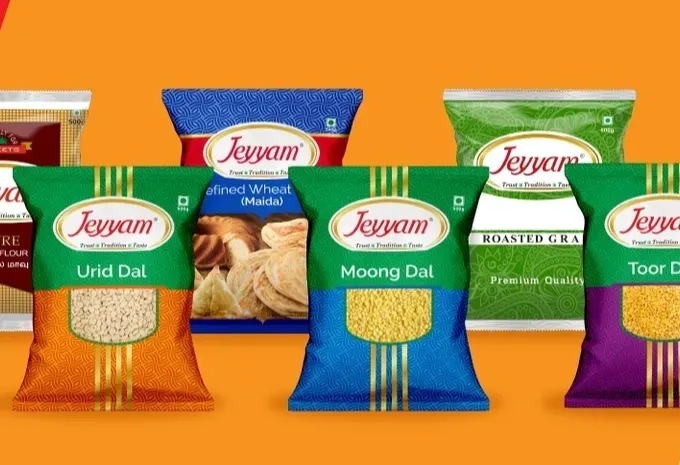
The business is divided into three main product streams. Clean chana is the starting point—impurities removed, size and colour graded, and sold either onward or used internally. Fried gram is where the magic (and margins) happen: chana is tempered, puffed, and roasted under controlled conditions. Then comes gram flour (besan), ground in three stages and sieved for quality.
The company operates two large facilities—Tamil Nadu (~1,04,328 MT capacity) and Andhra Pradesh (~66,830 MT capacity). Tamil Nadu runs at decent utilisation (70%+ across products), while Andhra Pradesh is still warming up, running at 20–34% utilisation. Translation: operating leverage is sitting there like an unused gym membership.
Sales are overwhelmingly B2B. About 82% comes from wholesalers, with distributors and others filling the rest. Geographically, Tamil Nadu alone contributes ~82% of revenue, which is both strength and risk—strength because dominance is clear, risk because diversification is still aspirational.
So yes,