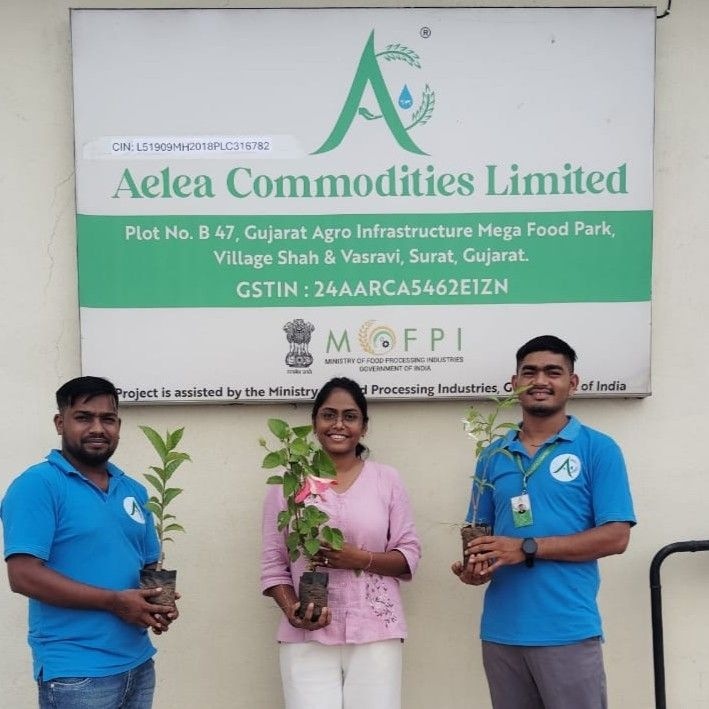
1. At a Glance – Cashew King or Just a Costly Kaju?
Aelea Commodities Ltd is one of those SME stocks that looks like it drank five shots of growth but forgot to hit the gym for profitability. Listed on BSE SME in July 2024 after raising ₹51 crore, the company now flaunts a market cap of about ₹318 crore at a price of ₹156, down roughly 16% in the last three months and a painful 31% over one year. Sales have exploded like Diwali crackers, with the latest half-year sales touching ₹174 crore, up a wild 98% YoY. PAT for the same period stands at ₹8.7 crore, up 56%. Sounds sexy, right? Then you notice ROE at 3.34% and ROCE at 7.56%, and the vibe changes faster than a bad first date. Stock P/E sits at a premium 52x, book value multiple at 2.84x, and debt is nearly negligible at ₹1.33 crore. In short: Aelea is growing fast, earning something, priced like a dream, but delivering returns like a fixed deposit that forgot to mature. Curious already? Good, because the real masala is just starting.
2. Introduction – From Trading Kirana to Processing Kaju Dreams
Aelea Commodities was incorporated in 2018, which means it’s barely old enough to order a beer, but already ambitious enough to talk about sustainable fuels, cardanol, and global demand. At its core, this is an agri-commodity company dealing in cashews, sugar, rice, onions, pulses, and pretty much anything that can fit inside a truck or a shipping container. But let’s be honest: cashew is the hero here. Everything else is like background dancers in a Bollywood item number.
The company started as a trading-focused setup and slowly moved into processing raw cashew nuts (RCN), importing them from African countries like Benin, Tanzania, Burkina Faso, Senegal, and Côte d’Ivoire. If geography bored you in school, congratulations, Aelea just made it relevant. The idea is simple: import raw cashews cheap, process them in India, sell kernels at higher margins. Simple on paper, brutal in execution.
FY24 revenue stood at ₹268 crore, with about 54% coming from manufactured products and 40% from traded goods. Exports are tiny at 4%, meaning Aelea is still very desi in its revenue mix. The company operates close to full capacity and has recently completed a massive expansion from 40 MTPD to 140 MTPD. Growth story? Yes. Margin story? Still loading. Governance story? Mixed signals. So the real question is: is Aelea building a long-term cashew empire or just flexing short-term volume muscles? Let’s dig.
3. Business Model – WTF Do They Even Do?
Imagine a company that buys raw cashew nuts from Africa, cracks them open in Surat, roasts them, salts them, turns some into kaju katli, and then also randomly trades sugar, rice, onions, and pulses because why not. That’s Aelea in a nutshell. Literally.
The business has two main engines. First, cashew processing. Aelea imports RCN, processes it into kernels at its Surat facility spread across 85,000 sq. ft., and sells to both B2B and B2C customers. Second, agri-commodity trading, mostly B2B, involving sugar, rice, and other staples.
What makes it interesting is the by-product story. Cashew shells are not waste here. They generate Cashew Nut Shell Liquid (CNSL), which is used in brake linings, varnishes, insecticides, pharmaceuticals, and chemicals. The company plans to further process CNSL into Cardanol and Residol, aiming to tap into sustainable fuel demand. Sounds futuristic, but remember: right now, this is still a plan, not a profit driver.
Capacity utilization is already at 95%, and Unit II was commissioned in May 2025 with capex of ₹37.08 crore. Processing capacity is now 140 MTPD. The business model is volume-heavy, working capital intensive, and brutally exposed to commodity price swings. So ask yourself: are you comfortable with a business where profits depend on global cashew