1. At a Glance
Hi-Green Carbon Ltd is that rare SME stock which smells like tyre smoke, talks like a climate warrior, and trades like a confused teenager. As of the latest close, the company sits at a market capitalisation of about ₹337 crore with the stock chilling around ₹135, after getting absolutely roasted in the last one year with a ~46% drawdown. Three-month and six-month returns are equally ugly, both deep in the red, which tells you that the market has clearly not inhaled the same optimism fumes that management is breathing.
Operationally though, the latest numbers look like a Bollywood comeback trailer. The most recent half-year shows consolidated sales of ₹69 crore with quarterly sales growth north of 90% YoY. That’s not growth, that’s “hold my pyrolysis reactor” energy. PAT for the quarter came in at ₹4.73 crore, although profits declined YoY by ~11%, reminding everyone that revenue growth and margin stability are not the same thing.
The company trades at a P/E of ~32, significantly higher than the industry median of ~20, despite ROCE of just ~11.9% and ROE of ~12.4%. Debt stands at ~₹57 crore with a debt-to-equity of 0.62, which is manageable but clearly rising as capex accelerates. Promoters hold a chunky ~72% stake with zero pledge, which is one of the few things here that doesn’t cause heartburn.
In short: booming top line, stressed margins, heavy capex, expensive valuation, and a stock chart that looks like it fell into its own waste tyre shredder. Curious yet?
2. Introduction
Hi-Green Carbon Ltd operates in that fashionable corner of capitalism where you take society’s trash, burn it very scientifically, and then sell the remains back to industry with a green label slapped on top. Founded in 2011 and part of the Radhe Group of Energy, the company has positioned itself as a waste tyre recycling specialist using pyrolysis technology.
The story is simple on paper: India generates mountains of end-of-life tyres, regulators want cleaner disposal, and industries want cheaper carbon substitutes. Enter Hi-Green, promising recovered carbon black, fuel oil, steel wire, synthesis gas, and even sodium silicate made from waste gases. It’s basically jugaad meets circular economy, with ISO certificates as garnish.
The market loved the idea initially. The IPO in September 2023 raised ~₹44.9 crore and the stock went on a joyride to highs of ₹341. Then reality kicked in. Capex ballooned, borrowings rose, margins softened, and suddenly investors realised that recycling tyres is not the same as recycling PowerPoint slides.
Now the company stands at an interesting crossroads. Capacity expansion is aggressive, with multiple plants either operational or under construction. Government incentives have been announced. Solar installations are in place. But execution risk, leverage, and volatile profitability remain very real.
So is Hi-Green Carbon an early-stage green industrial compounder… or just another SME burning cash while claiming to save the planet? Let’s put on the auditor’s helmet and walk through the smoke.
3. Business Model – WTF Do They Even Do?
At its core, Hi-Green Carbon takes old, useless tyres and cooks them. Literally. The company uses a pyrolysis process on end-of-life tyres (ELTs), heating them in the absence of oxygen to break them down into usable components. Think of it as pressure-cooking capitalism’s guilt.
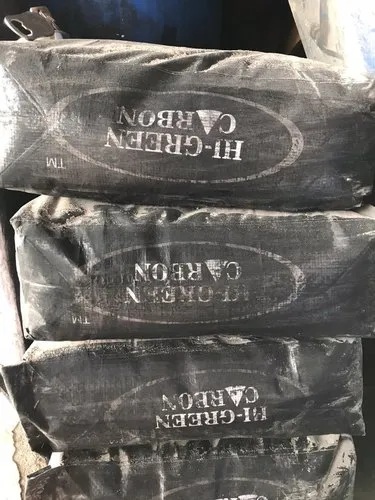
From this process, four main products pop out. First is Recovered Carbon Black (rCB), which is used in tyres, plastics, inks, coatings, and can even be upgraded into activated carbon. This is the star product and the main revenue driver. Second is fuel oil (also called bio-oil), which can be used in boilers and furnaces or refined further into chemicals. Third is steel wire, extracted from the tyres and sold as scrap. Fourth is synthesis gas, which Hi-Green further processes to manufacture sodium silicate, aka raw glass. Because why stop at one by-product when you can monetise the fumes too?
The company operates from its Bhilwara plant in Rajasthan with capacity to recycle 100 MT of tyres per day and produce 60 MT per day of sodium silicate. On top of that, a second 100 TPD plant in Dhule has been completed and a third 100 TPD plant in Dhar (Madhya Pradesh) is expected to commence operations by June 2025.
Revenue is largely product sales (~97%), not fancy carbon