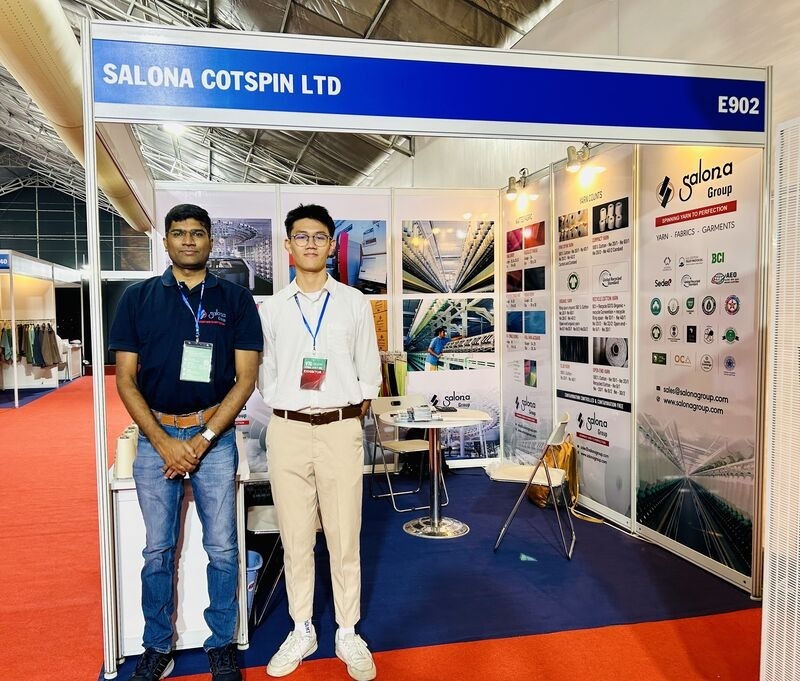
Salona Cotspin Ltd Q2 FY25 – The Cotton Yarn Spinner That’s Tying Itself in Knots (with ₹170 Cr Sales and EPS Just ₹2.03)
1. At a Glance
If you thought textile stocks were dull, Salona Cotspin Ltd (BSE: 590056, NSE: SALONA) is here to prove that even boredom can be volatile. The ₹153 crore company from Erode, Tamil Nadu, has spun cotton yarns, knitted fabrics, and garments into a Rs. 171 crore quarterly turnover — but with profit margins thinner than a politician’s promise. The company reported ₹1.07 crore PAT in Sep 2025, down 51% QoQ, while the EPS slipped to ₹2.03. Meanwhile, its P/E has bloated to 121x, the kind of valuation usually reserved for AI startups, not spinning mills.
Despite a modest ROE of 3.86% and a debt-to-equity ratio of 2.78, the stock sits at ₹290, up 14% over 3 months. Promoters hold a firm 67.1%, perhaps because no one else wants to. Salona’s tale this quarter: high on yarns, low on yield, and yet… still spinning stories for patient investors.
2. Introduction
Textiles and Tamil Nadu — the combination is as old as the state’s filter coffee. But Salona Cotspin’s journey feels like watching a handloom documentary in slow motion — the visuals are rich, but the plot barely moves.
Founded in 1996, Salona Cotspin started as a spinning unit and now claims to be a full-service textile player — from cotton yarn to garments. Over the years, it’s seen every textile boom and bust, survived demonetization, COVID, and even polyester’s aggressive invasion. But now, it’s wrestling with shrinking profits and rising debt.
The September 2025 quarter tells us a story of operational resilience… with the grace of a cotton bale rolling downhill. Sales rose slightly from ₹157 Cr to ₹171 Cr, but PAT halved from ₹2.02 Cr to ₹1.07 Cr. The interest cost alone (₹5.23 Cr) ate most of the profits like a loan shark at lunch.
Yet, there’s a certain charm — the company powers its own operations with windmills and solar plants, ensuring the spinning machines at least run sustainably while the P&L doesn’t. You can’t accuse them of not being green.
3. Business Model – WTF Do They Even Do?
Salona Cotspin makes cotton yarn, knitted fabrics, and garments under its own brand Salona. Think of them as the unseen tailors behind your comfy T-shirt or gym lower — they spin, knit, and stitch it all, but don’t get the credit tag on Myntra.
Their Product Range:
Yarns: Ring Spin, Compact, Open End, Slub, Hank — basically all the types that make textile engineers sound smart at conferences.
Fabrics: Fleece, French Terry, Jacquard, Interlock, RIB, and Single Jersey — all sounds fancy until you realize it’s just cotton’s different personalities.
Garments: Customized knitwear like T-shirts, lowers, and undergarments for domestic and export markets.
Export Markets: Bangladesh, Sri Lanka, Hong Kong, and Vietnam — classic low-cost textile zones. In short, Salona sells where everyone else also sells, competing in a global cotton “Thiruvizha” (festival) of margins.
The company’s Erode facility houses 24,336 spindles — a number that impresses engineers but not investors. They’ve smartly installed windmills and solar panels for captive power. So while profits evaporate, at least the electricity is self-sufficient.
4. Financials Overview
Let’s get into the spicy bit — numbers that reveal the reality behind the cotton mist.
Quarterly Results (₹ in Crore)
Source table
Metric
Latest Qtr (Sep 2025)
YoY Qtr (Sep 2024)
Prev Qtr (Jun 2025)
YoY %
QoQ %
Revenue
170.77
166.06
157.10
2.84%
8.7%
EBITDA
8.92
8.22
9.66
8.5%
-7.7%
PAT
1.07
2.19
1.53
-51.1%
-30.1%
EPS (₹)
2.03
4.16
2.91
-51.1%
-30.2%
Annualised EPS = ₹2.03 × 4 = ₹8.12. With CMP ₹290, P/E ≈ 35.7x (realistic) — not 121x if we annualize EPS. So, at least Screener didn’t lie; it just forgot math.
Witty Take: Revenue grew, profit shrank — the classic “running faster to stay in the same place” story. OPM at ~5.22% looks like a textile stitched too tight — there’s no breathing room.
5. Valuation Discussion – Fair Value Range Only
Let’s do the math like serious analysts (but with jokes).
(a) P/E Method:
Industry P/E = 19.1 Annualized EPS = ₹8.12
Fair Value (Low) = 19.1 × 8.12 = ₹155
Fair Value (High) = 25 × 8.12 = ₹203
(b) EV/EBITDA Method:
EV = ₹387 Cr EBITDA (TTM) = ₹34 Cr EV/EBITDA = 11.4x If we apply industry range (8x–10x):
Fair EV ≈ ₹272–₹340 Cr → Equity Value (after debt ₹237 Cr) = ₹35–₹103 Cr → Fair Value per Share ≈ ₹65–₹180