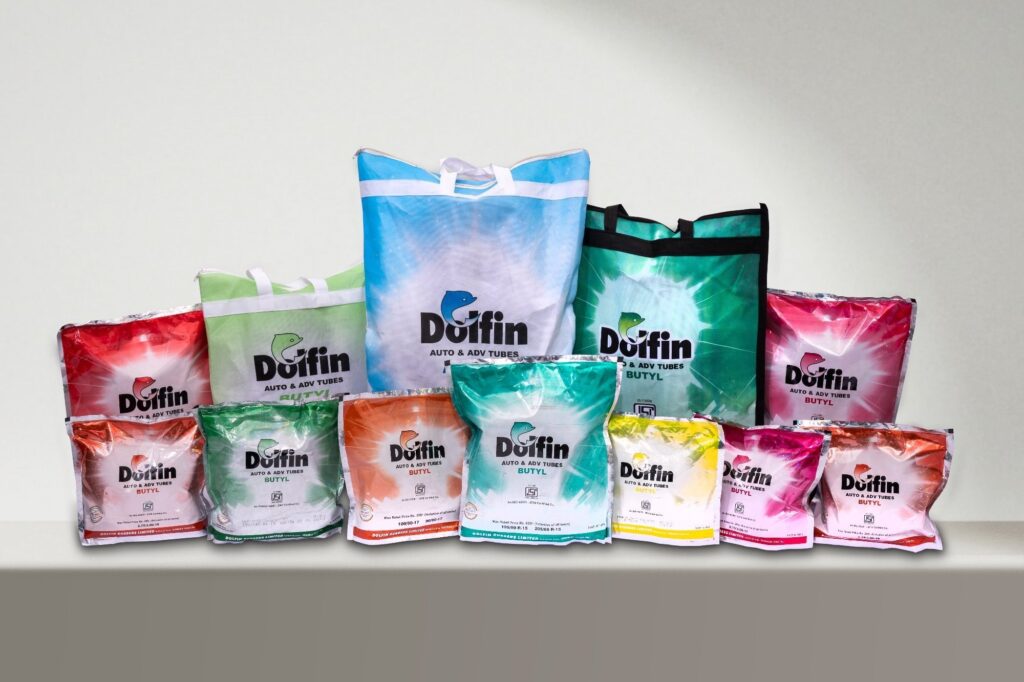
If there were an award for punching above its tube weight, Dolfin Rubbers Ltd (BSE: 542013) would be a finalist. With a market cap of ₹179 crore and a current price of ₹178, this Ludhiana-based rubber hustler manufactures auto tubes and tyres for every wheeled creature that rolls on Indian roads — from mopeds to tractors, and even the odd e-rickshaw in a forgotten gully of Patna. The stock’s been leaking air lately, down 19.4% over the past year, but its ROE of 16.5% and ROCE of 17.1% still hold traction.
For Q2 FY26 (quarter ended September 2025), Dolfin posted sales of ₹39.9 crore, up 18.4% YoY, while PAT came in at ₹1.08 crore, a modest 3.85% YoY rise. The Operating Profit Margin (OPM) stood at 4.59%, slipping from the golden days of 7%. Stock P/E is 38.7x, making it costlier than some entire tyre dealerships.
Still, with exports to six countries, 6 million tubes made annually, and a production unit that smells like hot butyl and hard work, Dolfin continues to keep the Indian tyre ecosystem inflated — literally.
2. Introduction
There’s something inherently poetic about a company that spends its life making circles of rubber, only to find itself stuck in the same loop of moderate growth. Dolfin Rubbers, founded in 1995, has spent three decades turning petrochemicals into rolling profit, operating quietly in the shadows of giants like MRF, CEAT, and Apollo Tyres.
But here’s the twist — while big boys are flaunting TV ads with cricketers and mountain bikers, Dolfin has been busy making the unsung hero of the vehicle world — the humble tube. The one component that nobody sees but everybody needs. The one part that, if it fails, brings even the loudest Bullet to a halt.
Over time, Dolfin moved beyond tubes to make tyres — not to compete with the giants, but to complete its ecosystem. Because what’s a tube without its tyre? It’s like chai without the cup — technically functional, but socially awkward.
In FY25, the company reported sales of ₹151 crore and PAT of ₹4.62 crore, giving it a profit margin of ~3%. Modest, but consistent. In a business where every rupee of rubber costs blood, sweat, and polymer fumes, Dolfin’s steady margins reflect strong control on input costs and efficiency.
So, is Dolfin a sleeping compound tiger or just another rubber recycler? Let’s peel off the tread layer by layer.
3. Business Model – WTF Do They Even Do?
In the simplest terms, Dolfin Rubbers converts butyl rubber into automobile tubes and tyres for two-wheelers, three-wheelers, tractors, and small commercial vehicles. They don’t make fancy radials for BMWs — they make the reliable, everyday tubes that keep India’s 2-wheelers humming.
Here’s the anatomy of their empire:
Tubes Division: From moped tubes to tractor rear tubes, Dolfin covers the entire mobility spectrum. Their portfolio even includes industrial tubes and flaps — those strong, inner rubber rings that make truckers’ lives less punctured.
Tyres Division: A newer venture, covering E-bike, Motorcycle, Scooter, and E-rickshaw tyres, all produced in the same Ludhiana facility. The product names sound like a mix of Transformer characters — ZR/ZEN, MZ/MEZ, NG/NEK — because why not?
The company manufactures 6 million butyl tubes and 0.5 million tyres annually, producing 6,000 tons of rubber goods per year in a 2 lakh sq. ft plant. That’s a lot of elasticity.
Exports go to Bangladesh, Bhutan, Egypt, Nepal, Pakistan, and Sri Lanka, proving that Dolfin’s tubes cross more borders than most Indian passports.
Its value proposition? Reliable quality, wide range, and cost-effective distribution — the holy trinity for Tier-2 auto manufacturers and spare-part dealers.
4. Financials Overview
Quarterly Comparison – Q2 FY26 (₹ crore)
Metric
Latest Qtr (Sep 2025)
YoY Qtr (Sep 2024)
Prev Qtr (Jun 2025)
YoY %
QoQ %
Revenue
39.90
33.70
40.23
18.4%
-0.8%
EBITDA
1.83
1.97
2.67
-7.1%
-31.5%
PAT
1.08
1.04
1.29
3.9%
-16.3%
EPS (₹)
1.08
1.04
1.29
3.9%
-16.3%
Commentary: Revenue inflated nicely YoY, but profits deflated a bit QoQ. The EBITDA margin dropped to 4.6%, suggesting higher raw material costs or lower pricing power — probably both. The company’s tax rate fluctuates wildly (11–43% in recent quarters), so profit consistency is more myth than math.
Annualized EPS (₹1.08 × 4) = ₹4.32, implying a P/E of 41x, which is high for a company that sells rubber circles. But in Dalal Street’s circus, valuation elasticity is sometimes infinite.
5. Valuation Discussion – Fair Value Range (Educational)
Let’s pull out the magnifying glass:
Method 1: P/E Multiple EPS (annualized): ₹4.32 Industry P/E: 30.8 Fair Value Range = ₹4.32 × (25 to 35) = ₹108 – ₹151
Method 2: EV/EBITDA EV = ₹195 Cr; EBITDA (TTM) = ₹9 Cr EV/EBITDA = 21.6x If normalized at 15–18x = Fair EV = ₹135–₹162 Cr → Equity Value ≈ ₹125 – ₹150
Method 3: DCF (Simplified) Assuming 13% CAGR in cash flow over 5 years and 10% discount rate, intrinsic range ≈ ₹115 – ₹160
✅ Fair Value Range (Educational Only): ₹110 – ₹155
Disclaimer: This range is for educational analysis, not investment advice. Rubber burns fast; don’t play with it.