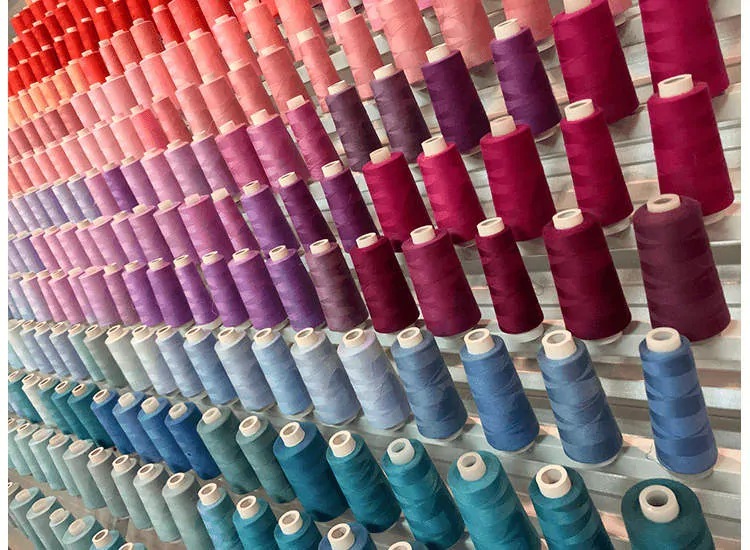
Welcome to Jattashankar Industries Ltd (JIL)—a ₹164 crore market cap textile company that seems to have spun more drama than yarn this quarter. Founded in 1988 and once known for its polyester dyed and fancy yarns, JIL’s current storyline involves a complete management shakeup, a registered office migration to Pune, and—brace yourself—a diversification into agriculture, edible oils, and food processing. Yes, the same Jattashankar that once dyed yarns now wants to dye the agri-market green.
The latest half-yearly numbers? Sales have almost evaporated—down a mind-numbing 99% YoY to ₹0.10 crore for TTM, with an OPM of -1,580%. PAT for Q2FY25 is a mere ₹3.39 lakh, and EPS has plunged from ₹8.71 in FY24 to -₹1.32 TTM. Yet the stock is up 224% YoY. Why? Because, apparently, hope and hype have better liquidity than actual sales.
The company’s P/B ratio at 8.83 screams “valuation absurdity,” while ROE and ROCE sulk around -7%. But the promoters—now a new controlling group post-acquisition in August 2025—still hold 72.55%. And if you think that’s stability, wait till you see the boardroom musical chairs this year.
2. Introduction
Some companies rise like phoenixes. Others just change their MOA (Memorandum of Association) and hope the phoenix will deliver edible oil.
Jattashankar Industries began as a decent yarn player, manufacturing polyester dyed, high bulk, and cotton yarns, alongside woven elastic tapes. Business was stable, boring, and predictable—until 2025 turned the company into a corporate soap opera. In just four months, JIL replaced its Chairman, Managing Director, CFO, Executive Directors, and Independent Directors. Then, it shifted its headquarters from Mumbai to Pune and decided to enter agriculture, food processing, and edible oils.
One could call it diversification. Or desperation. Or, as investors on social media say—“from textile to text-less.”
Meanwhile, despite the nosediving topline, the stock has soared 172% in three years and 224% in the last one. Clearly, Mr. Market loves chaos—especially when it’s draped in the word “transformation.”
But let’s pause the jokes for a second. This company, debt-free and once run by the Poddar family, was acquired in August 2025 through an open offer where the new acquirers bought 72.55% stake (31.82 lakh shares). Within weeks, they revamped the entire management and rewrote the company’s destiny. The textile legacy might be fading, but the Jattashankar story is just getting started.
3. Business Model – WTF Do They Even Do?
Once upon a time, Jattashankar Industries proudly produced dyed yarns used in suiting, shirting, hosiery, upholstery, and industrial fabrics. It also made woven elastic tapes—basically, everything your wardrobe silently relies on.
Their product catalogue included:
Polyester Dyed Yarn
Cotton Dyed Yarn
High Bulk Yarn
Woven Elastic Tapes
Narrow Fabrics like Labels and Laces
But as of September 2025, the company’s MOA now includes—wait for it—agriculture, edible oils, food processing, trading, and warehousing. Yes, from suiting fabric to suiting farmers.
It’s like your neighborhood tailor announcing he’s now into cold-pressed groundnut oil.
To be fair, Indian smallcaps often reinvent themselves. Sometimes it works (ask chemical-to-specialty players). Sometimes it doesn’t (ask crypto miners turned FMCG dreams). For Jattashankar, the pivot could be strategic—perhaps Sunrise Colours Ltd (its related party engaged in dyeing and narrow woven fabrics) no longer guarantees scale, and management wants a business with higher volume and less cyclicality.
But there’s a thin line between “strategic shift” and “identity crisis.” The next few quarters will tell whether Jattashankar becomes India’s next agri-processing mini-cap, or just another chapter in the “BSE Diversification Club.”
4. Financials Overview
Let’s dissect the Q2FY25 results like a forensic accountant with a caffeine addiction.
Metric
Latest Qtr (Sep 25)
Same Qtr Last Year (Sep 24)
Prev Qtr (Jun 25)
YoY %
QoQ %
Revenue
₹0.08 Cr
₹3.95 Cr
₹0.00 Cr
-97.9%
—
EBITDA
-₹0.08 Cr
-₹0.26 Cr
₹0.11 Cr
-69.2%
-172.7%
PAT
₹0.03 Cr
-₹0.59 Cr
₹0.11 Cr
—
-72.7%
EPS (₹)
0.07
-1.34
0.25
—
-72%
Commentary: Revenue collapsed 98% YoY—proof that “textile slowdown” is now an understatement. But PAT turned marginally positive at ₹3.39 lakh, which in corporate terms translates to “we’re still breathing.” OPM, once 7–10% a decade ago, has vanished into thin air, replaced by negative double digits.
The EPS of ₹0.07 this quarter gives an annualized EPS of ₹0.28, implying an astronomical P/E ratio of 1,335x. For context, that’s higher than Nvidia and Tesla combined. But hey, markets love a good resurrection story, even if it’s still on dialysis.
5. Valuation Discussion – Fair Value Range Only
Let’s try and sanity-check this circus.
Method 1: P/E Approach
EPS (annualized from Q2): ₹0.28
Industry average P/E: ~19.3
Fair Value Range = ₹0.28 × (15–25) = ₹4.2 – ₹7.0 per share
Method 2: EV/EBITDA
EV = ₹164 Cr
EBITDA (TTM) = -₹1.58 Cr (loss) Since EBITDA is negative, valuation by this method = “does not compute.”
Method 3: DCF (Simplified) Given no stable cash flow, even Excel refuses to cooperate.
Thus, for educational purposes only, the fair value range lies between ₹4 and ₹7, based purely on fundamentals.
Disclaimer: This fair value range is for educational purposes only and is not investment advice.