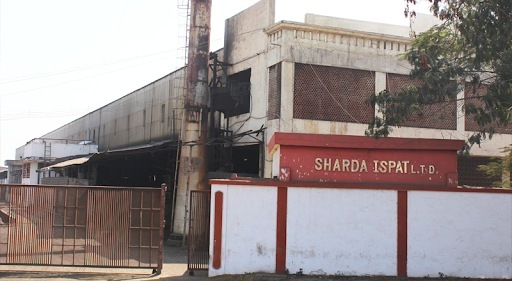
Sharda Ispat Ltd, the Nagpur-based steel roller born in 1960, just pulled off a masterclass in disappearing margins. At ₹191 per share and a market cap of ₹96.9 crore, the company is currently trading at a P/E of 21.3x — not cheap for a steelmaker that just reported a net profit of ₹0.13 crore on quarterly sales of ₹26.19 crore. Yes, you read that right — Rs 13 lakh profit. That’s like earning the price of a new Mahindra Thar after selling an entire warehouse of steel.
With Q2 FY26 results showing sales down 19.3% YoY and profit crashing 73.5%, Sharda Ispat looks like it’s trying to melt faster than its own furnace output. The return over the past 6 months is -38.2%, and the 1-year return is -37.4% — the stock’s way of telling investors, “Tumse na ho payega.”
The company’s ROCE sits at 14%, ROE at 13.7%, and Debt-to-Equity ratio at 0.57, suggesting a modest balance sheet that’s not terrible, just… tired. Despite consistent profits, there’s no dividend payout — apparently, steel isn’t the only thing being rolled; investor hopes are too.
2. Introduction
There’s something poetic about a steel company from Nagpur — the city that gave us zero traffic sense, orange barfi, and India’s iron spine in logistics. Sharda Ispat has been heating, rolling, and shaping alloy steel since the Nehruvian era, yet somehow manages to look like a startup still “figuring things out.”
In Q2 FY26, while the big boys like APL Apollo Tubes and Godawari Power are flexing with four-digit crore profits, Sharda is quietly whispering, “Main bhi hoon steel industry ka hissa.”
The company’s operational performance feels like a WhatsApp group of Indian cousins — everyone talks big during family functions but no one shows up when work needs to be done. Sales have slipped, profits have evaporated, and the only thing consistent is the “Other Income” of ₹1 crore, which has become their favorite seasoning to flavor quarterly results.
Yet, there’s a nostalgic charm. This company, with its family-style management and vendor connections with Tata Motors, Ashok Leyland, and Mahindra, continues to survive. That’s not easy. In India, even your girlfriend leaves you after bad quarters, but Sharda Ispat is still here, rolling its metal and its destiny.
3. Business Model – WTF Do They Even Do?
Sharda Ispat manufactures and does job work for alloy steel flat and rolled products — basically, they make the unsexy steel parts that make sexy cars and trucks possible. Their clientele includes vendors supplying to Tata Motors, Ashok Leyland, Mahindra & Mahindra, Eicher, and Force Motors — the who’s who of India’s heavy-duty automobile ecosystem.
Their product range looks like a metallurgist’s Tinder bio — flats, rounds, squares, carbon steel, alloy steel, and spring steel — all designed to withstand pressure, heat, and market analysts.
They operate with precision rolling mills that produce steel sections in grades like 65Si7, EN45A, SUP9, SUP11A — if you don’t understand those, don’t worry; your car’s suspension does.
Their FY22 production was ~19,074 MT, up from 16,900 MT in FY21 — impressive growth, but since then, the momentum seems to have rusted. The demerger saga from 2011 still echoes — the original Sharda empire split like a joint family after a property dispute, birthing Sharda Ispat Industries Ltd and Sarda Power & Steel Ltd. The Kamptee Road unit was retained, and the rest went to the cousins.
So yes, this is the prodigal child that stayed home and decided to keep rolling — literally.
4. Financials Overview
Quarterly Comparison Table (₹ crore)
Metric
Q2 FY26
Q2 FY25
Q1 FY26
YoY %
QoQ %
Revenue
26.19
32.45
27.82
-19.3%
-5.9%
EBITDA
0.12
0.52
0.21
-76.9%
-42.9%
PAT
0.13
0.49
0.28
-73.5%
-53.6%
EPS (₹)
0.26
0.97
0.55
-73.2%
-52.7%
Commentary: Sharda Ispat’s quarterly numbers look like a steel beam bent in slow motion. Sales slipped under the pressure of low demand and tight margins. Operating profit margin (OPM) has crashed from 1.6% last year to 0.46% now. Even “Other Income” (₹1.01 crore) was higher than operating profit — imagine earning more from FDs than furnaces.
EPS of ₹0.26 for the quarter gives an annualized EPS of about ₹1.04. With the stock trading at ₹191, that’s an annualized P/E of ~184x if we go by the latest quarter. Clearly, this stock believes in “valuation over validation.”
5. Valuation Discussion – Fair Value Range Only
Let’s do the math like proper auditors with sarcasm.
Method 1: P/E Approach Average industry P/E = 21x. TTM EPS = ₹8.94. → Fair Value = ₹188–₹210 range.
Method 2: EV/EBITDA EV = ₹129 crore, EBITDA (FY25) ≈ ₹9 crore → EV/EBITDA = 14x. If we assign fair multiple 10–12x (industry average), EV fair = ₹90–₹108 crore. After adjusting debt and cash, Fair Value per share ≈ ₹170–₹200.
Method 3: DCF (Discounted Cash Flows) Assuming stable EBITDA growth of 10% and cost of capital at 12%, DCF range suggests ₹175–₹195.
📘 Fair Value Range (Educational Purpose Only): ₹170 – ₹210 per share. This fair value range is for educational purposes only and not investment advice.
6. What’s Cooking – News, Triggers, Drama
The latest announcement on 14 November 2025 revealed unaudited financials for Q2/H1 FY26 — revenue of ₹54 crore and net profit of ₹0.41 crore