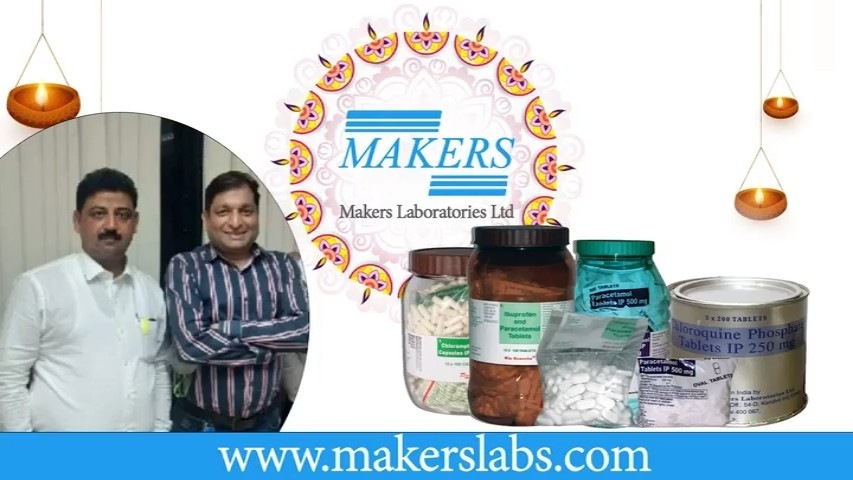
Makers Laboratories Ltd H1 FY26 – The Pharma Junior That Outsourced Its Own Plot Twist!
From selling anti-malarials to selling its own Mumbai land, Makers Labs’ H1 numbers are a perfect cocktail of pharmaceuticals, chemicals, and chaos. Revenue ₹69.18 crore, profit ₹2.03 crore, and a market cap barely worth one Sun Pharma conference lunch. Yet the company bagged a GMP certificate and ditched distributors. Let’s unwrap this pill of irony, shall we?
1. At a Glance
Makers Laboratories Ltd (BSE: 506919) closed on ₹118 on 10th December 2025 — down 33% in a year and down 16.5% in just three months. With a market cap of ₹69.6 crore, this pharma minion is trading at 0.98x book value, practically begging investors to notice it. But here’s the kicker — after all that hustle across 200+ formulations, the company earned a profit of ₹0.74 crore in Sep 2025, down from ₹9.76 crore a year ago.
While the Operating Profit Margin hangs around 7.4%, the ROCE at 4.25% and ROE at 3.36% make it look more like a sleepy chemist shop than a lab of miracles. Yet, this tiny pharma player has a new Eurasian Economic Union GMP certificate, a fresh ophthalmic unit, and a direct-to-chemist distribution strategy that sounds brave (or desperate, depending on caffeine levels).
If pharmaceuticals are a high-margin industry, Makers Labs is that one student who scored 33 just to pass — but proudly shows up with a certificate anyway.
2. Introduction
If pharma giants like Sun Pharma and Dr. Reddy’s are seasoned professors of the Indian drug university, Makers Laboratories Ltd (MLL) is the lab assistant who accidentally discovered aspirin while mixing painkillers and paperwork.
Founded in 1984, MLL manufactures and markets generic formulations across anti-malarials, antibiotics, anti-diabetics, and painkillers — basically anything ending with “-in,” “-ol,” or “-ine.” It caters to hospitals, nursing homes, and “dispensing doctors” (a polite way of saying the neighborhood clinic that doubles as a pharmacy).
The company doesn’t just make medicines; it does job work for IPCA Laboratories, its more muscular cousin. In fact, the two share more than just industry ties — they literally share transactions, management lineage, and now, real estate. Because in FY24, Makers Labs sold its Kandivali land and office building to IPCA for ₹18.5 crore. When your cousin buys your office, it’s not nepotism — it’s vertical integration with family discount.
With 200+ formulations and operations extending into chemical manufacturing (a full 53% of revenue), MLL seems less like a pure pharma play and more like a chemistry lab with a side hustle.
3. Business Model – WTF Do They Even Do?
At its core, Makers Laboratories Ltd runs two parallel engines:
Pharmaceuticals (47%) – Manufacturing and marketing of generic formulations across India. Their product basket includes anti-malarials, anti-inflammatory drugs, analgesics, and anti-diabetics.
Chemical Manufacturing (53%) – A quieter but steadier segment producing bulk chemicals that keep the lights on when the pharma business sneezes.
The company’s Naroda-Ahmedabad manufacturing unit handles commercial production for the Indian market while developing ophthalmic eye drops for “Rest of World” markets — read: countries that buy Indian meds but can’t spell “Naroda.”
What’s interesting is their shift from a distributor-based model to a Direct-to-Chemist strategy. Essentially, instead of paying a middleman to move stock, they now send field teams directly to chemists. Sounds empowering — until you realize that means managing logistics, inventory, and payments with every single chemist. In India. Where even Amazon struggles with delivery OTPs.
But the intent is noble — cut commissions, save costs, and improve margins. Whether it improves sales is another story.
4. Financials Overview
Welcome to H1 FY26, where Makers Labs tried mixing profit with experimentation and ended up with an ₹2.03 crore profit, up from last year’s near-loss.
Consolidated Half-Yearly Results (₹ in crore):
Source table
Metric
H1 FY26
H1 FY25
Q4 FY25
YoY %
QoQ %
Revenue
69.18
59.87
33.90
15.6%
1.0%
EBITDA
4.59
3.86
3.09
18.9%
4.2%
PAT
2.03
-0.12
1.58
–
28.5%
EPS (₹)
0.75
-0.05
0.68
–
10.3%
Annualised EPS = ₹0.75 × 2 = ₹1.50 (H1 basis)
With a CMP of ₹118, that’s a P/E of roughly 78x — the kind of valuation even Zydus would hesitate to prescribe.
Margins are up, profits are small but real, and the operating line looks steadier than before. But at this scale, one delayed consignment or missing payment can turn the profit column red faster than paracetamol sales during exam season.
5. Valuation Discussion – Fair Value Range Only
Let’s try three classic valuation approaches for educational entertainment:
(a) P/E Method
If we assume a modest industry P/E of 30x and annualised EPS of ₹1.5: Fair Value Range = ₹45 – ₹60 (conservative small-cap discount applied).
(b) EV/EBITDA Method
EV = ₹76.2 crore, EBITDA (TTM) ≈ ₹10 crore → EV/EBITDA = 7.6x. Industry average = 10x–12x. So, Fair Value Range = ₹90 – ₹120.
(c) DCF (Discounted Cash Flow) Method
Assuming free cash flow of ₹5 crore growing 5% annually at 12% discount rate: Intrinsic Value ≈ ₹100–₹115.
💬 Fair Value Educational Range: ₹90 – ₹115 (This fair value range is for educational purposes only and is not investment advice.)
6. What’s Cooking – News, Triggers, Drama
First, the big news: the Eurasian Economic Union RU GMP Certificate for their ophthalmic eye drop facility. Translation — Makers Labs can now sell eye drops to markets that previously didn’t trust their paperwork. This opens up potential exports, though no revenue impact has yet