Annapurna Swadisht Ltd H1 FY26 – From Fryums to Fortune: The Snack Empire That’s Expanding Faster Than a Popcorn Kernel in a Microwave
1. At a Glance
If India had a stock for every ₹5 snack you’ve impulsively bought at a railway station, it would be Annapurna Swadisht Ltd (ASL). And right now, that stock is sizzling at ₹218, down nearly 43% over the past year but still munching on revenues like a hungry teenager after tuition.
The company, with a market cap of ₹477 crore, recently posted H1 FY26 (Sep 2025) revenue of ₹249.9 crore and PAT of ₹15.4 crore, marking a 22% YoY growth in both top and bottom line. Despite the profit momentum, the share price took a breather — maybe the market’s on a diet.
With a P/E of 20.5, ROCE of 12.8%, and ROE of 9.7%, Annapurna looks like a mid-tier FMCG warrior trying to elbow its way into a hall dominated by Britannia, Nestle, and Bikaji. Oh, and did we mention promoters have pledged 55.7% of their holdings? Because nothing says “confidence” like collateralizing your chips.
2. Introduction
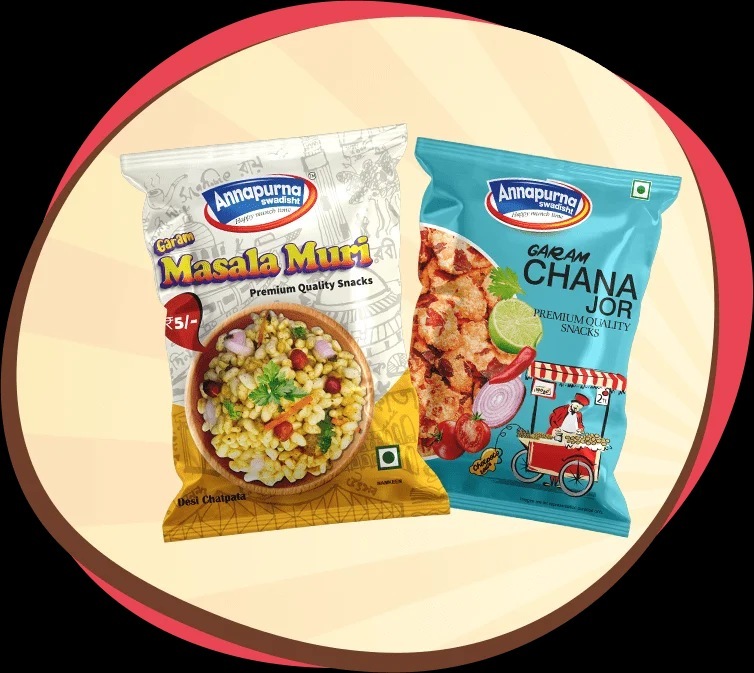
Picture this: small-town India, a tea stall, and a packet of ₹5 fryums with “Jackpot” written in Comic Sans. That’s where Annapurna Swadisht began its domination of the desi snacking world. Born in 2016, the company is young, loud, and refreshingly unapologetic about flooding your local kirana store shelves.
The company’s growth curve reads like a Bollywood montage — expanding from humble fryums and namkeen into cakes, biscuits, noodles, and even drinks. If it’s edible and packaged, Annapurna probably has a version with extra masala.
From Debgram to Assam to Meerut, the company’s eight production units crank out 76+ MTPD, recently boosted by the Gurap and Dhulagarh plants. That’s a whole lot of spicy goodness — or as analysts call it, “volume growth.”
And just when you thought they were done, Annapurna decided to acquire Arati brand mustard oil and 100% of Madhur Confectioners. Because clearly, diversification is the new dieting.
3. Business Model – WTF Do They Even Do?
At its core, Annapurna Swadisht is a multi-category FMCG manufacturer, operating across 10+ product verticals — from fryums and namkeen to cakes, biscuits, sweets, noodles, candies, and even beverages.
Think of it as a desi version of PepsiCo’s snack division, except every product feels like it was designed for Tier-2 and Tier-3 India’s impulsive shopper who wants taste, not English branding.
The company’s unique approach:
Mass affordability – majority of their SKUs sit in the ₹5 to ₹10 price bracket, now expanding into ₹30 products.
Regional expansion – heavily concentrated in Eastern India (West Bengal, Bihar, Jharkhand, Assam), where their 125 super stockists and 550 distributors reach over 6 lakh retail outlets.
Contract & owned production – with both in-house plants and leased units offering flexibility and scale.
The magic here isn’t just taste — it’s distribution density. The same “Dhamaka” or “Rambo” packet reaches 80,000+ villages, faster than some government schemes.
So if you’re wondering what they do — simple. They make everything your dietitian hates but your taste buds love.
So, Annapurna’s current valuation looks cheaper than the ₹10 rusk it sells — but the margins tell the real story. Operating profit margins have climbed from 9% to 13% in two years, showing this snack maker knows how to manage inflation and still fry with flair.
5. Valuation Discussion – Fair Value Range Only
Let’s crunch the numbers like crispy bhujia:
Annualised EPS (FY26 est.) = ₹14.12
P/E Range:
Lower end (industry discount): 18x → ₹254
Upper end (peer average): 25x → ₹353
→ Fair Value Range (P/E Method): ₹254 – ₹353 per share
EV/EBITDA Method:
EV = ₹573 Cr
EBITDA (TTM) = ₹56 Cr
EV/EBITDA = 10.1x (already given) Industry peers trade around 18–22x. If re-rated to 15–18x, fair value = ₹330–₹400 range.
DCF (Simplified): Assuming 20% earnings growth for 3 years, terminal growth 5%, discount rate 12% → ₹270–₹360 range.
👉 Educational Fair Value Range: ₹254–₹360 per share. (This fair value range is for educational purposes only and is not investment advice.)