1. At a Glance
Welcome to the chemical company that couldn’t decide whether it wanted to be a refinery or a fashion house. Ritesh International Ltd (RIL) — not to be confused with that RIL of Ambani — makes stearic acid, fatty acids, glycerin, and readymade garments. Yes, the same balance sheet that lists “PVC Grade Stearic Acid” also has “T-shirts” on it. Because why not?
At a market cap of ₹56.2 crore and a current price of ₹65.7, the company has been doing cartwheels this year, returning a whopping 97.6% in three months and 123% in one year. From a sleepy chemical stock to a 2x performer — clearly, the market’s got some new affection for acids and apparel.
With a P/E of 12.0, ROE of 16.3%, and ROCE of 17.8%, the numbers are as unexpectedly balanced as a chemist’s love life. The latest Q2 FY26 results (Sept 2025) reported revenue of ₹38.74 crore and PAT of ₹1.06 crore, translating to an EPS of ₹1.24 — up 412% YoY. Whoever said “slow and steady wins the race” clearly didn’t see this quarter’s profit chart.
The stock price up 97% in 3 months, profit growth of 1,019%, and zero promoter pledge — all while juggling chemicals and cardigans — make Ritesh International one of those tiny-cap marvels that quietly wake up and start shouting, “Notice me, senpai!”
2. Introduction
Let’s get one thing straight — most companies are either in manufacturing or retail, but Ritesh International Ltd (est. 1981) is a maverick that said, “We’ll make acids for the tyre industry and shirts for your next office meeting.”
On one hand, it runs a Stearic Acid & Glycerin Division, supplying crucial inputs to the rubber, PVC, and candle industries. On the other hand, its Knitwear Division makes garments — because diversification, my friend, is the best hedge against boredom.
The company’s origin story is rooted in Ludhiana, Punjab — where textile mills and small chemical units share the same street. And Ritesh decided to embrace both worlds. This dual-business identity has given it a kind of old-school resilience: when the garment sector slows, chemicals pick up, and vice versa. Smart? Or just lucky? Maybe both.
Its return on capital employed (17.8%) shows management isn’t asleep, even if the market ignored it for years. But here’s the kicker — after a tragic leadership loss in October 2023 (the demise of long-time MD Rajiv Arora), the company restructured with Ritesh Arora taking over as Managing Director and Chairman. Under him, the company is showing new energy — not just in results, but also in corporate moves like a preferential issue of ₹3.79 crore in late 2025 to strengthen its capital structure.
A year ago, Ritesh International was just another sleepy SME counter; now, it’s a tiny dynamo posting triple-digit returns, with debt under control and margins finally looking up.
3. Business Model – WTF Do They Even Do?
Alright, so let’s decode this two-faced genius of a company.
Division 1: Stearic Acids & Non-Edible Oils
Think of stearic acid as the unsung hero behind your tyres, candles, soaps, and PVC pipes. Ritesh makes PVC-grade, rubber-grade, and candle-grade stearic acids — the building blocks of industrial chemistry. Then there’s industrial-grade refined glycerin, the ingredient that makes your hand sanitizers and creams slippery and smooth (and sometimes, your financials too).
This division contributes ~88% of total revenue — the real breadwinner here. Its customers include small-to-mid rubber and PVC manufacturers who rely on consistent purity and supply. The product names may sound boring, but margins are actually improving due to better capacity utilization and cost control.
Division 2: Knitwear
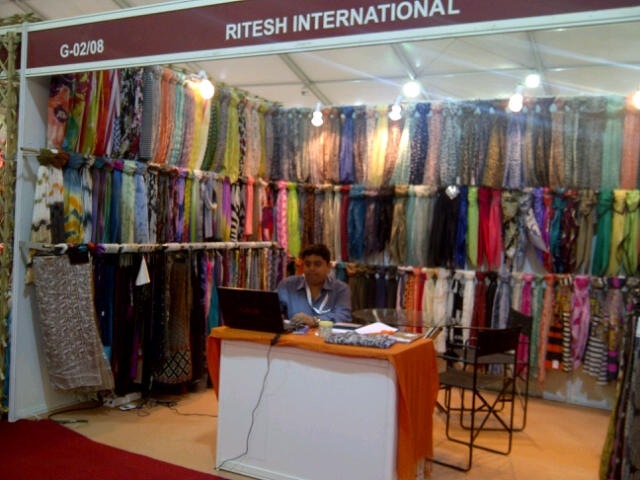
Enter the fashion world. Ritesh’s knitwear division, contributing ~12% of revenue, makes readymade garments. It’s a smaller player in the apparel segment, primarily catering to export and domestic B2B markets. But this also gives the company a natural hedge — when chemicals slow down, garments keep the factory lights on.
In short:
It sells acids to tyre guys, glycerin to soap guys, and shirts