BCL Industries Ltd Q2 FY26 – From Grain to Gain: 700 KLPD Ethanol, ₹104 Cr PAT, and a Biofuel Buffet That’s Just Getting Started
1. At a Glance
If ethanol were a religion, BCL Industries Ltd would be its most loyal disciple. This ₹986 crore market cap agro-processing veteran, incorporated way back in 1975, is running on pure grain and government incentives. Trading at ₹33.4 with a P/E of 9.45, BCL looks like the guy in college who quietly tops the class while everyone else flexes on Instagram.
The company’s Q2 FY26 (Sep 2025) results show sales of ₹691 crore and a PAT of ₹32 crore, up 4.5% QoQ, proving it’s still got its distillery groove even as revenue dipped 4% QoQ. The operating margin has bubbled up to 10%, its best in a year. Ethanol alone makes up a tipsy 72% of distillery revenue, and management seems drunk on expansion—pushing total distillery capacity from 700 KLPD to 1,100 KLPD.
With ROE of 13%, ROCE of 13.2%, and debt-to-equity at 0.78, it’s not debt-free, but who is in today’s ethanol economy? Meanwhile, promoters hold 58%, with a minor 4.4% pledged (probably to buy more tanks for molasses).
So, if the ethanol story is India’s renewable fairy tale, BCL is that side character finally getting screen time.
2. Introduction
There’s something poetic about turning grain into green — both in the literal and financial sense. BCL Industries Ltd, headquartered in Bathinda, started off refining oil but found its true calling in ethanol, ENA, and IMIL. While peers are busy fighting over sugarcane, BCL quietly became a grain-based ethanol giant.
The company’s revenue mix says it all: Distillery – 66%, Oil & Vanaspati – 34%, and Real Estate – 0.3% (because clearly, the only thing real about that estate is the land they built their plant on).
Over time, BCL has transformed from a humble oil refiner into a full-fledged biofuel factory. They supply Extra Neutral Alcohol (ENA) to bigwigs like Pernod Ricard, Amrut, and Mohan Meakin — basically, if you’ve had a peg of Indian whisky, chances are a few drops came from Bathinda.
Their shift from edible oil to distillery isn’t just diversification—it’s evolution. As fossil fuels lose favour and ethanol blending mandates rise, BCL’s future looks fermented to perfection. But can they stay sober through rising debt and fluctuating government ethanol prices? Stick around.
3. Business Model – WTF Do They Even Do?
BCL’s model is simple yet intoxicating: buy grain, distill alcohol, refine oil, sell fuel and liquor, repeat.
Here’s how the machinery of madness works:
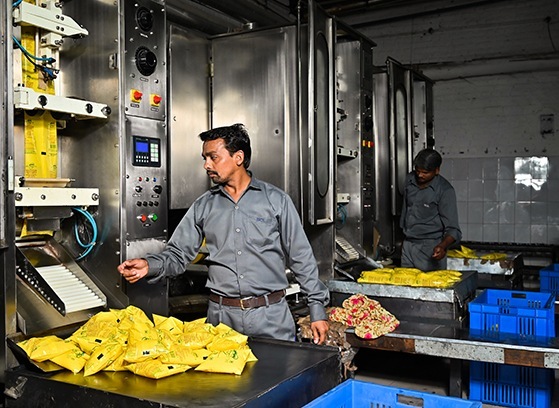
Distillery Division: The crown jewel. Two massive distilleries — Sangat (Bathinda) at 400 KLPD and Svaksha (Kharagpur) at 300 KLPD — churn out ethanol, ENA, DDGS (animal feed), and IMIL. Utilization? A solid 100%.
Oil & Vanaspati Division: The OG business, still running with 200 MT/day edible oil and 100 MT/day vanaspati capacity. They also crush seeds, extract solvents, and refine oil — but are now planning a phased exit. Probably tired of watching Fortune and Gemini ads while selling 34% of revenue.
Real Estate: Exists, but let’s be honest, it’s the appendix of the business model — there for formality.
BCL’s secret weapon is its integration. The by-product from distillation (spent grain) becomes animal feed; their oil division supports raw material logistics; and their ethanol plants feed into India’s grand plan of 20% ethanol blending.
In short: grain goes in, fuel comes out, and investors stay mildly buzzed.
4. Financials Overview
Let’s break down the party numbers for Q2 FY26 (Sep 2025) versus Q2 FY25 (Sep 2024) and Q1 FY26 (Jun 2025):
Metric
Latest Qtr (Sep’25)
YoY Qtr (Sep’24)
Prev Qtr (Jun’25)
YoY %
QoQ %
Revenue (₹ Cr)
691
721
792
-4.16%
-12.8%
EBITDA (₹ Cr)
67
55
53
+21.8%
+26.4%
PAT (₹ Cr)
32
30
33
+6.7%
-3.0%
EPS (₹)
0.98
0.94
1.04
+4.3%
-5.8%
Commentary: Revenue slipped a bit, but EBITDA margin (10%) hit the highest in recent quarters, showing cost control and operational efficiency. Interest costs (₹10 Cr) and Depreciation (₹13 Cr) kept net profit stable at ₹32 Cr. In a volatile ethanol price