Shalimar Paints Ltd Q2 FY26 – 123 Years Old and Still Learning to Paint Profitability
1. At a Glance
Welcome to the world of Shalimar Paints Ltd, the 123-year-old veteran of the paint industry that once coloured colonial bungalows and now struggles to stay within the lines of profitability. With a market cap of ₹552 crore, the stock trades at ₹66, barely above its 52-week low of ₹65.6, down 38% over the past year. It’s the OG of Indian paints — but while peers are spraying luxury emulsions across balance sheets, Shalimar’s numbers look more like a patchy primer coat.
The company clocked Q2 FY26 sales of ₹134 crore, down 7.55% QoQ, but the good news (yes, there’s some!) — its net loss narrowed to ₹14.1 crore, a 27.9% improvement over last quarter. The stock’s P/E ratio is MIA (because, well, negative EPS of ₹-7.69), ROE stands at -22.6%, and ROCE is -12.8% — all screaming “work in progress.” Promoters hold 75%, but 61% of that is pledged, which makes lenders’ eyebrows rise faster than Asian Paints’ margins.
With a debt load of ₹190 crore, negative operating margins (-5.9%), and enterprise value of ₹694 crore, the company’s financials look like a painter’s drop cloth — full of stains from past mistakes and fresh splashes of hope. Will the new management under Kuldip Raina (appointed April 2025) finally repaint the story? Let’s dip our brushes into the numbers.
2. Introduction
Once upon a time in 1902, when British India had more horse-drawn carriages than electric scooters, Shalimar Paints was born to add colour to the Empire. Fast forward to 2025, the paint remains — but the empire? Not so much. Shalimar’s legacy spans over a century, and so does its struggle to balance artistry with accounting.
It’s part of the Ratan Jindal–S.S. Jhunjhunwala faction, with a big-ticket Hella Infra Market (Inframarket) stake of 24.89%. On paper, it’s a solid trifecta of family capital, construction network, and retail ambition. In practice, it’s been more like a reality show — “When Promoters Collide.”
For years, Shalimar has been the underdog of the Indian paints industry, competing in the same canvas as Asian Paints, Berger, Kansai Nerolac, and Akzo Nobel — each with profit margins that could make Shalimar blush. But despite all the red ink, it’s not dead yet. FY25 saw the board approving a ₹70 crore NCD issue, signalling yet another attempt to refuel operations. CARE Ratings didn’t exactly cheer — it downgraded the company to CARE BB+ (Negative) — but hey, it’s not “default” either.
So, can a century-old painter pull off a modern art comeback in a market where even new-age start-ups are splashing past it? Time to open the can.
3. Business Model – WTF Do They Even Do?
Shalimar Paints manufactures, sells, and distributes decorative and industrial paints, with a side hustle in coatings and related services. Sounds simple — until you realise its market share is so small, Asian Paints probably spends more on Diwali ads than Shalimar earns in a quarter.
Decorative Paints:
This is the glamour wing — interior and exterior emulsions, enamels, distempers. In FY23, this segment grew by ~36%, thanks to 1,500 new dealers and 22,000 newly enrolled painters. Emulsion mix rose by 5%, proving that even small brushes can leave big marks. The segment contributed nearly 70% of total revenue, and new products like Zero Damp and Super WTCP were launched.
Industrial Paints:
This is where things get technical — protective coatings for power plants, marine and pipeline coatings. Shalimar bagged key projects like NPCIL Kudankulam and Adani Kutch Copper, along with jobs via L&T Offshore and various state irrigation projects. It’s niche, high-margin work — if managed right.
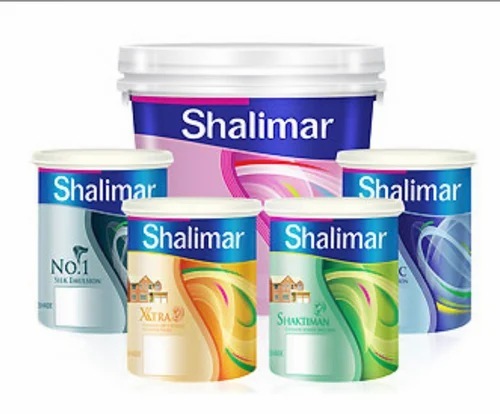
The company’s brand bouquet includes Superlac HiGloss Enamel, Xtra Exterior Emulsion, No.1 Silk Emulsion, and the rural favourite “No. 1” distemper. Think of it as a paint brand that serves everyone — from posh bungalows to panchayat walls.
But the real plot twist? Shalimar’s capex plans of ₹190 crore — modernisation, R&D centre in Nashik, automation, and capacity expansion from 78 million litres to 185 million litres per annum. That’s ambitious — but as any painter knows, you can’t paint over cracks without fixing the wall first.
4. Financials Overview
Let’s break down Q2 FY26 — the latest quarter available — versus earlier quarters.
Metric
Latest Qtr (Sep 2025)
YoY Qtr (Sep 2024)
Prev Qtr (Jun 2025)
YoY %
QoQ %
Revenue
₹134 Cr
₹145 Cr
₹155 Cr
-7.6%
-13.5%
EBITDA
₹-6 Cr
₹-13 Cr
₹-8 Cr
53.8%
25.0%
PAT
₹-14.1 Cr
₹-20 Cr
₹-17 Cr
29.5%
17.1%
EPS (₹)
-1.69
-2.34
-2.00
27.8%
15.5%
The company is still painting losses, but at least it’s using thinner coats now. The EBITDA loss has halved YoY, showing that cost control and pricing adjustments are working. On the