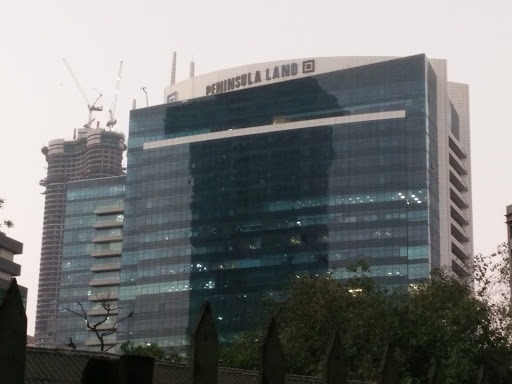
Peninsula Land Ltd Q2 FY26 – From Parel Mills to Piramal Panic: Real Estate’s Oldest Player Tries to Stay Relevant in a Market Full of Glass Towers and Debt Towers
1. At a Glance
Let’s be honest — Peninsula Land Ltd (PLL) is not your typical “young and dynamic” real estate company. It’s more like that classy old uncle who built Mumbai’s first mall, then watched everyone else build entire cities. Incorporated in 1871 (yes, when Queen Victoria was still on the throne), this Ashok Piramal Group company once redefined Mumbai’s skyline with landmarks like Peninsula Corporate Park and Ashok Towers.
Fast-forward to FY26, and things aren’t exactly Bollywood-level glamorous. The stock trades around ₹29.6, with a market cap of ₹981 crore, and a year-on-year return of -40.2%. Sales for the quarter stood at ₹37.6 crore, a painful 38% decline YoY, while the bottom line showed a net loss of ₹7.2 crore, an even more painful 304% drop.
With debt of ₹452 crore, negative ROE (-12.3%), and a current ratio below 1, Peninsula is living proof that old money doesn’t always mean new profits. Yet, it still manages to lease out its flagship Parel property at 100% occupancy, earn rent from the Income Tax and GST departments, and occasionally find a new partner like Alpha Alternatives or Delta Corp to keep things spicy.
Still reading? Good. You’re about to find out how Mumbai’s original real estate pioneer is juggling government tenants, debt restructuring, and redemption hopes in a market now dominated by Lodhas and Godrejs.
2. Introduction
If Mumbai’s real estate were a soap opera, Peninsula Land would be that veteran actor who still shows up to the set with gravitas — but fewer lines and lower pay. Once celebrated for developing Crossroads (Mumbai’s first retail mall) and Ashok Towers, the company now mostly headlines news for credit rating downgrades, OCD conversions, and CIRP notices involving its JVs.
Its latest CARE downgrade in November 2025 — from “BBB-” to BB+ — was the financial equivalent of a reality check. Meanwhile, the NSE fined them over ₹10 lakh for delayed SEBI compliance, just to add insult to injury. The management, still led by the Piramal family, continues to promise “strategic alliances” and “platform-based growth,” but the balance sheet tells a more grounded story.
Yet, Peninsula Land isn’t dead. The company’s ₹150 crore RE Platform partnership with Alpha Alternatives and Delta Corp aims to rejuvenate its portfolio. Think of it as Botox for an ageing developer. The firm is still expanding in Mumbai, Pune, and Bangalore — with 1.68 million sq. ft. under development, and 13 projects delivered across major cities.
But can a company with negative free cash flows, falling revenues, and rising debt-to-equity (2.19x) really reboot itself in an age of pre-launch hype and digital realty platforms? Let’s find out.
3. Business Model – WTF Do They Even Do?
Peninsula Land Ltd is the real estate development arm of the Ashok Piramal Group, a diversified conglomerate with interests in textiles, sports, and retail. PLL develops residential, commercial, and mixed-use projects through multiple structures — direct ownership, joint ventures, subsidiaries, and associates.
The company’s bread and butter? Property development and lease income. Realty sales contribute ~90% of revenue, rental income from investment properties adds ~7%, while “other operating income” and miscellaneous items make up the rest. In other words, Peninsula sells homes to survive and rents offices to stay alive.
One of its crown jewels is Piramal Chambers in Lalbaug, Mumbai — fully leased out to the Income Tax Department and GST Department since 1970. The company smartly monetized this asset via Lease Rental Discounting (LRD) of ₹250 crore, using an escrow structure to manage inflows. The rent goes in, EMI goes out, and any leftover is a happy accident.
Peninsula also operates with a web of 23 subsidiaries, 5 joint ventures, and 1 associate company, because apparently, one balance sheet just isn’t enough. It’s like having a family WhatsApp group for each cousin who bought a flat in the same project.
4. Financials Overview
Let’s dissect the Q2 FY26 (September 2025) numbers like a forensic auditor with a sense of humour:
Metric
Latest Qtr (Sep 25)
YoY Qtr (Sep 24)
Prev Qtr (Jun 25)
YoY %
QoQ %
Revenue
₹37.6 Cr
₹61 Cr
₹63 Cr
-38.3%
-40.3%
EBITDA
₹3 Cr
₹11 Cr
₹9 Cr
-72.7%
-66.7%
PAT
-₹7.2 Cr
₹3 Cr
-₹5 Cr
-304%
-44%
EPS (₹)
-0.56
0.11
-0.15
-609%
-273%
If numbers could cry, these would be weeping.
Revenue has nearly halved YoY, and profit turned into a puddle. EBITDA margin dropped from 18% to 9%, showing cost pressures or poor realizations. Annualized EPS? A tragic -₹2.24, translating to a negative P/E ratio that’s more philosophy than finance.
At this rate, the only thing Peninsula is appreciating is the rent from