Patel Retail Ltd Q2 FY26 – The ₹821 Crore Retailer That’s Turning Tier-III Towns into Mini D-Marts (with an Indian Chaska Twist)
1. At a Glance
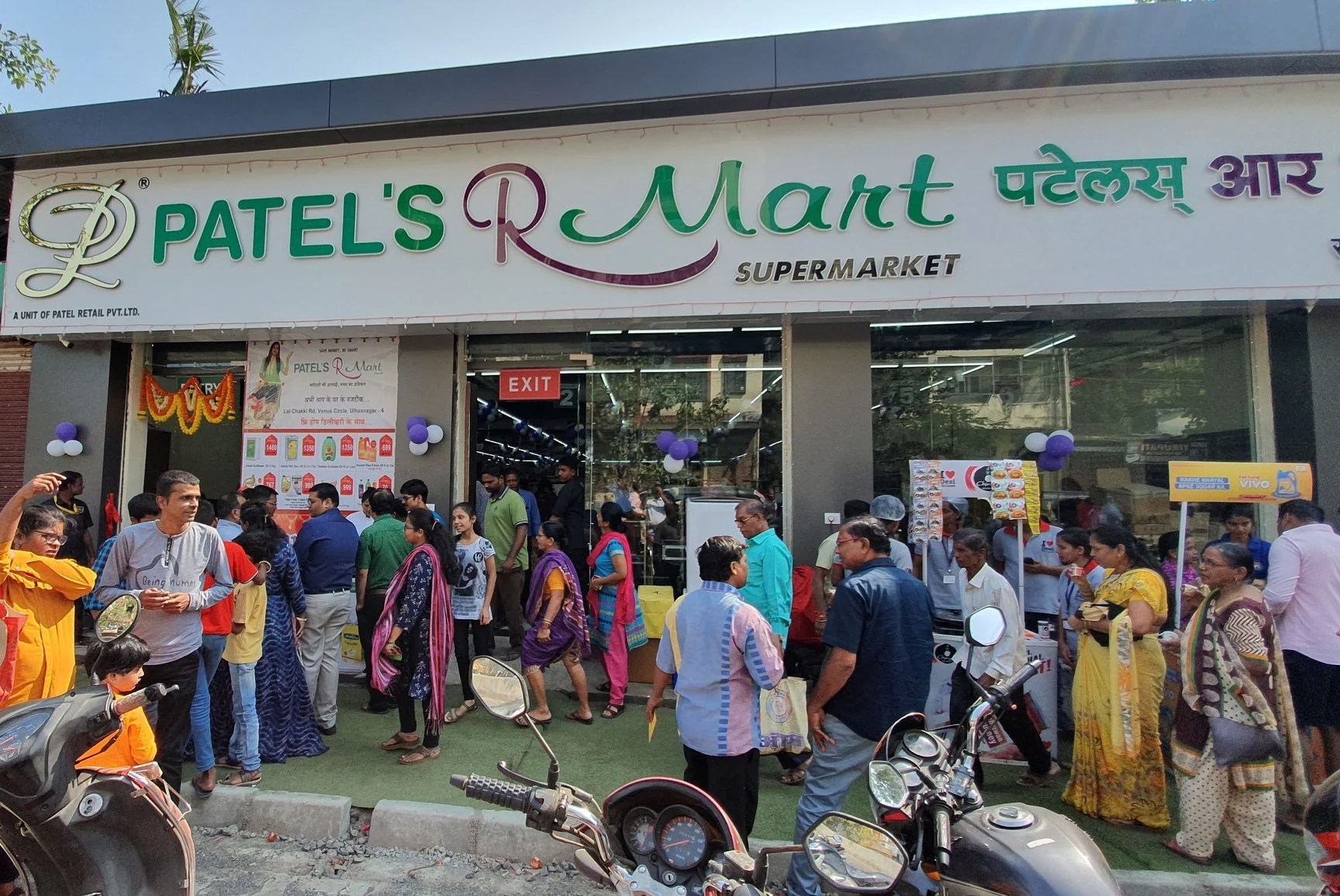
Once upon a time in Ambernath, a small-town supermarket dared to dream like D-Mart but act like Big Bazaar—efficient, local, and proudly Gujarati. That’s Patel Retail Ltd (PRL) for you: a ₹868 crore market-cap hybrid beast juggling grocery aisles, peanut plants, and pulse-processing units like a multitasking Indian mom on Diwali morning.
At ₹260 a share, Patel Retail is trading at a P/E of 29.4, comfortably cheaper than its elite peers—Avenue Supermarts (P/E ~95), Vishal Mega Mart (~86), and V-Mart (~62). The company just posted ₹222 crore in quarterly sales with ₹10.1 crore PAT, marking a juicy 73.3% YoY profit jump, and that too with a modest 13.9% sales bump.
No dividends yet (because why share?), but a stellar ROE of 22.1% and ROCE of 17.3% suggest this Ambernath-based grocer knows how to squeeze profits better than it squeezes lemons. Debt-to-equity? A relaxed 0.34, meaning Patel bhai isn’t drowning in EMIs.
And did we mention 43 stores and 10,000+ SKUs across Maharashtra? The “Patel’s R Mart” chain has quietly become a suburban supermarket empire, adding the right masala of private labels, processing units, and export dreams to its spicy story.
2. Introduction
India’s retail landscape is a bizarre circus—D-Mart’s the ringmaster, Reliance Fresh is the muscle, and small-town supermarkets are the clowns trying to stay relevant. But every now and then, one clown learns some serious tricks. Patel Retail Ltd is that clever underdog.
Incorporated in 2008, PRL built its empire where big corporates usually send interns to “study rural markets.” The company turned local grocery chaos into an organised chain of supermarkets in Thane and Raigad, a strategy that screams: “Why compete in Mumbai when you can dominate Ambernath?”
With a cluster-based expansion model, Patel Retail doesn’t go all “pan-India” in a hurry. Instead, it builds dense, hyper-local store networks, keeping logistics tight and margins juicier than aam ras. Add to that its in-house brands—Patel Fresh (pulses), Indian Chaska (spices), Blue Nation (menswear)—and you get a business that sells everything from chana dal to chinos under one logo.
Oh, and if you thought this was just retail, think again. There’s non-retail muscle too—processing plants, cold storage, and export operations reaching 35+ countries. Basically, Patel Retail is half supermarket, half manufacturing firm, and 100% desi hustle.
3. Business Model – WTF Do They Even Do?
Picture this: a customer buys Patel Fresh moong dal from Patel’s R Mart, unaware that Patel Retail processed it, packed it, and probably exported the same dal’s cousin to Canada last week. That’s vertical integration, Patel-style.
Their business has two clear halves:
Retail (44.95% revenue share): The Patel’s R Mart stores across Maharashtra’s suburban and tier-III cities. These aren’t your air-conditioned malls—they’re practical, community-driven, and strategically located in residential pockets where footfall meets familiarity.
Non-Retail (54.14% revenue share): This includes their agro-processing clusters, packaging plants, exports, and bulk commodity trading. Yes, they even process peanuts and spices in Kutch because someone has to supply the world’s chaat masala.
And they don’t just sell—they lease. The five-year average lease model keeps capital light and flexible. Add their mobile app that connects customers to the nearest R Mart for free home delivery, and you’ve got a classic “phygital” setup—physical stores backed by digital ordering.
Revenue-wise, Food (32.8%) leads the table, followed by FMCG non-food (8.8%), General merchandise & apparel (3.3%), Manufacturing (44%), and Trading (10%). So yes, Patel bhai earns more from processing peanuts than from selling toothpaste.
4. Financials Overview
Metric
Sep 2025 (Latest Qtr)
Sep 2024 (YoY)
Jun 2025 (QoQ)
YoY %
QoQ %
Revenue
₹222 Cr
₹195 Cr
₹182 Cr
13.9%
22.0%
EBITDA
₹17 Cr
₹14 Cr
₹15 Cr
21.4%
13.3%
PAT
₹10.1 Cr
₹5.8 Cr
₹7 Cr
73.3%
44.3%
EPS (₹)
3.04
2.40
2.78
26.7%
9.4%
The quarterly results are proof that Patel Retail’s grocery aisles are busier than ever. PAT jumped 73.3% YoY, which could make even Avenue Supermarts sweat a little.
Operating margins remain stable around 7%, respectable in retail terms, considering the blend of food, apparel, and agro-processing segments. If annualised, the EPS of ₹3.04 translates to ₹12.16—giving us a forward P/E of around 21.4, well below the retail industry’s 51.5x average.
In short: decent revenue, solid profit jump, and a valuation that doesn’t look like a midlife crisis.
5. Valuation Discussion – Fair Value Range
Let’s pull out the calculator and our sarcasm.
Method 1: P/E Basis
Current EPS (FY25): ₹10.16
Sector P/E: 51.5
Fair Value = ₹10.16 × (25 to 35) → ₹254 – ₹356 range (reasonable considering growth and smallcap status).
Method 2: EV/EBITDA
EV = ₹921 Cr
EBITDA (FY25) = ₹58 Cr
EV/EBITDA = 15.9× currently. A fair multiple for growing retail (especially FMCG-linked) could be 12–18×. → Implied Fair Value Range: ₹225 – ₹340
Method 3: Simplified DCF Assume PAT growth of 20% for next 5 years, discount rate 12%. → Fair value lands between ₹240 – ₹330
🎯 Fair Value Range (Educational): ₹240 – ₹340 per share. (Disclaimer: This fair value range is for educational purposes only and is not investment advice.)
6. What’s Cooking – News, Triggers, Drama
Lately, Patel Retail has been making more noise than the vegetable section at 7 PM.
IPO Debut (Aug 2025): The ₹92.2 lakh share IPO hit the markets like a well-organised grocery queue. Proceeds worth ₹174 crore are earmarked for debt repayment (₹59 crore) and working capital (₹115 crore)—basically, reducing borrowings and stocking more peanuts.
CEO Appointment (Oct 2025): Mr. Sanjeev Kumar Nigam joined as CEO of Indian Chaska, bringing 24 years of food & beverage expertise. Expect the brand to sprinkle extra masala on its FMCG expansion.
Volume Clarifications (Nov 2025): Exchanges questioned sudden stock volume spikes; company said “sab normal hai.” Translation: Retail investors finally discovered Ambernath.
Investor Calls & Presentations (Nov 2025): The company’s H1 FY26 call revealed focus on export growth, margin enhancement, and new store additions within Maharashtra clusters.
Basically, everything is cooking—literally and figuratively.
7. Balance Sheet
Metric (₹ Cr)
Mar 2024
Mar 2025
Sep 2025
Total Assets
333
383
553
Net Worth (Equity + Reserves)
94
135
368
Borrowings
188
183
124
Other Liabilities
51
66
60
Total Liabilities
333
383
553
Sarcastic Notes:
Assets jumped faster than onion prices, +44% in six months—because IPO cash works wonders.
Borrowings down to ₹124 Cr; someone finally paid their EMIs on time.
Net worth tripled—because listing and fresh capital make everyone look rich.