Hercules Investments Ltd H1 FY26 Results – From Hoists to Holdings: The Bajaj Baby That Lifted Loads Now Lifts Portfolios
1. At a Glance
From heavy-duty hoists to heavy-duty holdings, Hercules Investments Ltd (formerly Hercules Hoists Ltd) has finally completed its metamorphosis into a pure-play investment company. Market cap stands at ₹541 crore, current price ₹169, and a P/E of 68.3 — the kind of multiple that screams “we don’t make things, we make moves.” The company, once a proud lifter of India’s factories, has now lifted itself out of the manufacturing trenches into the serene (and occasionally treacherous) waters of investment management.
Its latest H1 FY26 results are a fascinating mix of post-demerger hangover and newfound financial yoga. PAT for the latest quarter came in at ₹5.2 crore, almost doubling YoY (96.2% growth), despite zero sales. That’s right — zero. Every rupee of profit now flows from the company’s investment portfolio, interest income, and dividend streams, not from cranes or chains. ROE remains stuck around 0.7%, but the company is almost debt-free and trades at a price-to-book of just 0.63. Cheap by one metric, confusing by another, and curious for every investor wondering if Bajaj’s baby is plotting another lift-off.
2. Introduction
Let’s be honest — Hercules Investments is not your average capital goods story anymore. This isn’t about machines or motors or how many tonnes of steel their hoists can lift. It’s about money — specifically, how money earns more money while the old factories hum quietly under a different name (Indef Manufacturing Ltd).
This 1962-incorporated Bajaj Group entity recently spun off its entire manufacturing division to a subsidiary, Indef Manufacturing Ltd, in one of the cleanest demergers the Indian markets have seen in years. What’s left behind is a lean, unleveraged holding and investment company with a curious sense of purpose: to manage a ₹900+ crore asset book that’s heavier on investments than any crane they ever sold.
The irony is poetic. The company that once lifted India’s industrial machinery now lifts its own portfolio performance. With negligible operations and most income coming from dividends, interest, and capital gains, Hercules Investments now sits among a new breed of Bajaj family holdings — quiet, patient, and perpetually undervalued until someone wakes up and rerates it.
But here’s the fun part: investors expected post-demerger lethargy, but the numbers show life. The September 2025 quarter saw PAT of ₹5.2 crore compared to ₹2.65 crore in the same quarter last year. That’s nearly double the bottom line from just sitting on assets. What are they putting in their coffee — equity caffeine?
3. Business Model – WTF Do They Even Do?
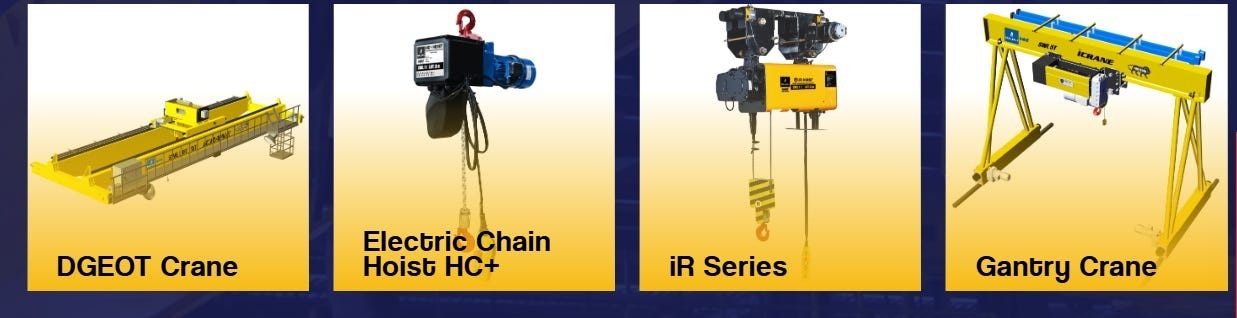
Once upon a time, Hercules made cranes, chain pulley blocks, and hoists that could lift anything from car engines to egos. Post-2024, however, the story flipped. After demerging its manufacturing arm, Hercules Hoists Limited rebranded to Hercules Investments Ltd, a pure investment company with a fancy new MOA and a mandate to play the markets, not the factory floor.
Now, the company earns from:
Dividend income from subsidiaries and strategic holdings (roughly 4% of total income FY24).
Interest income (around 1%).
Capital gains from sale of investments (6%).
Spares and cranes-related residue income (~13%, pre-demerger tail-end FY24).
Other non-operating income (1%).
In essence, they’ve turned from “making products” to “making passive income.” Hercules’ portfolio primarily comprises investments in group and listed companies, some of which could themselves be multibaggers in hiding. The company’s operational structure now looks like this:
Parent Company: Hercules Investments Ltd – holds the treasury and investments.
Subsidiary: Indef Manufacturing Ltd – runs the actual manufacturing business.
Business Purpose: Manage assets, receive dividends, and occasionally trade securities like a very polite version of a Bajaj family office.
So yes, the business model is basically “earn more by doing less” — an idea every corporate finance intern dreams about.
4. Financials Overview
Let’s see how the “new Hercules” performed in the latest Half-Yearly Results (H1 FY26) ending September 2025.
Metric (₹ Cr)
Latest Qtr (Sep’25)
YoY Qtr (Sep’24)
Prev Qtr (Jun’25)
YoY %
QoQ %
Revenue
0.00
0.00
0.00
—
—
EBITDA
(0.24)
(0.22)
(0.13)
9.1%
84.6%
PAT
5.20
2.65
(0.01)
96.2%
Huge turnaround
EPS (₹)
1.62
0.83
–
95.2%
—
Hercules reported zero operating revenue, but the profits came alive thanks to investment income. Think of it as a landlord making more money from rent than running his old factory.
The YoY growth looks amazing — but don’t be fooled. It’s not an operational miracle; it’s accounting evolution. After the demerger, all manufacturing revenue went to Indef Manufacturing, while Hercules is left managing investments and balance sheets thicker than textbooks.
Still, doubling profit without touching a single hoist deserves a slow clap.
5. Valuation Discussion – Fair Value Range Only
Let’s run through the math (because numbers don’t lie — they just nap quietly when nobody’s looking).
EPS (TTM): ₹2.47 Current Price: ₹169 P/E: 68.3
Now, if we remove the effect of one-time gains, the “core” investment P/E might hover closer to 40–45x, still premium for a holding company.
Method 1 – P/E Based Valuation: Industry average P/E for capital goods ≈ 34.8. But Hercules is now an investment play, not a manufacturer. Typical NBFC/holding company multiples hover around 20–30x. Fair value range = ₹2.47 × 25–35 = ₹62–₹86
Method 2 – EV/EBITDA: EV = ₹540 Cr, EBITDA ≈ ₹8 Cr → EV/EBITDA ≈ 67x. That’s about the same multiple used for buying aircraft carriers, not investment firms. Suggests overvaluation or deep hidden value in its portfolio.
Method 3 – DCF (Simplified): Assume annual investment income growth of 8%, cost of capital 10%. Using a conservative perpetual growth model, fair value falls in the range of ₹90–₹110.
So, our Educational Fair Value Range: ₹62 – ₹110 per share. This fair value range is for educational purposes only and is not investment advice.
6. What’s Cooking – News, Triggers, Drama
If corporate restructuring were an Olympic sport, Hercules would be podium material. The company completed its demerger with Indef Manufacturing Ltd in late 2024, a process blessed by NCLT and sprinkled with more regulatory filings than your CA’s wildest dreams.
Then, in August 2025, it officially changed its name to Hercules Investments Ltd, aligning its identity with its new purpose. Around November 2025, the board approved voluntary delisting from NSE without exit opportunity — because when you’re a Bajaj-backed holding company, liquidity is optional.
But wait, there’s more drama. The CFO carousel continued: Mr. Vijay Singh resigned, replaced by Mr. Girish Jethmalani, who resigned three months later. Maybe the finance department couldn’t decide whether they were a manufacturer or an investor.
Key triggers:
Delisting may simplify structure and reduce compliance cost.
Post-demerger clarity could unlock hidden NAV value.
Dividends and capital gains from Indef Manufacturing may form a stable income stream going forward.
In short: less welding, more wealth management.
7. Balance Sheet
₹ Cr
Mar 2024
Mar 2025
Sep 2025
Total Assets
781.7
940.2
953.6
Net Worth (Equity + Reserves)
729.2
846.5
862.2
Borrowings
0.0
0.0
0.0
Other Liabilities
52.5
93.7
91.4
Total Liabilities
781.7
940.2
953.6
Three-point commentary:
This is not a balance sheet; it’s a family trust disguised as a company.
With zero debt and rising investments, the company’s financial health is cleaner than an audit textbook.