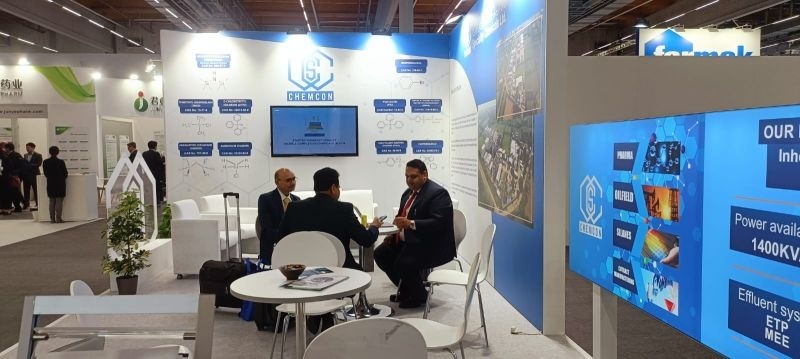
1. At a Glance
Welcome to Chemcon Speciality Chemicals Ltd — where bromides, silanes, and corporate plot twists are part of the daily mix. The company, with a market cap of ₹807 crore and a current price of ₹220 per share (as of Nov 28, 2025), just reported a flat quarter that can best be described as “steady but sleepy.” Sales grew just 2.11% QoQ to ₹53.71 crore, while PAT slipped 9.16% QoQ to ₹5.75 crore. The stock trades at a P/E of 32.4, almost kissing the industry median of 28.9, which means investors are still paying a premium for slow-moving chemistry.
Despite being nearly debt-free with a Debt-to-Equity ratio of 0.00, Chemcon’s ROE of 5% and ROCE of 7% don’t exactly scream “speciality.” The company’s current ratio of 9.13 shows it has more liquidity than excitement, and with no dividend payout, shareholders are left watching plants grow — literally. Over five years, sales have shrunk by -4.57%, profits by -13%, and stock price by -12%. And yet, Chemcon soldiers on, being India’s only manufacturer of HMDS and Zinc Bromide, the backbone chemicals behind your favourite pharma drugs and drilling fluids.
So what’s cooking in their nine manufacturing plants (plus two under construction)? Let’s break it down before the bromide fumes hit us.
2. Introduction
Incorporated in 1988, Chemcon Speciality Chemicals Ltd (CSCL) is the kind of company that looks simple on paper — but the deeper you go, the more layers of chemical complexity and corporate drama emerge. They make pharma intermediates and oilfield chemicals, which sounds like a boring laboratory gig until you realize they’re the only Indian player in some high-margin niches globally dominated by chemical giants.
From Hexamethyldisilazane (HMDS) — a reagent used in antiviral drugs and semiconductors — to Calcium Bromide that lubricates oil wells, Chemcon has carved out niches where competition is minimal, but operational hiccups are frequent. The company operates out of Manjusar, Gujarat, housing nine plants and six warehouses, with two new organic chemical plants (Plant 10 and 11) under construction, still waiting for their grand opening in H2FY26.
Yet, the real kicker came in August 2025, when Chemcon bought Shivam Petrochem Industries — a related-party company owned by its own promoter — for ₹36 crore via slump sale. Whether this is vertical integration or just corporate recycling, the jury is out. Investors, meanwhile, just sighed and checked if bromide fumes cause dizziness.
Exports contribute 35% of Chemcon’s revenue across 12 countries, with domestic sales still dominating at 65%. Despite a healthy client roster (Aurobindo, Hetero, Laurus Labs), top 5 customers contribute 30% of total sales — which means a sneeze from one big client could give Chemcon a fever.
3. Business Model – WTF Do They Even Do?
Let’s make it simple: Chemcon makes chemicals that make other chemicals.
Their business is split into two buckets — Organic Chemicals (78% of revenue) and Inorganic Chemicals (16%), with the rest being miscellaneous odds and ends (6%).
Organic Segment:
This is the glamour division that makes HMDS, CMIC, Bromobenzene, and 2-Bromo — all tongue-twisters but crucial intermediates for pharmaceutical formulations. HMDS and CMIC are especially important for manufacturing antiviral drugs and antibiotics. Fun fact: Chemcon is the largest CMIC manufacturer globally and the only Indian manufacturer of HMDS, giving them an exclusive throne in pharma supply chains.
Inorganic Segment:
Here, Chemcon makes bromides — Calcium, Zinc, and Sodium Bromide — used in oil drilling fluids. These products don’t trend on Twitter but pay the bills. The company’s Calcium Bromide capacity of 15,000 MTPA helps balance revenue cyclicality when pharma orders dry up.
They operate with a mix of pharma exposure (Hetero, Laurus, Macleods) and industrial clients