1. At a Glance
Welcome to Fratelli Vineyards Ltd — the reincarnation of the once-grain-trading Tinna Trade Ltd — now fully tipsy in the world of fermented grapes. The stock closed at ₹116 on November 28, 2025, down -2.43%, and boasts a market cap of ₹506 crore. From trading wheat to pouring wine, this company has truly gone from “agro” to “alcoholic.”
In the latest Q2 FY26, the company reported revenue of ₹45.9 crore (down 26.1% YoY), and a net loss of ₹3.31 crore (down 13.8% YoY). The operating margin clocked in at a sobering 1.72%, compared to last year’s hangover of -8.13%. With an ROE of -15.6%, ROCE of -3.35%, and debt-to-equity of 0.97, the balance sheet looks like it had one drink too many.
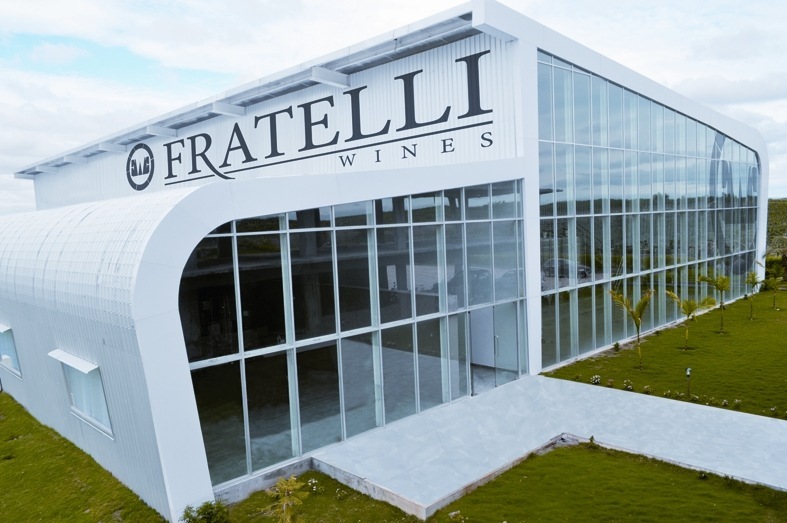
Still, this is no back-alley distillery — Fratelli owns 400 acres of vineyards and 5.3 million liters of winemaking capacity. Promoters hold a healthy 56.9%, while the public owns 42.5%. But the stock has fallen 59% in a year — perhaps because investors realized it’s not easy to turn grape juice into profits.
So, is Fratelli the fine wine maturing slowly or just grape soda in disguise? Let’s swirl, sniff, and sip through the numbers.
2. Introduction – The Tinna-to-Tipsy Metamorphosis
Once upon a time, there was Tinna Trade Limited, an agro-trader trying to time commodity cycles and failing spectacularly. Then came FY25 — a year that tasted like oak barrels and redemption. They acquired Fratelli Wines Ltd, slapped a new name on the door, and declared to the world: “We make wine now!”
It’s like watching a dal-chawal merchant suddenly become a sommelier. And yet, in India’s still-nascent wine market, this pivot actually makes sense. Wine consumption in India is growing at ~15% CAGR, and Fratelli isn’t just bottling grapes — it’s bottling lifestyle.
Their vineyard in Akluj, Maharashtra, looks like something out of Tuscany (minus the pizza), while the Bijapur, Karnataka plant handles smaller batches. With marquee labels like Sette and J’NOON, Fratelli wants to make Indians feel fancy — even if most still prefer whiskey.
But here’s the twist — while the product screams luxury, the balance sheet whispers “recovering trader.” FY25 saw a ₹22.8 crore loss on ₹172 crore revenue. OPM slipped to -7.87%. In simple words, they’re selling wine but not earning a dime.
Yet, the optimism is vintage — they’re expanding capacity, investing in vineyard tourism, and dreaming of a ₹1,000 crore valuation hangover.
The question is: Can Fratelli age gracefully, or will it sour before it matures?
3. Business Model – WTF Do They Even Do?
In the simplest terms: Fratelli grows grapes, ferments them, bottles them, and then prays you buy enough to fund their next harvest.
The business runs on a “grapes-to-bottle” model — which sounds fancy until you realize it means managing both farmers and sommeliers. They own 400 acres of vineyards, produce over 5 million liters of wine annually, and export to 6 countries. That’s impressive for an Indian winery, especially one that was trading chickpeas just a few years ago.
The product portfolio reads like an upscale bar menu:
- Luxury Wines: J’NOON (crafted with French collaborator Jean Charles Boisset) and Sette, India’s first proper luxury wine.
- Super Premium: Gran Cuvée Brut, a sparkling wine with no added sugar — because guilt-free hangovers matter.
- Premium Range: Cabernet Franc, Shiraz, Sauvignon Blanc, and the Instagrammable Rosé.
- Value Range: Ziva and Mosso — because even Tier 2 cities deserve bubbles.
- Canned Wines: Tilt — India’s first vegan, gluten-free wine-in-a-can. Because millennials don’t open corks anymore.
They also dabble in vineyard tourism, planning luxury stays with 40 keys by FY27. So yes, they’re trying to turn wine into an experience — part beverage, part vacation.
In essence, Fratelli wants to be India’s Sula 2.0, but with better margins and less karaoke.
4. Financials Overview
Let’s swirl through the