HP Adhesives Ltd Q2 FY26 – Sticky Revenues, Slippery Margins, and a Tube Full of Drama
1. At a Glance
HP Adhesives Ltd (NSE: HPAL) — the company that literally sells glue for a living — is having a hard time keeping its own financials from coming unstuck. As of 27 November 2025, the company trades at ₹45.9, down a painful 43.5% over the past year. Market cap stands at a modest ₹419 crore, making it a mid-level smallcap player in India’s adhesive and sealant jungle. The P/E ratio of 26.1x looks sticky compared to an industry average of 30x, while ROE at 9.82% and ROCE at 13.6% whisper “we’re fine” but don’t exactly scream “Pidilite in the making.”
In Q2 FY26 (Sep 2025), HPAL reported sales of ₹65.13 crore and a PAT of ₹3.55 crore, marking a YoY growth of ~3.8% in revenue but a decline of 8% in profit. Operating margins softened to 9.83%, showing that even in the business of bonding things together, profitability can easily fall apart. The balance sheet looks tight with debt of just ₹2.13 crore, making it nearly debt-free — always a plus when your margins are as fragile as glass.
With promoters holding 71.35%, zero pledges, and the stock trading at roughly 2.24x book value, HP Adhesives looks more like a disciplined small-town trader than a corporate giant. But beneath this calm surface lies a cocktail of regulatory show-cause notices, margin compression, and expansion ambitions — all waiting to be uncorked.
2. Introduction
Let’s get one thing straight: HP Adhesives is that overachieving cousin who came to the party late but won’t stop talking about “solvent cements.” Incorporated in 2021, the company went public right into the middle of India’s retail-investing frenzy — and for a while, the market stuck to it like Fevikwik.
However, 2025 hasn’t exactly been kind. The share price slipped more than 40% in a year, which, for an adhesives maker, is ironic enough to deserve an award. The company’s claim to fame lies in manufacturing and distributing a range of adhesives, sealants, and plumbing accessories, under catchy brands like Strong Weld, Strong Fix, and Strong Seal — names that sound like they came straight out of a JCB catalogue.
Their pitch? “We bond everything — from PVC pipes to emotional investors.” But beyond the humor lies a solid operational model. The company has built an extensive distribution network with 1,250+ distributors across India, stretching from the shiny glass towers of Mumbai to the hardware shops of Guwahati.
Financially, HPAL isn’t bleeding, but it’s limping. With an EPS of ₹1.73 and sales of ₹263 crore (TTM), it’s walking a tightrope between scale-up ambition and regulatory headaches. The company even received GST and customs show-cause notices in September 2025, demanding crores in dues — just what every CFO dreams of before Diwali.
So yes, HP Adhesives is sticky — but not always in the way shareholders want.
3. Business Model – WTF Do They Even Do?
HP Adhesives is in the adhesive and sealant business — the kind of stuff that keeps your plumbing together, your tiles sealed, and your investor hopes glued.
The product range looks like a chemistry lab met a hardware store:
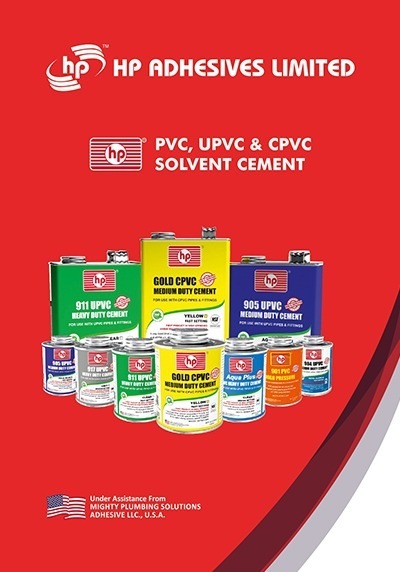
Solvent Cement (59% of FY23 revenue) – used for joining PVC pipes in plumbing. Imagine the smell of PVC glue — that’s HPAL’s bread and butter.
Silicone Sealants (18%) – the goop used in bathrooms, kitchens, and windows, perfect for both leaky pipes and metaphorical cracks in quarterly results.
Contact & PVA Adhesives (7%) – your typical “white glue” and sprayable adhesive for furniture and shoes — used by carpenters, kids, and occasionally auditors fixing balance sheets.
Ball Valves & Tapes (14%) – traded items that add some spice (and volume) to the top line.
FRP Drainage Solutions – manhole covers, gratings, and tank covers, proving HPAL doesn’t just glue — it also covers holes.
Manufacturing happens at Khopoli, Maharashtra, with a 13,000 MTPA capacity. Distribution is the real power play: 5 depots serving over 1,250 distributors, with exports to 20+ countries including the US, UK, Africa, and SAARC nations.
Clients include some heavyweights like Pidilite, Finolex Industries, Brilloca, and HIL — basically, the same people HPAL probably competes with on shelves. It’s like doing group projects with your rivals.
The new subsidiary Unitybond Solutions Pvt. Ltd. was incorporated in April 2024, and HPAL invested ₹2 crore into it — presumably to expand into new adhesive technologies or, knowing Indian promoters, to “synergize and optimize core competencies.”
In short, HP Adhesives is building a mini-Pidilite — but without the marketing budget, monopoly, or mascot.
4. Financials Overview
Let’s look at the numbers that actually matter — because as the CFO knows, “trust is good, but tables are better.”
Metric
Sep 2025 (Q2 FY26)
Sep 2024 (YoY)
Jun 2025 (QoQ)
YoY %
QoQ %
Revenue (₹ Cr)
65.13
62.60
66.13
+4.0%
-1.5%
EBITDA (₹ Cr)
6.40
7.34
6.61
-12.8%
-3.2%
PAT (₹ Cr)
3.55
5.24
4.22
-32.3%
-15.9%
EPS (₹)
0.39
0.57
0.46
-31.6%
-15.2%
Annualised EPS = 0.39 × 4 = ₹1.56 At the current price of ₹45.9, annualised P/E = 29.4x — a bit higher than its trailing 26x, signaling that either the market expects magic or forgot to update its Excel sheet.