1. At a Glance
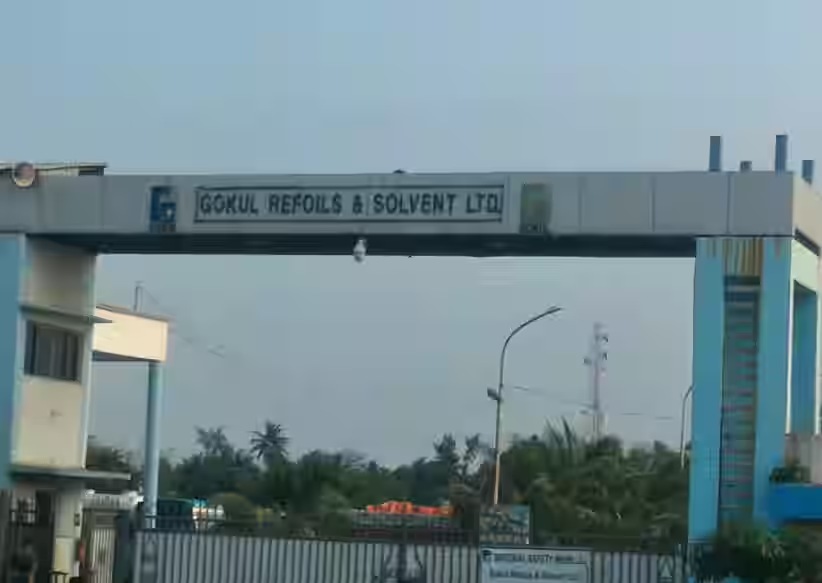
Gokul Refoils and Solvent Ltd (GRSL) is back in the frying pan for Q2 FY26 with revenue of ₹1,062.65 crore and a profit of ₹3.52 crore — down 31.5% QoQ, but hey, who said frying oil was a stable business? With a market cap of ₹398 crore and a stock P/E of 27.2, this Gujarat-based oil trader continues to juggle edible oil, castor derivatives, and a little bit of everything that drips or shines. ROCE at 8.4% and ROE at 4.12% show that while the oil flows, the returns trickle. The company, a part of the Gokul Group (one of India’s top three castor derivative exporters), just wrapped up its September 2025 quarter. The stock currently trades around ₹40.2 — roughly the price of one litre of cheap cooking oil — and yet, still manages to be worth ₹398 crore. No dividends, no glamour, but enough drama to keep financial voyeurs entertained.
2. Introduction
In the ever-boiling Indian edible oil market, Gokul Refoils and Solvent Ltd plays the role of that calm guy at a Gujarati wedding buffet—serving quietly but always near the kadhai. Incorporated in 1992, the company has spent over three decades refining, crushing, and extracting oil from just about anything that grows on Indian soil. But what truly makes Gokul spicy is its dual life: edible oils for your kitchen and castor oil for your car engine.
While peers like Marico and Patanjali flex brand muscles with glossy TV ads, Gokul’s focus remains old-school—manufacturing and exporting from its massive Sidhpur plant. Its revenue pie (FY23) tells the story: 53% from edible oils, 16% from interest from partnership firms, 15% from loans and advances, and a cool 9% from “other non-operating income.” Translation: the side hustle is strong.
And the export game? Pretty oily too—29% exports vs 71% domestic sales. But the Q2FY26 numbers show volatility: sales rose 24% QoQ, but profit slipped 31.5%, proving that oil refining can be a game of “who blinked first” with global crude and edible oil prices. Still, for a company with borrowings of ₹339 crore, the balance sheet isn’t leaking oil—yet.
3. Business Model – WTF Do They Even Do?
So, what exactly does Gokul do? In short: everything oily under the sun.
The company deals in edible oils, industrial oils, and agro commodities — and if you blink, it’ll add another oil to its Memorandum of Association (which it literally did in Jan 2024, adding mineral oils, brake oils, gear oils, and even creosote oils!). Apparently, if it drips, Gokul can sell it.
Its main engine is Gokul Agri International Limited, a wholly-owned subsidiary handling production at Sidhpur, Gujarat — a city now smelling of castor and groundnut thanks to Gokul’s refinery. Their menu includes Kachi Ghani mustard oil, groundnut oil, cottonseed oil, soybean oil, palmolein, and even castor oil. It’s like an FMCG buffet, minus the branding budget.
The castor oil segment is the real money-spinner internationally. With applications in lubricants, paints, dyes, coatings, and pharma, castor derivatives give Gokul its export edge. And to complete the eco-circle, they also make organic fertilizers — basically monetizing the leftovers.
Gokul’s distribution network is serious: 23 carrying and forwarding agents,