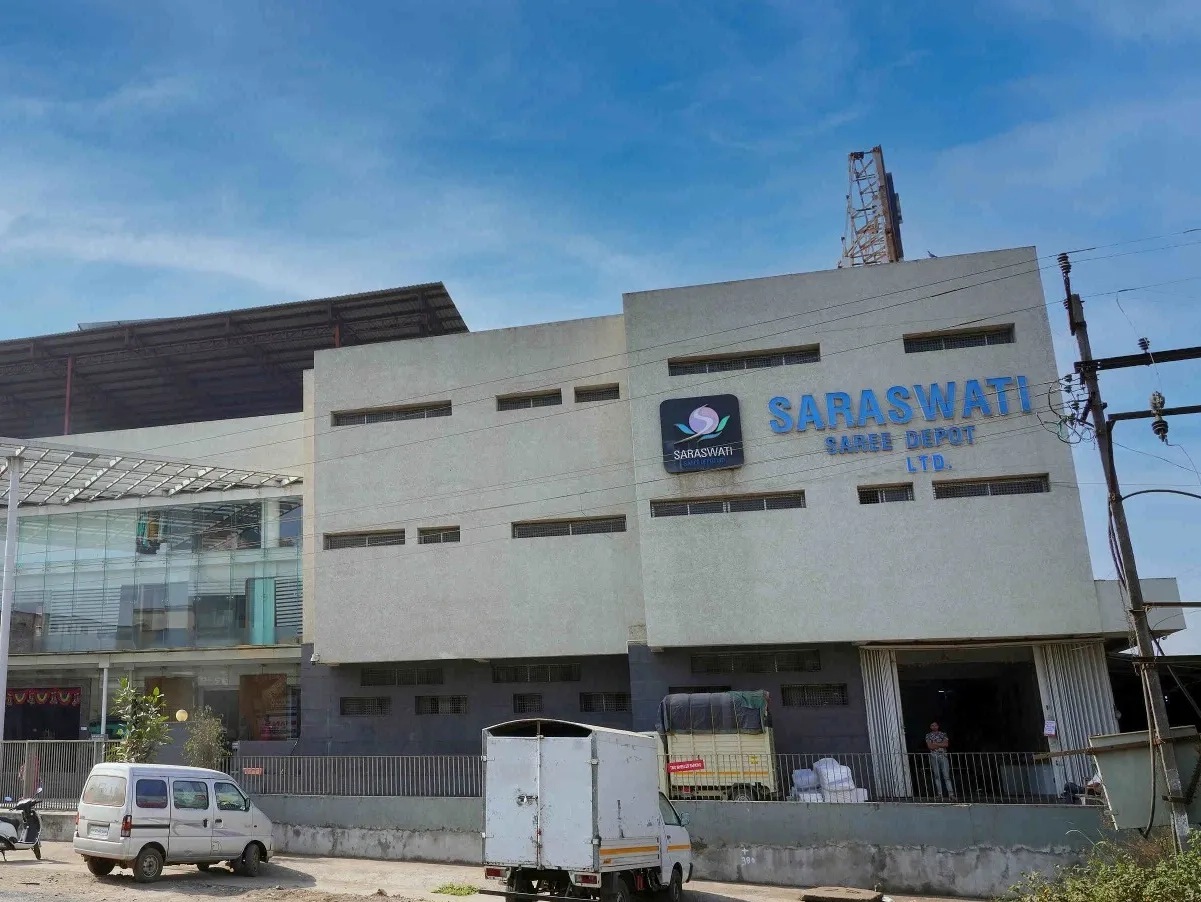
Saraswati Saree Depot Ltd Q2 FY26 Results: The Saree That Outsold Sensex, But Now Tangled in Working Capital Drama
1. At a Glance
Once upon a time in Kolhapur, a saree trader dreamt of building an empire. Fast forward to FY26, Saraswati Saree Depot Ltd (SSD) is now a ₹323 crore market-cap textile beast that sells sarees faster than influencers sell affiliate codes. With a current price of ₹80.9, the stock sits almost 48% below its 52-week high of ₹154 — because even legends need a breather. The company clocked Q2 FY26 revenue of ₹208 crore (up 26.5% YoY) and PAT of ₹10.5 crore (up 9.8% YoY), proving that Indians might be cutting down on vacations, but not on nine-yard investments.
ROCE? A sizzling 28.6%. ROE? An elite 25.2%. Debt to equity? Barely 0.05, which means SSD borrows less than your friend who insists he’ll “pay you back after salary day.” Add a dividend yield of 2.8%, and you’ve got a traditional business giving modern investors something to wrap around with pride.
But there’s a small crease — working capital days have doubled from 35 to 70. Sarees are flowing, but the cash cycle is now looking like an overextended wedding function.
2. Introduction
If you ever thought India’s fashion pulse beats only on Instagram, meet Saraswati Saree Depot Ltd — a business that sells tradition by the meter and still manages to make margins sharper than a blouse hook. Founded in 1996, the company has turned “wholesale saree trading” into a ₹600+ crore annual enterprise.
From Surat to Varanasi to Madurai, SSD sources its goods from 900+ weavers — essentially commanding an army of looms big enough to cover India’s GDP growth chart. Over 13,600 customers (mostly retailers and distributors) rely on SSD’s 3 massive warehouses in Kolhapur, Ulhasnagar, and Ahmednagar, spanning a jaw-dropping 235,000 sq. ft.
The company doesn’t just sell sarees; it hosts an annual retail war called UTSAV, a mega B2B event that alone contributes 13–15% of total revenue. If Flipkart’s Big Billion Days had a traditional cousin, this would be it.
In June 2025, SSD decided to flirt with B2C by opening a 15,000 sq. ft. direct retail outlet in Kolhapur. Investment? ₹2.8 crore. Expected first-year revenue? ₹5–6 crore. Not bad for a pilot project that could become the FabIndia of sarees — minus the existential rebranding crisis.
3. Business Model – WTF Do They Even Do?
In simple words, SSD is the Amazon for sarees — but with actual margins and far less customer return drama. Their business model is rooted in B2B wholesale distribution, focusing mainly on sarees (90.8% of FY25 revenue), with smaller contributions from kurtis, dress materials, blouse pieces, and men’s shirt/pant materials.
Their sourcing web spreads across India’s textile ecosystem — Surat, Varanasi, Madurai, Dharmavaram, and Kolkata — turning SSD into a logistics monster that manages more than 300,000 SKUs. That’s right — their product catalogue is so deep, even ChatGPT’s token limit would give up.
SSD’s strategy is delightfully simple:
Source cheap, sell wide.
Focus on scale, not trend-chasing.
Dominate regional markets (West & South India contribute 100%).
The company’s stores serve as massive exhibition centers where retailers can browse, bulk-order, and go home broke but happy. Their Kolhapur store alone contributes 88% of total revenue, which basically means it’s the Ambani Wedding of textile showrooms.
And guess what’s next? SSD’s expansion into men’s ethnic wear, because even men deserve to sweat in silk during weddings.