Pashupati Cotspin Ltd Q2 FY26 – Cotton, Capital, and Comedic Margins: When 37,000 Spindles Spin 94x P/E Dreams
1. At a Glance
Pashupati Cotspin Ltd — the SME stock that decided cotton is the new cryptocurrency. Trading at ₹812 with a P/E of 94, it’s the kind of stock that makes even polyester blush. With a market cap of ₹1,281 crore, this Gujarat-based yarn-spinner has been weaving both cotton and investor expectations into fine threads.
In the latest Q2 FY26 results (Sep 2025), sales stood at ₹241.85 crore, down 12% YoY, while PAT dropped to ₹4.04 crore, a 25% nosedive from last year’s ₹5.32 crore. The EBITDA margin? Barely hanging at 3.5%, which is about as tight as a new pair of jeans after Diwali.
Yet, the market loves drama — the stock is up 59% in one year, proving once again that valuation sanity and SME enthusiasm are two parallel universes. Debt stands at ₹82 crore, D/E ratio 0.51, and the company claims an ROE of 10.3% — which in SME terms, counts as heroic.
If you thought spinning yarns was a metaphor, think again — Pashupati Cotspin literally spins yarn, and figuratively spins a tale of expansion, ginning, and optimism strong enough to challenge textile gravity.
2. Introduction
Incorporated in 2017, Pashupati Cotspin is a relatively young player that’s already mastered the art of turning cotton into both fabric and fortune. Headquartered in Kadi, Gujarat, the land of dhokla, diesel, and debt restructuring, the company is part of the larger Pashupati Group, which has been in textiles longer than most Indian millennials have been alive.
They do the full cotton circus — from ginning raw cotton to spinning yarn to selling by-products like cotton seeds. Basically, if cotton sneezes, they monetize the tissue.
But here’s the twist — while the company’s sales in FY25 were ₹637 crore (down from ₹658 crore in FY24), the net profit doubled to ₹14 crore, riding on “Other Income” of ₹14 crore. That’s right — for every rupee earned from yarn, there’s a matching rupee earned from… not yarn.
Still, the stock has been on a wild run. With returns of 88% over three years, Pashupati has become the poster child of how SME investors confuse high P/E with high growth. Because nothing screams “value” like a ₹812 stock with a book value of ₹102.
3. Business Model – WTF Do They Even Do?
Let’s simplify: Pashupati Cotspin is in the cotton ginning and spinning business. Imagine buying raw cotton, cleaning it (ginning), and spinning it into yarn. Then sell the cotton yarn, keep the cotton seeds as by-products, and pray the monsoon behaves.
They produce:
Ne 20s to 40s yarn — the everyday range for weaving and knitting.
BCI/Organic/Fair Trade Cotton Yarn — the woke version of yarn that makes you feel like you’re saving the planet, one T-shirt at a time.
Compact/Combed/Carded varieties — industry jargon for how tightly and neatly the yarn is twisted before it twists your P&L.
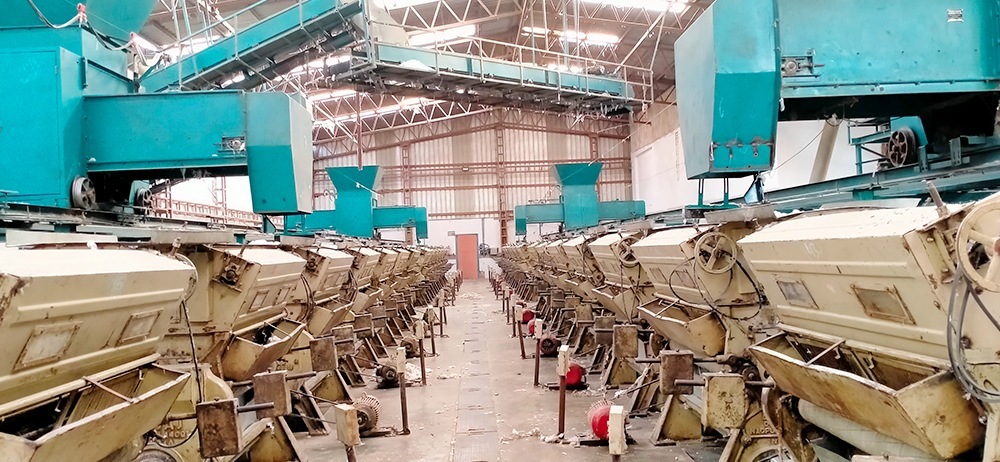
The company’s plant has 37,000 spindles and a ginning capacity of 37,707 metric tons per annum, all located in Kadi, Gujarat — a hotspot for textile manufacturing and political debates about cotton MSPs.
In essence, Pashupati Cotspin buys cotton from farmers, processes it, sells yarn to textile mills, and by-products like cotton seeds to oil companies. The value chain is straightforward. The margins? Not so much.
4. Financials Overview
Quarterly Comparison (Standalone, ₹ crore)
Source table
Metric
Q2 FY26
Q2 FY25
Q1 FY26
YoY %
QoQ %
Revenue
241.85
274.69
106.08
-12.0%
+128.1%
EBITDA
8.50
15.25
4.16
-44.3%
+104.3%
PAT
4.04
5.32
2.03
-24.9%
+99.0%
EPS (₹)
2.56
3.48
1.29
-26.4%
+98.4%
Witty commentary: The quarterly numbers look like a cricket scorecard after a rain interruption — the revenue collapsed but managed a late bounce. EBITDA barely keeps the lights on, and EPS needs protein shakes. Yet, the market cap is ₹1,281 crore. SME investors clearly believe in “Cotton to the Moon!”